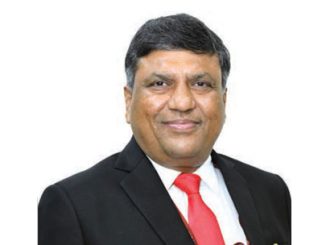
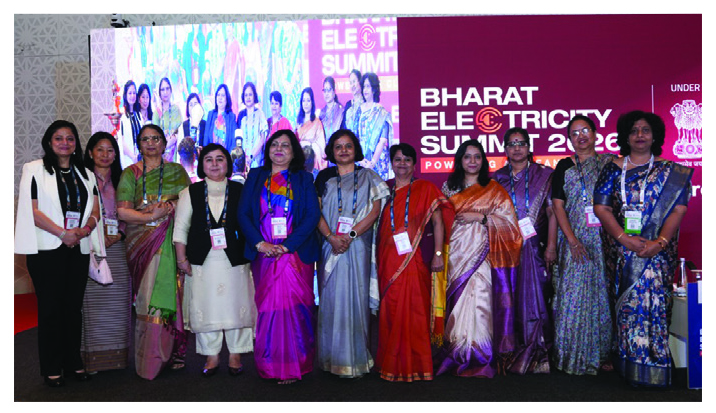
 At the Bharat Electricity Summit 2026, the session on “Women in Electricity: Current and Courageous” brought together women leaders, policymakers, engineers and professionals from across India and the global energy sector. It included leadership talks along with panel discussions on the themes “Future-Ready Women: Driving Global Renewable Energy Revolution” and “Leading with Influence, Not Authority”. The speakers included Parminder Chopra, Chairman and Managing Director, Power Finance Corporation; Manju Gupta, Executive Director, Power Grid Corporation of India Limited, and Chair, CIGRE Women in Energy (WiE), India; Bala Jyoti, Member (Law), Joint Electricity Regulatory Commission for the union territories of Jammu & Kashmir and Ladakh; Dr. Tripta Thakur, Vice-Chancellor, VMSB University of Technology, Dehradun; Dr Tal Katz, Chair, CIGRE WiE, Israel; Dechen Dema, Director, Transmission, Bhutan Power Corporation; and Anamika Bhargava, Global Head, L&T Semiconductor, India, among others. Across discussions, speakers emphasised that women are not merely participants in the energy transition but are central to shaping its direction and outcomes. Edited excerpts…
Women in power
India’s power sector is expanding rapidly, driven by rising demand and structural shifts in the energy mix. Electricity consumption from data centres is expected to increase sharply in the coming years. At the same time, the country has crossed 260 GW of renewable energy capacity, now accounting for over half of the total installed capacity, and is steadily progressing towards its target of 500 GW of non-fossil capacity by 2031. As a result, the grid is becoming more complex, with the greater integration of renewables, wider adoption of digital technologies, and an increasing focus on ensuring reliability at scale. In this context, the question is not only how infrastructure is built, but also who leads this transition.
The future of the power sector will be shaped as much by leadership and inclusion as by technology. Women are playing an increasingly important role across the electricity value chain, from grid operations and system planning to transmission, project execution, regulation, and commercial and financial management. Their growing presence in leadership roles across utilities, academia, industry and international organisations reflects a broader shift in what has traditionally been a male-dominated sector. Across levels, women are stepping into roles as field electricians, grid operators and industry leaders, steadily expanding their footprint.
This progress is also visible at the grassroots level. In regions such as Jammu & Kashmir and Ladakh, women entrepreneurs, though still limited in number, are contributing meaningfully to renewable energy and rural electrification. Supported by initiatives like Barefoot College, women from rural communities are being trained as solar technicians, installing panels, maintaining systems and electrifying off-grid villages, while also emerging as local energy entrepreneurs.
Women are also integral to global energy collaboration, with an expanding role in cross-border initiatives, regional power pools, reliability frameworks and international renewable energy projects.
Women as drivers of change
Women, with their diverse perspectives and problem-solving approaches, have a critical role in shaping the future of the power sector. They consistently bring clarity of thought, a strong sense of fairness and institutional integrity to the responsibilities they undertake. At the same time, they demonstrate key leadership qualities such as calm decision-making, strategic focus, effective multitasking and a collaborative approach to working.
Diversity also strengthens decision-making and execution. Whether in planning large-scale transmission systems, integrating renewable energy corridors, or managing complex regulatory and commercial frameworks, inclusive teams tend to deliver more resilient and effective outcomes.
Meanwhile, the sector itself is undergoing rapid transformation. With evolving technologies, a changing energy mix and more dynamic market structures, the power sector is becoming increasingly complex and opportunity-driven. In such an environment, professionals must remain adaptable, continuously upgrade their skills and respond to emerging challenges with agility, enabling them to contribute meaningfully across roles and leadership positions. As the sector modernises and responds to priorities such as digitalisation and climate change, it increasingly demands diverse perspectives and experiences to navigate the transition effectively.
Challenges faced by women in the sector
Despite visible progress, several challenges persist. While some are common across the workforce, women often face additional barriers such as unconscious bias, entrenched stereotypes and expectations that extend beyond the workplace. Balancing professional responsibilities with personal commitments can create added pressure, particularly in leadership roles. Many women continue to manage demanding careers alongside responsibilities at home, a dual role that requires sustained commitment and resilience and deserves greater recognition.
There is no denying that the sector today includes skilled women entrepreneurs, industrialists and engineers. However, they remain exceptions rather than the norm. Women continue to be underrepresented, especially in core engineering, field operations and senior decision-making roles. They are less frequently placed in positions that offer visibility, operational authority and leadership exposure. Globally, women account for only about 20 per cent of the energy sector workforce, underscoring the scale of the gap. This disparity is not due to a lack of capability, but often stems from social and organisational factors. These include limited access to high-impact assignments, fewer opportunities to participate in decision-making forums and differences in how potential is assessed. Sponsorship and active advocacy by senior leaders remain critical accelerators for career growth. However, it is often informal, uneven and not linked to leadership accountability, limiting its effectiveness.
Many of these biases faced by women are subtle but influential. Assumptions about women’s availability or long-term commitment can shape hiring, role allocation and advancement decisions. Addressing such challenges requires a broader shift in mindset, both within organisations and in society at large.
Understanding the deeper roots of these issues is equally important. Historically, Indian society recognised the importance of women, with references in ancient texts highlighting their strong and independent roles. Over time, however, social structures became more restrictive, and certain stereotypes became deeply embedded across generations. Changing this requires conscious effort, especially from the younger generation, to ensure that more inclusive and equitable perspectives are carried forward.
Opportunities
There is a clear need to expand capacity-building programmes for women in the power sector. As the industry evolves, demand for skilled manpower continues to grow. While there is increasing discussion around artificial intelligence (AI) replacing jobs, the more immediate priority is to strengthen training and improve employability. Final-year students can benefit from internships and supplement their learning through massive open online courses to better align with industry requirements. The National Education Policy, 2020, is also supporting this shift by promoting skill development and practical learning. The discussion emphasised that AI will not replace women. Instead, those equipped with AI-related skills will have a distinct advantage. This makes it important to promote specialised and future-oriented training programmes for women.
Women must continue to build technical competence and acquire the skills required for an evolving energy landscape. Strengthening these capabilities will enhance credibility and enable more effective participation across roles. There is also a need for more women to step into leadership positions and actively contribute to shaping policies and strategies for the sector. At the same time, leadership progression often requires stepping beyond comfort zones, including taking on new roles, relocating when needed and handling complex or high-stakes assignments. Combining relational strengths with technical expertise, continuous learning and proactive self-advocacy will be key to advancing in the sector.
The way forward
Encouragingly, there has been significant progress in recent years. Policy measures and growing social awareness have led to greater participation of women across industries, including the power sector. Today, women are visible across functions, and are not only contributing but also leading change. At the same time, the journey is still evolving, with considerable ground yet to be covered.
For a progressive India, it is important to continue expanding career pathways in the sector. A clear roadmap for women in energy, electricity and power is essential to include them at all levels. While some women leaders have made notable strides, broader efforts are needed across regions, from urban centres to rural and border areas, to ensure inclusive growth.
The need of the hour is to strengthen educational and professional pathways, along with creating mentoring and leadership opportunities. At present, women represent a small share of the workforce and less than 10 per cent at the board level in leading power utilities. To address this imbalance, focused efforts are necessary to support capable women, expand opportunities and eliminate gender-based discrimination and pay gaps. Above all, it is critical to ensure a safe and supportive work environment where women feel secure and can perform with confidence. The focus, therefore, should not be on strengthening women, but on ensuring equal opportunities and removing structural barriers. True equality will be achieved when individuals are recognised for their capabilities, without bias or distinction.
Going forward, every effort must be made to increase the participation of women in this traditionally male-dominated sector.