 By T.V. Surya Prakash, Director Operation, Eastern Power Distribution Company of Andhra Pradesh
Distribution utilities are facing growing challenges in maintaining network reliability, asset health and power quality due to ageing infrastructure, rising electricity demand, renewable energy integration, electric vehicle (EV) adoption and increasing inverter-based loads. Traditional methods of fault detection and maintenance are becoming inadequate to manage the complexity of modern distribution systems. In response, utilities are increasingly adopting artificial intelligence (AI), advanced analytics and digital technologies to move towards predictive and proactive network management. Technologies such as smart meter analytics, AI-based inspection systems, drone-enabled monitoring, and intelligent data platforms are helping utilities detect faults early, improve asset reliability, reduce outages and strengthen power quality management.
Reliability and safety challenges
Distribution networks are facing increasing reliability and safety challenges due to ageing infrastructure, rising electricity demand and rapid renewable energy integration. One of the key concerns relates to line-insulator and clearance-related safety issues. Ageing conductors, cross-arms, poles and distribution transformers are increasing the risk of failures and outages. Polymer insulators are becoming more vulnerable to flashovers during pollution, rainfall and harsh weather conditions. In many cases, insulator defects such as cracks, contamination and physical damage remain undetected until they lead to faults or supply interruptions. Low ground clearance on 33 kV and 11 kV lines caused by conductor sag and ageing network components has also become a major safety concern. Further, unsafe horizontal and vertical clearances from buildings and residential areas are increasing public safety risks and compliance challenges for utilities.
Network loading and stress levels are also rising significantly. Continuous load growth and renewable energy injection are causing overloading of 33 kV and 11 kV feeders. Distribution transformers are increasingly overloaded due to concentrated downstream consumer demand. At substations, power transformers are experiencing stress from repeated heavy fault currents caused by insulator failures, feeder short circuits, phase faults and conductor snapping or grounding. As a result, feeders, transformers and substations are operating beyond their designed capacities, affecting overall network reliability.
Voltage imbalance and power quality issues have also become more prominent. Frequent voltage fluctuations at LT and 11 kV levels are impacting power quality and damaging consumer equipment. The growing installation of single-phase rooftop solar systems under the PM Surya Ghar Muft Bijli scheme is causing LT phase imbalance because solar power injection is uneven across phases. In addition, rooftop solar installations are creating reverse power flow at the consumer, transformer and feeder levels. Mid-day solar generation peaks during periods of low demand often result in surplus power generation within the network, increasing the need for battery energy storage systems (BESSs) and pumped storage plants (PSPs) to absorb excess power and maintain grid stability.
Further, harmonics and inverter-related impacts are affecting network performance. Harmonic distortion caused by solar plants, inverters, and other power-electronic devices is increasing stress on transformers, capacitor banks and protection systems. At the same time, the rapid adoption of renewable energy, BESSs and EV charging infrastructure is creating new high-impact loads, necessitating network strengthening through additional feeders, transformers, substations and upgraded protection systems.
Digital tools in use
Distribution utilities are increasingly adopting digital tools and analytics-based solutions to improve network reliability, operational efficiency and consumer service quality. Technology-driven initiatives are being implemented to address challenges related to line maintenance, transformer monitoring, power quality assessment and renewable energy integration.
One of the initiatives is the deployment of mobile-based AI inspection systems for line and insulator reliability. Earlier, inspections were manual, periodic and dependent on the judgement of field personnel. Problems such as pole tilting, inadequate clearances, vegetation encroachment and damaged insulators were often detected only after outages or flashovers occurred. There was also limited central visibility of inspection findings. Under the new system, field staff capture geotagged images through mobile applications, which are analysed using AI algorithms. The system identifies issues such as insulator cracks, contamination, flashover risks, pole lean, cross-arm misalignment, low clearances and vegetation proximity to live conductors. Centralised visibility of field observations enables timely corrective action. This has helped utilities identify unsafe conditions before failures occur, standardise inspections, and reduce outages and safety incidents.
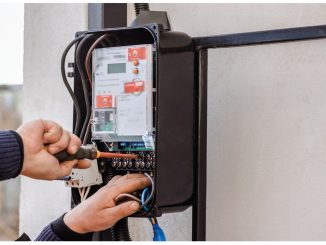
Another initiative is smart meter data analytics for distribution transformer (DT) health monitoring. Earlier, DT monitoring depended on manual logbooks and periodic field checks, resulting in inconsistent data quality and limited visibility of actual loading conditions. Low voltage issues were generally identified only after consumer complaints or transformer failures. The current system combines DT meter data with 30-minute interval smart meter load survey data. It enables communication between DT meters and downstream consumer meters to provide accurate visibility of transformer loading patterns. The system identifies overloaded and low voltage DTs, phase imbalance and load concentration trends. These insights support load redistribution across transformers and phases, improving voltage performance, reducing transformation losses, and enhancing transformer life and consumer satisfaction.
Utilities are also using smart meter load survey data for power quality monitoring and reliability assessment. Earlier, voltage fluctuations and interruptions at LT and 11 kV levels were mainly tracked through consumer complaints, with limited granular data available for analysis. Reliability indices such as SAIDI and SAIFI were available only at aggregated levels. The current approach uses 30-minute interval smart meter data to analyse voltage behaviour, interruptions and supply continuity at the consumer, DT and area levels. It helps identify chronic under-voltage and over-voltage locations and provides objective reliability indices such as SAIDI, SAIFI, CAIDI, CAIFI and MAIFI, enabling targeted corrective action.
AI-based long-term planning tools are also being used for solar peak management and emerging load planning. Using feeder-level load data, live APIs, and weather reanalysis inputs, these tools assess solar surplus, storage requirements and EV charging impacts. The analysis has highlighted the growing importance of BESSs and PSPs for balancing renewable energy integration and maintaining grid stability.
Next-stage AI solutions
As distribution networks become more complex with the rapid integration of renewable energy, EVs, distributed generation and smart consumer loads, utilities are increasingly adopting proactive and predictive operational models. Advanced AI-based solutions are emerging as critical tools to improve reliability, power quality, operational efficiency and asset management across the network.
One of the solutions is AI-based reverse power flow detection. Distribution systems were traditionally designed for one-way power flow from substations to consumers. However, increasing rooftop solar and distributed generation have introduced bidirectional power flows in many areas. The solution identifies reverse power flow conditions at the consumer, DT and feeder levels where local generation exceeds consumption and power flows back into the grid. It analyses smart meter export data, DT and feeder measurements and GIS-based network topology to distinguish actual reverse power flow from normal load fluctuations. Early detection is becoming essential as uncontrolled reverse power flow can lead to voltage instability, transformer overloading, protection coordination issues and equipment stress.
Another important advancement is AI-driven line reliability and fault detection using drones. This solution combines network analytics, mobile image analysis, and drone-based inspections to improve fault detection and asset monitoring. It correlates smart meter events, outage management system logs and GIS connectivity information to identify probable fault locations. AI algorithms analyse images captured through mobile devices and drones to detect insulator failures, conductor damage, vegetation encroachment, low clearances and other line defects before outages occur. The solution is especially useful on high-risk 33 kV and 11 kV feeders, difficult terrain and areas with recurring failures. Faster fault localisation and early defect detection help utilities improve reliability, extend asset life and strengthen safety compliance.
AI-based harmonics and inverter-impact intelligence is also becoming increasingly important. Rising penetration of rooftop solar, EV chargers and inverter-based loads is causing higher harmonic distortion across LT and 11 kV networks. These harmonics create hidden stress on transformers, capacitor banks and other equipment. The solution analyses voltage and current waveforms from power quality meters installed at LT panels, DTs and feeders. AI models correlate harmonic patterns with inverter-based loads and identify areas facing high harmonic distortion, transformer heating risks and capacitor bank stress, enabling utilities to manage these issues proactively.
In addition, AI-based distribution load flow and loss intelligence solutions help utilities better understand network performance and technical losses. Using GIS topology, smart meter data, advanced meter reading data and billing information, these solutions perform energy balance and load flow analysis across feeders and DTs. They identify conductor losses, transformer losses, phase imbalance, voltage issues and overloaded network sections, enabling targeted corrective action and more efficient network planning.
Conclusion
AI-based fault detection, predictive maintenance and power quality management solutions are becoming essential for modern distribution networks. Advanced applications such as reverse power flow detection, drone-based inspections, harmonics analysis and load flow intelligence are helping utilities improve reliability, optimise asset utilisation and manage emerging grid challenges. As renewable energy and digital loads continue to expand, AI-driven solutions will play a key role in building resilient, efficient and future-ready distribution systems.