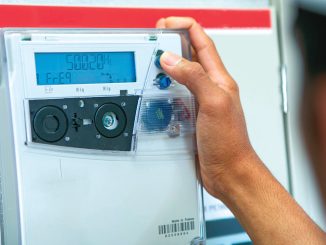
Smart meters form the foundation of modern smart grid applications by providing the data and information required for grid management and consumer services. Unlike conventional meters, smart meters support two-way communication, enabling consumers to receive information about their energy consumption, tariffs and alerts from their utility. They also perform functions related to equipment health monitoring and energy measurement.
As the most important component of the data acquisition system, the reliability and accuracy of smart meters have a direct impact on the quality of information collected by utilities. Since these meters are expected to operate continuously under varying electrical and environmental conditions, ensuring their performance through rigorous testing becomes essential.
Need for smart meter testing
Smart meters are subjected to operating conditions that are much more demanding than those experienced by conventional static meters. They are required to withstand repeated power on-off operations, electrical surges, low and high voltages, and frequent communication with backend systems. In addition, they support large-scale data collection and analysis involving millions of consumers and regular reporting of energy consumption.
These meters are also exposed to extreme environmental conditions and temperature variations. Since hardware-related failures are difficult to rectify and cannot be corrected remotely, such as software issues, comprehensive testing is necessary before deployment. Smart meter reliability depends on several factors, including hardware performance, software and firmware reliability, communication capability and proper functioning of various operational features. Metering functions, relays, data registers, communication modules and upgrade features must all operate reliably throughout the life of the meter.
Metering standards
The key standards governing electricity metering in India include IS 16444, IS 13779 and IS 15959. IS 16444 comprises two parts covering smart meters. Part 1 specifies the requirements and testing procedures for direct-connected AC static smart meters of Class 1 and Class 2, including features such as time-of-use registers, displays, load switches and integrated or plug-in bidirectional communication modules for measuring import and export energy. Part 2 applies to transformer-operated smart meters of accuracy classes 0.2S, 0.5S and 1.0S, covering meters with measuring elements, displays, communication modules and import-export energy measurement capabilities.
IS 13779 lays down the technical requirements, performance criteria and testing procedures for conventional AC static watt-hour meters used in single-phase and three-phase applications, covering aspects such as accuracy, starting current, power consumption, tamper resistance, safety, environmental and climatic performance, electromagnetic compatibility and insulation tests.
Meanwhile, IS 15959 (Parts 1-4) establishes the data exchange requirements for electricity meters based on the device language message specification/companion specification for energy metering protocols(DLMS/COSEM), enabling interoperability between meters and communication systems from different manufacturers through standardised data models, communication protocols, and security and access control mechanisms.
Key tests for smart meters
Metrology testing: Rigorous pre-installation testing of smart meters is essential to ensure accurate billing, reliable communication and secure operation before field deployment. The testing process verifies compliance with applicable standards and the meter’s ability to withstand various electrical and environmental conditions.
Metrology testing includes type tests, routine tests and acceptance tests. Type tests are performed on representative meters to demonstrate compliance with standard requirements and evaluate the design and performance characteristics of the meter. Routine tests are conducted during manufacturing to ensure that every meter meets quality requirements. Acceptance tests are performed on samples from a production lot to determine whether the entire batch meets the prescribed standards.
Reliability testing: Reliability testing is carried out to ensure that smart meters continue to perform under adverse operating conditions. Effective communication among manufacturers, utilities, service providers and testing laboratories is necessary to establish realistic testing conditions. Various reliability tests are performed, including stress tests, highly accelerated life cycle tests and endurance tests. Long-term testing is conducted on service switches and other critical components. Damped heat tests, cold and heat tests and power cycling tests are also carried out to assess the durability of the meter. Power cycling tests involve repeated switching operations to verify the proper functioning of the meter, the real-time clock, cumulative energy registers and data storage systems. These tests help ensure that the meter can withstand repeated power interruptions without data corruption or loss of functionality.
Test of insulation properties: Insulation tests are conducted to evaluate the dielectric properties of smart meters. Impulse voltage tests are performed by applying high-voltage impulses to verify the ability of the meter to withstand electrical surges. The tests are conducted between electrical circuits as well as between electrical circuits and earth. AC high-voltage tests are also carried out by applying specified voltages between the current and voltage circuits and earth. These tests verify the strength of the insulation system and ensure electrical safety during operation. Insulation resistance tests are performed by applying direct current voltage between the electrical circuits and earth to evaluate insulation integrity. Functional accuracy tests are conducted both before and after the insulation tests to ensure that the electrical stresses do not affect the meter’s measurement performance.
Accuracy testing: The accuracy of smart meters is verified under different load conditions and power factors at rated voltage and frequency. Automatic test benches equipped with highly stable power sources and reference meters are used for this purpose. The required test parameters, including voltage, current and power factor, are programmed into the system. The test equipment automatically calculates the percentage error and determines whether the meter satisfies the prescribed accuracy limits. Since billing and revenue collection depend on accurate energy measurement, these tests represent one of the most important stages of smart meter evaluation.
Electrical performance tests: Electrical requirement tests evaluate the performance of smart meters under different supply conditions. The percentage error of the meter is verified under the influence of supply voltage variations. Power consumption in both the voltage and current circuits is measured during idle operation as well as during active communication. These tests ensure that the meter operates efficiently, while maintaining its accuracy under different operating conditions.
Influence quantity testing: Smart meters may be affected by several external factors during operation. Influence quantity tests are, therefore, conducted to assess the impact of voltage variation, frequency variation, magnetic fields and harmonics on meter performance. These tests verify that the smart meter maintains acceptable levels of accuracy and reliability despite changes in electrical conditions.
Climatic testing: To ensure that smart meters can withstand any environmental condition, climatic tests are carried out by placing the meter inside environmental chambers and exposing it to various temperature and humidity conditions. Dry heat tests, cold tests and damp heat cyclic tests are conducted to evaluate the performance of the meter under extreme conditions. Functional accuracy tests are performed before and after these environmental tests to ensure that the meter continues to operate correctly. Following the climatic tests, insulation resistance and functional tests are repeated to confirm the reliability of the meter.
Mechanical testing: Smart meters are subjected to vibration and shock during transportation, handling and installation. Mechanical tests are, therefore, conducted to evaluate the meter’s ability to withstand these conditions. The tests assess the mechanical robustness of the meter and verify that it can tolerate vibration, shock and handling stresses without damage. Additional tests are also performed to verify protection against dust and water ingress as well as resistance to heat and fire.
Cybersecurity compliance testing: Smart meters handle sensitive consumer information and support remote operations, making cybersecurity an important aspect of testing. Common risks include unauthorised access, data theft, billing manipulation, energy theft and disruption of utility operations. Cybersecurity testing evaluates authentication mechanisms, encryption protocols and secure communication between the meter and the head-end system. The standards require different levels of security, including authentication procedures and encrypted data exchange for critical operations. Additional security features such as message protection, anti-replay mechanisms, role-based access control and secure key exchange are also verified. These tests ensure that only authorised users can access meter information and help protect consumer data from cyberattacks.
Conclusion
As smart meter deployment continues to expand, rigorous testing and compliance with established standards will remain essential for achieving dependable and secure metering systems. Comprehensive testing of electrical performance, insulation, accuracy, environmental conditions, communication protocols and cybersecurity helps ensure that smart meters perform reliably throughout their operational life.
Aastha Sharma