
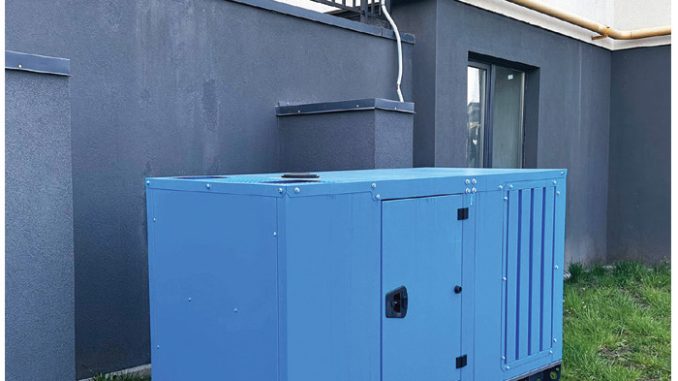
India’s growing industrialisation, expanding digital economy and rising infrastructure investments are driving the demand for reliable and uninterrupted power. Manufacturing facilities, commercial establishments, healthcare institutions, data centres and critical infrastructure increasingly depend on continuous electricity to ensure operational continuity. Businesses are investing in advanced backup power solutions that offer reliability and improved efficiency, as well as intelligent and environmentally sustainable operations.
Regulatory landscape
Environmental considerations and increasingly stringent emission norms are accelerating the adoption of cleaner power generation technologies. Following the implementation of Central Pollution Control Board (CPCB) IV+ emission regulations, gensets in the Indian power sector landscape have evolved rapidly to comply with the tightened emission norms to reduce air pollution. Additionally, companies are aligning their backup power strategies with broader sustainability and environmental, social and governance objectives by opting for low-emission diesel generators, gas-based gensets, advanced engine technologies and intelligent load management systems.
One of the demand drivers for gensets is the fact that despite improvements in grid availability, Tier 2 and Tier 3 cities continue to experience frequent power outages and voltage fluctuations, making diesel genset (DG) sets essential for commercial establishments, healthcare facilities, cold storage units and small industries. India’s expanding construction and real estate sector is another key growth driver. Large-scale investments in highways, airports, metro rail projects, industrial corridors and affordable housing require reliable temporary power during the construction phase, creating sustained demand for medium- and high-capacity generators. In parallel, the rapid expansion of telecom infrastructure and 5G networks in rural areas is increasing the need for dependable off-grid power solutions for telecom towers.
Another growth driver is the rapid growth of data centres, where uninterrupted power supply is mandatory. The electricity demand from data centres is estimated to reach 13.56 GW by 2031-32, further reinforcing the need for reliable backup power solutions. In addition, the increasing adoption of generator leasing models among micro, small and medium enterprises is expected to create new opportunities for DG manufacturers and service providers. As data centres become increasingly critical to sectors such as banking, healthcare, e-commerce and telecommunications, ensuring uninterrupted power supply has become essential. Even a brief power outage can disrupt operations, compromise data integrity, interrupt customer services and result in significant financial and reputational losses. Therefore, reliable backup power systems are a key component of modern data centre infrastructure. Diesel gensets remain the preferred backup power solution due to their high reliability, rapid start-up capability and ability to deliver continuous power during extended outages. Unlike battery-based or renewable energy systems, diesel gensets are not dependent on weather conditions or limited storage capacity.
Beyond emergency backup, diesel gensets also support operations during planned maintenance, grid disturbances and periods of peak electricity demand, ensuring uninterrupted service. Although diesel systems involve higher fuel costs, they offer long service life, proven performance, readily available fuel and relatively low maintenance requirements, making them a cost-effective solution over the long term. By maintaining uninterrupted operation of critical IT and security systems, diesel gensets help protect sensitive data, minimise downtime and ensure business continuity. As digital infrastructure continues to expand, diesel gensets remain an integral part of resilient and reliable data centre power strategies.
Emerging trends
Technological improvements are supporting the growth of the diesel engine and genset market. Modern DG sets equipped with electronic fuel injection, advanced emission-control systems and IoT-enabled remote monitoring offer higher fuel efficiency, lower emissions and predictive maintenance capabilities, making them increasingly attractive to end users.
Digitalisation: A key trend reshaping the power backup segment is the increasing adoption of smart, connected generator systems. Conventional diesel gensets are evolving into intelligent assets equipped with remote monitoring, real-time performance analytics, predictive maintenance capabilities and automated reporting. These digital features enable operators to monitor equipment health, optimise fuel consumption and identify potential faults before they result in failures, thereby improving asset utilisation and reducing downtime. Generator manufacturers are increasingly integrating advanced control and monitoring technologies into their product offerings to support data-driven power management.
Fuel efficiency: With fuel accounting for a significant share of operating costs, customers are placing greater emphasis on fuel-efficient backup power solutions. This trend is encouraging manufacturers to develop more efficient engines, optimise combustion technologies and improve generator designs to deliver higher operational efficiency.
Hybrid power systems: The future of backup power is expected to be characterised by hybrid energy systems that integrate multiple power sources, including diesel gensets, gas-based generators, solar photovoltaic systems, battery energy storage and grid supply. Such configurations improve energy resilience, while reducing fuel consumption and emissions. Hybrid systems are particularly suited for remote industrial facilities and regions with weak grid connectivity, where they can ensure reliable power, while lowering operating costs and environmental impact.
Predictive maintenance: Maintenance strategies are also undergoing significant transformation. Instead of relying solely on periodic servicing, operators are increasingly adopting predictive maintenance approaches that utilise real-time operating data to detect anomalies and anticipate component failures. This helps reduce unplanned outages, extend equipment life, lower maintenance costs and improve the overall system reliability. As digital technologies become more accessible, predictive maintenance is expected to become a standard feature across industrial backup power installations.
Energy-saving measures for DG sets
To improve DG set efficiency, a combination of proper operation, regular maintenance and energy-saving measures is being implemented by consumers. Maintaining steady load conditions, while avoiding load fluctuations, phase imbalances and harmonic loads, helps optimise performance and reduce fuel consumption. The Bureau of Energy Efficiency (BEE) recommends that intake air must remain clean, cool and dust-free, with improved air filtration systems, and for large DG sets operating in hot and dry conditions, the use of air washers further improves combustion efficiency. Proper fuel storage, handling and preparation in line with manufacturers’ recommendations, together with the use of suitable fuel additives, help maintain fuel quality and optimise engine performance. Regular calibration of fuel injection pumps and strict adherence to maintenance schedules are essential for sustaining efficiency and reliability. For DG sets operating as baseload units, waste heat recovery systems can be deployed to utilise exhaust gases and jacket cooling water for steam generation, refrigeration or vapour absorption cooling, thereby improving the overall energy efficiency. Fuel costs can also be reduced through partial substitution of diesel with biomass gas, provided adequate tar removal systems are in place to protect the engine life. In facilities with multiple DG sets, parallel operation can improve loading patterns and fuel economy. Further, periodic field performance trials assess operational efficiency, identify maintenance requirements and support continuous performance optimisation.
Economics of DG sets
From a cost perspective, diesel gensets continue to be preferred because of their relatively low upfront investment, quick installation and dependable operation during power outages. Capital costs account for only about 6-7 per cent of a genset’s lifetime expenditure, while fuel represents nearly 75-80 per cent of the total operating cost, making fuel efficiency the most critical determinant of life cycle economics. According to the Petroleum Planning and Analysis Cell, the retail selling price of diesel in Delhi was Rs 95.20 per litre in July 2026 as against Rs 87.76 per litre July 2025, marking an 8.4 per cent increase. This growth in the price of diesel is attributed to increasing international crude oil prices. However, fluctuations in diesel prices expose users to significant operating cost volatility, particularly for sectors with high generator utilisation.
Although CPCB IV+ emission norms have increased equipment prices by 20-40 per cent due to advanced emission control technologies, these systems deliver improved engine performance and lower fuel consumption, partially offsetting the higher initial investment. Electricity generation from diesel gensets typically costs Rs 25-40 per kWh, considerably higher than grid electricity and gas-based generation. As a result, diesel gensets are primarily used for backup power rather than continuous operation. Nevertheless, for sectors where uninterrupted power is essential, such as healthcare, data centres, telecom and manufacturing, the economic losses associated with power interruptions often outweigh the higher operating costs of gensets, sustaining their adoption despite the availability of alternative power solutions.
The way forward
As power requirements continue to evolve, businesses are evaluating backup power systems based on a broader set of parameters beyond installed capacity. Factors such as fuel efficiency, emissions compliance, scalability, digital monitoring capabilities, after-sales service and the total cost of ownership are becoming increasingly important in investment decisions. Going forward, the power backup market is expected to be driven by intelligent, efficient and sustainable solutions that enhance operational resilience, while supporting long-term business growth. Manufacturers that combine reliable equipment with digital capabilities and cleaner technologies are better positioned to meet the evolving requirements of India’s industrial and commercial sectors.
Akanksha Chandrakar


