 By Balaram Saha, Deputy General Manager, Strategy & Analytics Centre of Excellence, CESC
CESC Limited operates an integrated power business spanning mining, thermal generation, renewable energy and distribution. Its thermal portfolio comprises around 2.2 GW of operational capacity across three plants. The company is also developing around 3.2 GW of renewable energy capacity by 2028-29 in phase – 1. On the distribution side, CESC operates in Kolkata, Noida, Chandigarh, Kota, Bikaner, Bharatpur and Malegaon, serving more than 4.9 million consumers.
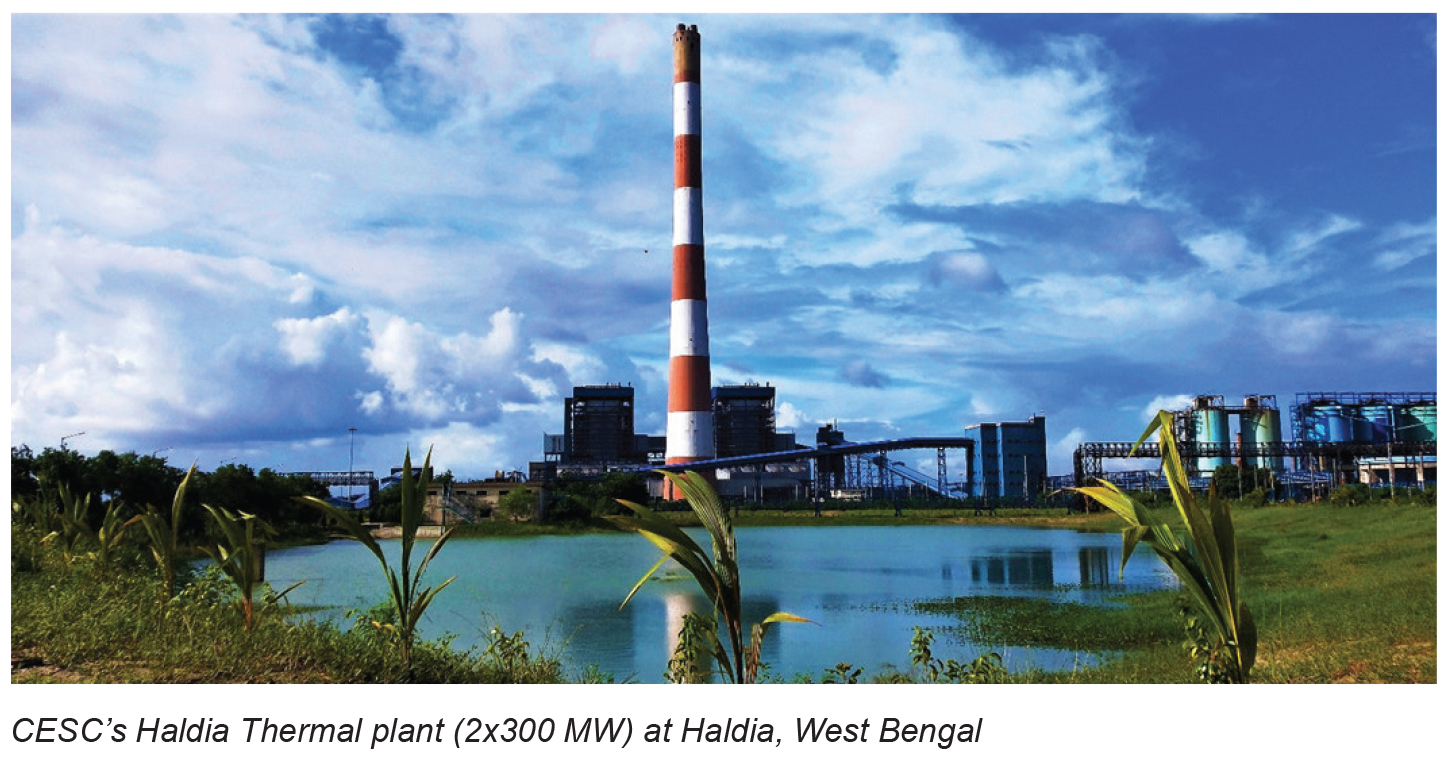
The company’s thermal generation portfolio includes the Budge Budge generating station (3×250 MW) and Haldia Energy Limited (2×300 MW) in West Bengal, and Dhariwal Infrastructure Limited (2×300 MW) in Maharashtra. With operations spread across multiple locations, CESC identified the need for a common data platform to enable a single, real-time view of plant performance.
Earlier, data was spread across distributed control systems, supervisory control and data acquisition, programmable logic controllers and other plant systems. This made an integrated view difficult. Much of the analysis of plant parameters was also carried out on the following day, resulting in a loss of real-time visibility.
The need for faster analysis has also increased as thermal plants operate under more dynamic conditions due to the penetration of renewable energy. At the same time, equipment degradation needs to be identified early to avoid unnecessary trips, derating and maintenance. CESC is therefore using centralised monitoring and artificial intelligence (AI)-based models for equipment health, performance optimisation, deviation monitoring and diagnostic analytics.
Digitalisation in CESC
To address the data challenge, CESC has connected its plants to a centralised monitoring system in Kolkata. The company uses the AVEVA PI System to collect plant data and bring it on to a common platform. The data is then visualised through dashboards and used for analytics, notifications and reporting. The system brings together data from various sources and supports a common data lake for the development of AI-based models.
To drive this initiative, CESC has established an analytics centre of excellence (ACOE), known as SAMARTH. It comprises plant-level teams as well as central corporate teams. Each plant has a digital champion and digital evangelists who work on tools and models for performance and reliability improvement. The corporate ACOE, meanwhile, modifies models based on plant requirements, evaluates new technologies and works with stations to develop integrated solutions.
AI in thermal power plants
CESC is using AI to improve performance and reliability. For a regulated business, improvement of key operational parameter is most necessary. Heat rate and auxiliary power consumption (APC) are two major components of this improvement KPI. The company has therefore focused its AI applications on heat rate and APC optimisation. The performance models cover heat rate, combustion, APC, load despatch and condenser cycle optimisation. At the same time, AI is being used for equipment health indexing, alert-based systems, remaining useful life assessment and ramp-up and run-down compliance.
CESC has also linked the models with failure mode and effects analysis (FMEA). When the system detects a failure mode or performance deviation from design values or expected performance, it provides standardised corrective actions. This gives operators consistent guidance while retaining their judgement. Some of the AI-based models developed by CESC are listed below.
- APC tracking model: APC is a key area for optimisation because even small improvements can generate significant savings. However, maintaining efficiency is difficult under changing load and environmental conditions. CESC has therefore developed an in-house AI-based APC prediction model using the TensorFlow deep learning algorithm. The model uses ambient temperature, humidity, plant load factor and specific coal consumption as inputs. It analyses historical data to identify the best APC under comparable conditions. The default lookback period is 90 days and can also be customised. During operation, actual APC is compared with predicted and best APC under similar conditions. If APC is higher than the predicted level, it identifies equipment contributing to the gap. FMEA-based analysis then helps identify possible causes and suggests corrective action.
- Heat rate performance model: CESC has developed a live heat and mass balance diagram to monitor thermodynamic performance. The model compares actual parameters with design values and tracks deviations in real time. Each parameter has a defined limit, and an alert is generated when the deviation crosses it. This reduces the monitoring burden. Instead of checking 30-40 parameters continuously, the operator can focus on those that have crossed their limits. A live heat rate deviation waterfall also shows sources of losses, such as vacuum and air preheater losses. The AI model then identifies the likely root cause and suggests corrective action.
- HPH performance model: The high-pressure heater (HPH) health and performance model monitors HP heaters in real time. It tracks temperature gain, terminal temperature difference and drain cooler approach (DCA), and compares them with the design values. The model provides individual equipment health scores and an overall health index. A lower score can indicate that a parameter such as DCA is outside the desired range. Operators can identify which heater needs attention and access corrective actions. This supports early detection of degradation and helps improve feedwater heating efficiency and turbine cycle performance.
- Boiler efficiency model: The boiler efficiency model monitors key sections of the boiler, including the economiser, superheater and reheater. Each section has an expected temperature gain for a given operating condition. When actual gain deviates from this expected level, the model generates an alert. For instance, if an economiser should achieve a 90 °C temperature gain but reaches 85 °C, the model can indicate an efficiency issue. This information is linked with the soot-blowing model to suggest whether soot blowing may be required in the relevant zone.
- Start-up curve analytics model: CESC is also using AI to improve unit start-ups. Separate models have been developed for cold, warm and hot start-ups using historical data representing the best available performance. During an actual start-up, the operator can compare the live curve with the expected trajectory. The model identifies deviations such as delays, incorrect operating steps and higher-than-expected oil consumption. It also shows the deviation from the predicted best performance. This allows operators to take corrective action while the startup is in progress. The objective is to reduce oil consumption, limit thermal stress and bring the start-up closer to the best or design performance.
 PPE detection: AI is also used for personal protective equipment (PPE) detection to improve safety. The system can identify violations such as workers without helmets or gloves and ash-handling trucks operating without the required cover. Alerts are generated for such violations, along with details such as the truck number, and the person or contractor involved. This allows station heads to take timely corrective action.
- Other applications: CESC is extending AI and analytics to other applications. The merit order despatch toolkit supports optimal allocation of station demand across boiler, turbine and generator units. Load forecasting models support generation planning and power procurement. Other digital tools include the coal mill toolkit, which monitors the mill window and mill effectiveness index to detect and correct subpar mill performance. Further, the oil planning toolkit assesses boiler conditions during start-up and suggests the ideal activity-level secondary fuel consumption. The boiler heat-pickup tool monitors heat pickup across different boiler zones. Furthermore, the coal-ranking tool dynamically assesses mines based on quantity, quality and landed cost and uses this information to suggest optimal coal lifting amounts and minimise coal cost. These tools extend digitalisation into operational and commercial decisions.
Challenges in AI adoption
Despite its benefits, AI adoption presents data, technical, organisational and cybersecurity challenges. Data quality is a key concern, particularly when multiple parameters need to be correctly aligned. Incomplete historical records can also affect model performance. For a 130-year-old company such as CESC, integrating legacy systems with digital tools adds further complexity. Model accuracy and reliability are equally important before outputs can support operational decisions.
Greater digital connectivity also increases cybersecurity risks and the need for stronger safeguards.
Nevertheless, digitalisation can deliver significant operational gains for thermal power plants. Notably, with the help of these AI-based models, CESC’s Haldia Energy plant achieved almost more than 365 days without tripping. This highlights the potential of digital adoption, process excellence, AI, analytics and thermodynamic models to improve plant performance and reliability.