
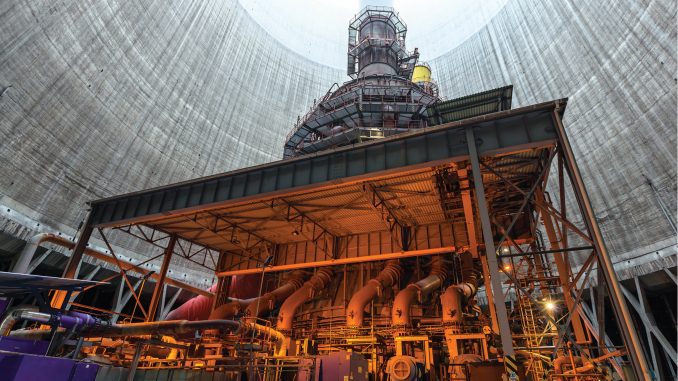
Ensuring effective emission control in coal-based thermal power plants (TPPs) is essential to facilitate a seamless energy transition in India. Despite the rapid growth of renewable energy capacity, coal-based plants are expected to play a crucial role in providing grid stability in the near to medium term, at least until energy storage technology is commercially scaled up. It is imperative that these plants operate in an environmentally responsible manner until they are gradually phased out. However, the deployment of emission control equipment in TPPs has been sluggish, even eight years after the Ministry of Environment, Forest and Climate Change (MoEFCC) revised its norms in 2015. The deadlines for meeting these norms have been extended multiple times, initially from 2017 to 2022, then to 2025, and now, finally, to 2027.
Emission norms
In December 2015, the MoEFCC issued revised emission norms for particulate matter (PM), sulphur dioxide (SO2) and oxides of nitrogen for TPPs. Initially, TPPs were required to install emission control systems by December 2017. However, the deadline has been extended several times. Most recently, in September 2022, the MoEFCC extended the deadline for TPPs to reduce sulphur emissions by an additional two years. Depending on their location, TPPs now have until December 2026 to comply with the emission norms. For coal-based units falling under Category A, the deadline has been extended from December 31, 2022, to December 31, 2024. Similarly, for TPP units under Category B, the deadline has been extended from December 31, 2023, to December 31, 2025. For TPPs falling under Category C, the deadline has been extended from December 31, 2024, to December 31, 2026. Furthermore, according to the new rules, non-retiring TPPs that operate in a non-compliant manner beyond the specified timeline will be subject to environmental compensation. The compensation rates are set at Re 0.20 per unit for a duration of 0-180 days, Re 0.30 per unit for 181-365 days, and Re 0.40 per unit for 366 days and beyond.
With regard to NOx norms, power plants commissioned between 2003 and 2016 were previously required to cap their NOx emissions at 300 milligram per cubic metre (mg per Nm3). This has now been raised to 450 mg per Nm3. For plants commissioned from 2017 onwards, the limit for NOx emissions has been set at 100 mg per Nm3. For older plants commissioned prior to December 2003, the NOx limit has been set at 600 mg per Nm3. As per the MoEFCC’s notification in March 2021, the NOx standards are to be met by the specified timelines – December 2022, December 2023 and December 2024 for Categories A, B and C respectively. Any deviation from these norms beyond the prescribed timelines will result in the levy of emission compensation. The PM emission standards in the revised norms are also based on the installation dates of the plants. A limit of 100 mg per Nm3 has been set for plants commissioned till December 31, 2003; while for plants commissioned between January 1, 2004, and December 31, 2016, it is 50 mg per Nm3; followed by 30 mg per Nm3 for plants commissioned from January 1, 2017 onwards.
Progress update
FGD systems have been planned for 600 units aggregating 211.52 GW capacity. According to CEA data, as of October 2023, FGDs have been commissioned and are operational for 24 units with a total capacity of 10,600 MW. Meanwhile, bids have been awarded for 227 units, aggregating 102,960 MW in capacity. Sector-wise, bids have been awarded for 133 units in the central sector, 48 in the state sector and 46 in the private sector. Additionally, a notice inviting tender has been issued for 25,895 MW of capacity, spanning 89 units.
To curb NOx emissions from TPPs and meet regulatory guidelines, plant operators are increasingly installing emission control technologies such as selective catalytic reduction and selective non-catalytic reduction. Electrostatic precipitators (ESPs) are the most commonly used PM emission control equipment in coal-based TPPs. They specialise in the removal of PM by electrically charging the ash particles in a flue gas stream. Given their high collection efficiency of over 99.99 per cent for a particle range of 0.01-100 micrometres, most power plants in the country have already installed ESPs. However, ESPs do not work well for fly ash with high electrical resistivity as it limits their collection efficiency.
Possible solutions
In response to concerns about greenhouse gas emissions and their impact on climate change, the industry has been exploring various strategies to mitigate emissions while maintaining efficient power generation.
Operation and maintenance (O&M) practices: Effective tracking of the operating parameters of power plants is useful for the early discovery of deviations and flaws in power plant performance. New-age technologies such as data analytics, internet of things, machine learning and artificial intelligence are useful in identifying these deviations in performance. These solutions minimise energy losses, increase cycle efficiency, limit unplanned interruptions, eliminate unnecessary preventive maintenance and improve the overall plant performance. With more efficient O&M practices, power plants can generate more electricity while utilising less coal for each unit of power produced. This will result in minimal production of undesirable emissions. Efficient O&M of old and ineffective power facilities improves the efficiency of power generation and gradually reduces CO2 emissions.
Carbon capture and storage (CCS): CCS involves capturing CO2 emissions from industrial processes such as power generation, and storing them underground to prevent their release into the atmosphere. The process typically involves capturing CO2 from the combustion flue gases before they are emitted into the atmosphere. This captured CO2 can then be transported via pipelines and injected into geological formations, where it is stored securely underground.
Biomass cofiring: This is another strategy that TPPs are employing to reduce emissions while diversifying their fuel sources. Biomass, such as wood pellets, agricultural residues and energy crops, can be combusted alongside traditional fossil fuels in existing power plant boilers. The combustion of biomass releases CO2, but unlike fossil fuels, biomass is considered carbon-neutral because the CO2 released during combustion is offset by the CO2 absorbed by the plants during photosynthesis. As a result, biomass cofiring can significantly reduce net CO2 emissions from TPPs compared to using fossil fuels alone. In addition to reducing emissions, biomass cofiring offers other environmental benefits, such as promoting sustainable land management practices, reducing dependence on finite fossil fuel resources, and supporting rural economies through the production and supply of biomass feedstock.
Digital monitoring: Digital technologies such as sensors, data analytics and machine learning algorithms enable real-time monitoring of key parameters, such as pollutant concentrations, combustion efficiency and plant performance. By continuously monitoring emissions and operational parameters, TPPs can identify inefficiencies, optimise combustion processes and minimise emissions. For example, sensors installed throughout a plant can detect deviations from optimal operating conditions and trigger automated adjustments to improve efficiency and reduce emissions. Furthermore, digital monitoring solutions facilitate compliance with environmental regulations by providing accurate and timely data for reporting purposes.
Conclusion
To conclude, TPPs have been sluggish in complying with emission standards. As such, the new deadline extension has come as a huge relief for developers. However, strict adherence to the implementation schedule is required, especially in light of India’s commitment to net zero emissions. Further, as technology continues to advance, the adoption of emission reduction measures is expected to accelerate, contributing to a cleaner and more sustainable energy future. Overall, efficient and well-defined O&M practices coupled with emission control technology will lead to a significant reduction in TPP emissions.