
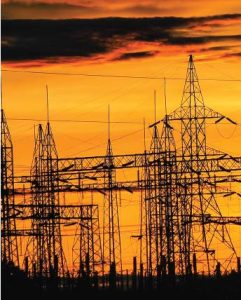
 Power transmission infrastructure is fundamental to the growth of the power sector. The power transmission sector faces a multifaceted challenge: ensuring reliable and efficient electricity delivery amidst growing demand, renewable energy integration and ageing infrastructure. To tackle this, effective asset management is crucial, and the sector is witnessing a surge in innovative approaches and technological advancements. Effectively overseeing power transmission assets throughout their lifespan is a multifaceted and crucial responsibility, necessitating meticulous planning, continuous monitoring, regular maintenance and strategic replacement efforts to ensure reliability, safety, efficiency and affordability. Asset management policies and plans provide a framework for the maintenance and technical management of tangible and intangible assets. Digital transformation, re-engineering processes and technological upgradation are needed for advanced asset management.
Power Grid Corporation of India Limited (Powergrid) has defined its asset management policy, including the key principles it will apply to its assets to achieve its organisational objectives and corporate vision, mission and values. This policy provides the framework for the implementation of asset management within the organisation, as well as associated activities and decision-making criteria. Powergrid’s Strategic Asset Management Plan is a comprehensive document covering all aspects of Powergrid’s transmission asset management domain, including technical management of assets such as towers, conductors, transformers, reactors and switchyard equipment. In addition, it extends beyond the physical infrastructure, embracing the management of intangible assets such as people, data, documents, policies, finances and IT tools. The key pillars of Powergrid’s asset management strategy are digital transformation, re-engineering processes, technology upgradation and human capital deployment.
Digital transformation
The digitalisation initiative seeks to transition operations from analogue to digital by leveraging SAP technology for enterprise asset management, implementing remote acquisition systems at the National Transmission Asset Management Centre (NTAMC), deploying digital substations, utilising drones for remote patrolling of towers and substations, and employing geographic information system mapping for asset management. The NTAMC is a centre for the remote monitoring and operation of transmission systems on a real-time basis. Powergrid has successfully implemented remote operation from the NTAMC, and has introduced the concept of digital workers through augmented reality and virtual reality-based headgear for operations and maintenance (O&M) tasks. Furthermore, Asset Management through Artificial Intelligence in Transmission or AMRIT, a defect identification tool, has been seamlessly integrated with the Powergrid Digital Application for Routine Patrolling and Assessment of Network (PG-DARPAN) for automated detection of defects in transmission lines.
Digitalising asset management processes using performance data can enhance operational efficiencies. The Powergrid Asset Life Management System (PALMS 2.0) is a software tool for indexing asset health and providing real-time monitoring of transformer and reactor conditions. With the incorporation of circuit breaker details in this tool, maintenance processes for circuit breakers have been streamlined. PG-DARPAN enables asset controllers to monitor transmission lines and promptly address issues as they arise. Robotic inspection of substations has proven effective in reducing the accident and injury risks associated with manual tasks. Meanwhile, UDAAN (Unique Digital Analysis of Assets and Network) offers a comprehensive dashboard, providing a geospatial overview of key performance indicators such as inventory, transformer and reactor health; operational data such as tripping breakdowns; and alerts for overloaded transmission lines and transformers.
Re-engineering of processes
Re-engineering of processes is imperative for reducing network intricacy, adjusting to regulatory changes, prioritising cost efficiency and reliability, embracing technological advancements, meeting heightened stakeholder demands for enhanced service standards and sustainability, and handling ageing infrastructure. Achieving this involves implementing reliability-centred inspection and maintenance, emphasising quality over quantity, and fostering self-reliance through Atmanirbhar O&M. Additionally, leveraging digital tools and analytics, optimising inventory, standardising resilience and continuity plans, proactively managing disasters, and adhering to ISO 55001-compliant practices can further facilitate process revamping.
Reliability-centred maintenance (RCM) tailors the maintenance plan for each asset based on its criticality and significance to grid operations. Failure mode analysis provides insights that help adjust maintenance approaches, thereby preventing future failures. This method acts as both a management tool and a feedback loop for maintenance strategies. The equipment most suitable for this approach includes high voltage transformers, circuit breakers and transmission lines. These assets are crucial for operations; have limited redundancy and high potential impact on operational costs, safety and the environment; and are expected to have long operational lifespans. They may require the evolution of maintenance plans over time, and have significant implications for grid operations if they fail. RCM enables real-time health indexing and risk impact mapping. It facilitates lower maintenance costs, inventory optimisation, optimised resource planning, and data-driven decision-making.
Technology upgradation
Technology upgradation encompasses upgraded tower designs; high temperature, low sag (HTLS) conductors; and improved line arrestors, among other changes that contribute to a more robust transmission network. The utilisation of composite tower designs presents numerous advantages, including a superior strength-to-weight ratio and enhanced resilience against corrosion and extreme weather conditions compared to traditional steel towers. Additionally, implementing hot line maintenance practices and utilising travelling wave fault locators will expedite fault detection and repair, minimising downtime. Hot line maintenance allows the maintenance of critical transmission line components in their live state, significantly reducing outages compared to traditional methods that require de-energisation. Additionally, the Emergency Restoration System complements this efficiency by facilitating swift restoration in case of failure. Optimising substation operations involves the incorporation of resin-impregnated paper bushings in transformers and reactors to improve insulation and reliability. The deployment of a comprehensive network of sensors across transmission lines, substations and transformers facilitates the real-time collection of critical data pertaining to vital parameters such as temperature, vibration and current flow. This data provides invaluable insights into the health of assets and potential issues that may arise. The implementation of HTLS conductors offers the ability to handle higher current loads without excessive sagging, thereby increasing transmission capacity without necessitating the construction of new infrastructure.
Furthermore, the integration of multi terminal high voltage direct current (MT-HVDC) systems, controlled switching devices and advanced diagnostic tools will enhance the overall substation efficiency, and enable proactive maintenance strategies. MT-HVDC systems are particularly beneficial for the efficient transmission of power over long distances, especially when integrating renewable energy sources located far from load centres. The consideration of advanced insulator material such as composite and polymer insulators presents an opportunity for improved performance and reduced maintenance requirements compared to traditional porcelain insulators. The utilisation of drone-based inspection for remote and inaccessible areas offers significant advantages for real-time monitoring of equipment. Additionally, thermal imaging cameras can effectively detect overheating components, while dissolved gas analysis aids in the early identification of transformer faults. Leveraging Light Detection and Ranging technology allows for the creation of detailed three-dimensional models of transmission lines, facilitating comprehensive inspection and efficient vegetation management practices.
The deployment of static synchronous compensators empowers grid stability improvement measures through the dynamic management of reactive power flow, which is particularly advantageous when dealing with the inherent variability of renewable energy sources. The implementation of ester-based transformer fluids offers superior fire safety characteristics and biodegradability compared to conventional mineral oil-based fluids.
Powergrid employs sulphur hexafluoride (SF6) gas, a potent greenhouse gas, as an insulating and arc extinguishing medium in its circuit breakers and gas-insulated substations. It has been exploring ways to replace this gas in circuit breakers with environmentally sustainable gases.
Human capital deployment
Powergrid is undertaking capacity development through skill building and has constituted specialised maintenance groups for this. The company is undertaking documentation of best practices on the PRAGYAAN portal, and sharing of its learnings in various national and international forums. It is also running a training programme, certified by various OEMs, on different aspects of equipment maintenance. Other practices for human capital deployment include a monthly regional benchmarking scheme, a best employee of the month scheme, and competency mapping and job description cards.
Conclusion
Net-net, by embracing numerous technological advancements in equipment and processes, the power transmission sector can significantly enhance its infrastructure, optimise operations, and ensure a more reliable and efficient grid. This will support the growing demand for electricity, and pave the way for a more sustainable and resilient power transmission system that can effectively integrate renewable energy sources.
Based on a presentation by Kuleshwar Sahu, Chief General Manager, Corporate Centre-Asset Management Department, Power Grid Corporation of India Limited at a recent Power Line conference.