
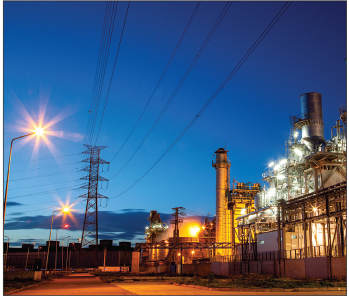
 Renovation and modernisation (R&M) of ageing power plants is a cost-effective solution compared to adding new capacity to meet increasing power demand while addressing the challenges associated with integrating a significant proportion of non-fossil fuel capacity by 2030. It optimises the operation of power plants, and helps mitigate the shortage of installed capacity in India. However, achieving the goal of integrating 500 GW of non-fossil fuel capacity poses both technical and financial challenges, along with the need for compliance with prevailing environmental standards and utilisation capabilities. To address these challenges, the Central Electricity Authority (CEA) revised the R&M guidelines in 2020 to accommodate the operational changes necessary for flexibilisation and compliance with emission norms in old thermal power plants (TPPs). Yet, new challenges are arising, such as ensuring flexible operation of thermal units, meeting environmental standards, establishing viable business models for R&M projects, adhering to standard bidding guidelines, encountering technical complexities and dealing with delays in completing R&M activities.
The aim of R&M of power generating units is to furnish them with upgraded equipment, components and systems, thereby enhancing their operational performance, reliability and availability to either meet or surpass their original design values. This includes reducing maintenance requirements, facilitating easier maintenance, improving efficiency, complying with the latest environmental standards, enabling flexibility in generation, achieving compatibility for biomass co-firing and reaching the reduced technical minimum. Power plants undergoing R&M are equipped with cutting-edge technological solutions, aimed at enhancing their performance, sustaining generation output and addressing operational challenges stemming from design flaws, ageing equipment and shifts in policy and regulatory frameworks. Additionally, power plants can operate effectively beyond their originally designated lifespans after undergoing life extension (LE) work.
R&M/LE has become necessary due to the ageing of plant infrastructure, changes in policy and technological obsolescence. Typically, plant equipment is engineered with a fatigue life expectancy of 25-30 years. High temperatures and wear and tear during operations induce fatigue and creep in the equipment. Occasionally, operational stresses such as frequent temperature and pressure fluctuations, full-load tripping, and frequent start-and-stop cycles can prematurely weaken the equipment. To ensure dependable plant operations, it becomes crucial to assess the remaining useful life of the plant after 20 years of operation as a proactive measure against critical failures. This assessment is conducted through residual life assessment (RLA) studies, involving non-destructive and destructive tests of plant equipment to gauge their future performance. If the plant condition demands it, RLA may even be conducted after 15 years or 100,000 hours of operation.
Progress so far and R&M potential
During 2022-23, Unit 13 (200 MW) of the Obra TPS and Unit 6 (110 MW) of the Barauni TPS underwent R&M/LE works under the CEA’s R&M programme. During 2017-22, a total capacity of 1,197 MW underwent R&M/LE works in the state and central sectors. As per the CEA’s phased plan, around 148 old units with a total capacity of 38,150 MW have been earmarked for R&M/LE works. As per Phase IA of the plan, all units over 35 years old are proposed to undergo R&M/LE works by June 2026, while under Phase IB of the plan, all units between 30 and 35 years old are proposed to undergo R&M/LE works by June 2028. In Phase II, thermal units between 25 and 30 years old are to undergo R&M by December 2030, while units between 20 and 25 years old are to complete the process by June 2033.
Under the CEA R&M programme for hydroelectric plants (HEPs), R&M work at 118 HEPs with an aggregate installed capacity of 22,634.7 MW was completed by the end of 2017-22, and a total benefit of 4,016 MW was accrued through LE, uprating and restoration. Of these, 26 plants belong to the Centre and the remaining 92 to various states. During 2017-22, renovation, modernisation, uprating and LE (RMU&LE) work at 14 HEPs (five central sector and nine state sector) with an aggregate capacity of 2,023.2 MW was completed, yielding a cumulative benefit of 848.68 MW. During 2022-27, RMU&LE work at 64 HEPs with an aggregate capacity of 11,718.1 MW is planned for completion, which is expected to yield a cumulative benefit of 9,323.8 MW. Of these 64 projects, eight in the state sector and one in the central sector, with an aggregate installed capacity of 2,249.8 MW, have been completed as of September 2023. Meanwhile, during 2027-32, RMU&LE work at 21 HEPs (three central sector and 18 state sector) with an aggregate capacity of 2,879.2 MW is planned for completion.
Growth drivers
Given the substantial costs associated with establishing new plants, and the escalating environmental apprehensions, maximising generation from existing power stations through R&M/LE is imperative. R&M of ageing power plants stands as a financially viable approach to bolstering power generation. R&M initiatives typically boast shorter implementation periods compared to the construction of new plants, and involve minimal rehabilitation and resettlement concerns. Within TPPs, R&M endeavours to enhance heat rate, diminish auxiliary consumption, decrease emissions and ensure optimal fuel utilisation.
A significant impetus for R&M has come from the stringent emission standards introduced by the Ministry of Environment, Forest and Climate Change in December 2015. Compliance with these norms necessitates the installation/retrofitting of various technology solutions such as electrostatic precipitators for particulate matter norms, flue gas desulphurisation systems for sulphur oxide emission norms, and selective non-catalytic reduction and selective catalytic reduction systems for nitrogen oxide emissions. Conducting R&M on emission control equipment also contributes to curbing emission levels.
Another emerging application of R&M involves the flexibilisation of TPPs. As renewable energy penetration increases, ensuring grid stability and security becomes increasingly challenging. A robust grid necessitates continuous balancing of load and generation. Flexible operation demands frequent and rapid adjustments in power plant capacity, including quick ramp-up and ramp-down processes. While power plants employing supercritical technology offer operational flexibility, older power plants often face significant performance degradation during flexible operations. Optimal performance can be maintained during flexible operation by undertaking R&M of plant equipment. This may entail the installation of advanced burners and indirect firing systems in boilers; utilisation of special alloys to enhance material strength; and other measures.
In the hydropower segment, the advantages of short start-up times, clean power generation, long plant lifespans, support for peak demand and low long-term marginal generation costs make HEPs an attractive power generation source. However, establishing new HEPs entails challenges such as rehabilitation and resettlement issues, delays in land acquisition, and clearance hurdles. Additionally, in regions such as the Himalayas, sediment management poses a significant challenge for hydropower plants, particularly during the monsoon season. As such, preserving the operational efficiency and prolonging the lifespan of existing HEPs are feasible alternatives.
Issues and challenges
One of the primary challenges encountered in the R&M of power plants is project execution delays. The entire process, encompassing feasibility studies, tendering, contract awarding, material procurement and project commissioning, often experiences setbacks. Frequently, upon commencing R&M/LE work on a plant/unit, new defects and damaged equipment are discovered, necessitating additional materials and consequently prolonging timelines and escalating costs. Unfortunately, these technical surprises are not typically addressed adequately in the contract documentation.
Another significant impediment to the growth of R&M in India is the necessity of shutting down power generating units for extended periods, typically six to eight months. Many utilities are hesitant to undergo such shutdowns due to the associated loss of revenue. Additionally, obtaining regulatory clearances for the plant shutdowns required for R&M work is a time-consuming process. Furthermore, there exists a shortage of specialised entities capable of conducting RLA studies for power plants. Defining the scope of work and establishing guarantees also pose considerable challenges in this domain.
With a significant portion of power plants being over 25 years old, there exists a substantial opportunity for enhancing performance through R&M. Some older plants that have undergone R&M have demonstrated commendable performance, surpassing their originally designed economic lifespan. Notable instances of successful R&M interventions on turbines include those conducted at NTPC Limited’s Ramagundam Stage-I (3×200 MW) and Gujarat State Electricity Corporation Limited’s Wanakbori Unit 3 (210 MW). Significant enhancements in turbine heat rate (ranging from 150 to 300 Kcal per kWhr) have been achieved in these stations solely through turbine R&M.
While power plants hold vast potential for R&M initiatives, it is imperative to minimise the gap between technical studies (such as residual life assessment and detailed project report preparation) and the actual commencement of R&M works. This reduction in turnaround time is crucial for attaining desired outcomes. Furthermore, adequate regulatory support is essential to foster R&M activities effectively.
Conclusion
To conclude, the R&M of old power plants offer a cost-effective way to meet increasing energy demand while navigating the challenges associated with environmental standards and technological advancements. Despite significant potential, R&M initiatives face hurdles such as project execution delays and the reluctance of utilities to undergo extended shutdowns. Moving forward, minimising turnaround times and providing regulatory support will be key to realising the full potential of R&M initiatives in enhancing power generation efficiency and sustainability.
Akanksha Chandrakar