
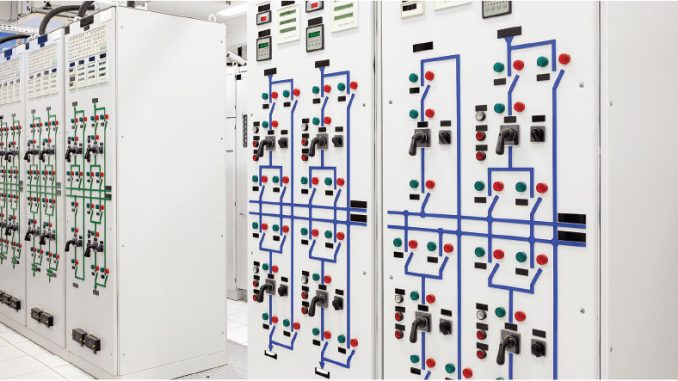
Substations and switchgear are crucial components of a power system. Their effective maintenance ensures reliable power supply and minimises failures to avoid outages and system failure. As the electrical grid becomes more complex, finding the right operations and maintenance (O&M) strategy for substation assets becomes increasingly important. Regular planned inspections, testing and troubleshooting are key to maintaining the correct operation and interaction of all components throughout a plant’s life cycle. The frequency and extent of such a supervision and maintenance depends on factors such as experience, climatic conditions, environment, service conditions and loading patterns.
Over the years, several key maintenance strategies have been developed for the upkeep of substation assets. Time-based maintenance involves performing periodic maintenance according to the manufacturer’s recommended schedule. This approach typically includes providing spare parts and consumables, as well as replacing worn-out components or systems during the substation’s operational life. Condition-based maintenance (CBM) is based on the actual condition of the equipment. This strategy employs intelligent electronic devices, smart sensors and other technologies to continuously monitor the condition of the equipment. The equipment’s status is assessed through online detection of significant operational parameters, which are automatically compared with standard values and performance benchmarks. Another approach is reliability-based maintenance. Substation reliability modelling helps customers understand the risks associated with each component. Reliability-centred maintenance aims to optimse investments by reducing redundant tasks and focusing on components that present higher risks. This method involves a “failure mode and effect analysis” to determine the most effective maintenance strategy for ensuring reliability. The life cycle cost evaluation of this approach is derived from CBM analysis.
The maintenance strategies for switchgear power systems are broadly categorised as preventive, corrective and predictive methods. Preventive maintenance is essential for ensuring the proper system functioning and involves regular annual inspections of components. These components must be tested to guarantee smooth operation as even minor vibrations can cause damage over time. Meanwhile, predictive maintenance methods are employed for condition-based monitoring of switchgear equipment. These methods help determine the maintenance requirement by analysing various parameters, employing different techniques to acquire condition data and understanding the degradation mechanisms that affect switchgear. Consequently, both intrusive and non-intrusive diagnostic tests can be performed on switchgear. These tests should be conducted during commissioning to establish a baseline for future assessments.
O&M solutions and strategies
The substations typically use lead acid batteries for direct current (DC) supply, favouring maintenance-free options. Since the DC system is crucial during emergencies, maintaining the battery system is vital. Cell containers must be kept clean to prevent surface leakage, and any leaks should be promptly fixed. Applying Vaseline or white petroleum jelly on terminals and connectors helps prevent sulphate deposits. It should be ensured that the rubber seals on terminals and cell lids are properly fitted and are replaced if damaged. For flooded cells, the electrolyte should be kept at the correct level by adding distilled water to prevent sulphation and cell damage. For valve regulated lead acid batteries, room temperature should be maintained with air conditioning, as temperature significantly affects battery performance.
Regular inspections are essential for gas-insulated substations (GIS), with monitoring of SF6 gas pressure and quality being critical tasks. Adherence to the manufacturer’s maintenance schedule and instructions for any special tests is imperative. SF6 gas, used in all GIS chambers, must have its pressure and quality constantly monitored to ensure proper insulation properties, with leakage rates not exceeding 0.5 per cent per year as per IEC standards. Pressure variations due to temperature changes and leaks can affect mechanical stress and insulation properties, highlighting the importance of regular SF6 quality and dew point checks.
Gas monitoring, mainly gas density monitoring, is undertaken to ensure an adequate SF6 gas supply and prevent environmental leakage. Partial discharge monitoring is also gaining attention for identifying insulation problems in GIS installations, aiming to maintain a partial discharge-free environment. Online partial discharge monitoring systems, equipped with sensors and data processing platforms, provide real-time data analysis, allowing for immediate action. Offline partial discharge monitoring can be conducted during scheduled outages or maintenance cycles using various technologies such as acoustic, dissolved gas analysis and ultra-high frequency. Accurate interpretation of partial discharge data is crucial for effective maintenance planning.
Preventive maintenance of current transformers (CTs) involves regular visual inspections to check for oil leaks, particularly around cemented joints and secondary terminal boxes, as even minor leaks can expose insulation to moisture. Signs of oil leakage or gas generation in bellows should be monitored, both of which require immediate action. Terminal connections, porcelain surfaces and insulators should be inspected for cracks or dirt. Further, the marshalling and CT terminal boxes should be properly sealed to prevent dust, water and insect ingress, with door gaskets replaced and bolts and latches tightened as necessary. Periodic checks and tightening of secondary terminal connections are recommended as vibrations and climate can loosen them over time. Further, proper alignment of disconnectors, which are switching devices used to safely de-energise parts of an electrical network and provide clear visual indication of whether an electrical connection is open or closed, is crucial for smooth operation. Periodic checks of the limit switches and auxiliary contacts are recommended. Main contacts should be inspected for pitting and smoothed if necessary. Further, it should be ensured that the corona shields are smooth, shining and securely fitted, replacing any damaged rings. Regular lubrication of all moving parts is advised.
The insulators of transformer bushings, circuit breakers, CTs, CVTs and isolators must be cleaned regularly, along with other insulators, to remove salt, dirt and dust build-up in the substation. The cleaning frequency should be determined by the level of pollution in the atmosphere. In areas with higher levels of atmospheric or saline pollution, cleaning should be more frequent, and measures should be taken to protect the insulators from pollution. Certain components of the operating mechanism, constructed from steel, undergo surface treatment to prevent rust. Despite effective rust protection, minor corrosion may develop over time, particularly in highly corrosive environments. To address this, any rust stains should be removed using sandpaper, followed by the application of new rust protection through painting or spraying. In addition, it is crucial to prioritise manufacturer-recommended lubricants, particularly in cold climates below -25°C.
Another effective maintenance strategy adopted in substations is the use of a robust earthing system to safeguard personnel and protect equipment. This entails maintaining low ground impedance, not surpassing 1 ohm for high fault levels and 5 ohms for low fault levels, and ensuring safe step and touch potentials. Achieving this involves burying an earthing mat at an appropriate depth, complemented by ground rods. Substations should also have fire-fighting systems that meet the IS: 1646-1982 standards. Key safety measures include adhering to maintenance schedules, using OEM-supplied parts, and ensuring proper de-energisation and earthing before maintenance. Operators must wear protective gear and use well-maintained tools.
Conclusion
The O&M of substations and switchgear are pivotal for ensuring the reliability, efficiency and longevity of power systems. By transitioning from reactive to proactive maintenance strategies, utilities can significantly reduce unplanned downtime, optimise resource utilisation and extend the lifespan of critical assets. Each component within substations — transformers, disconnectors, batteries, GIS and switchgear — requires tailored maintenance approaches to address specific operational and environmental challenges. Ultimately, an effective O&M strategy not only safeguards the financial investments in substations and switchgear but also enhances the overall business performance by maintaining a stable and reliable power supply. By adhering to best practices and leveraging advanced maintenance technologies, utilities can ensure continuous and efficient operations.