

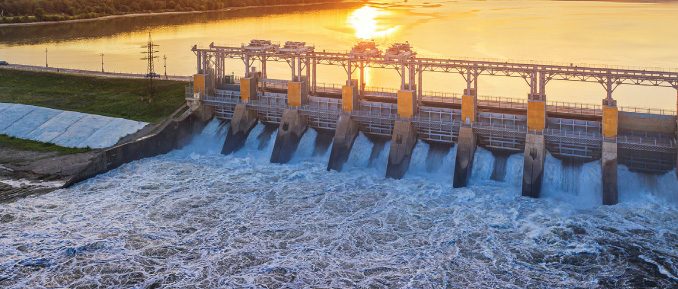
Hydropower, one of the oldest and most reliable renewable energy sources, has seen significant advancements in recent decades, particularly in the area of automation. Traditionally, hydropower plants required substantial human intervention for operation, monitoring and maintenance. However, advancements in control systems, sensors, communication technologies, and data analytics have paved the way for automation in hydroelectric facilities.
Benefits of hydropower plant automation
The automation of hydropower plants offers several advantages, spanning operational efficiency, safety enhancements and bolstered environmental sustainability. Foremost among these benefits is heightened efficiency, as it streamlines plant operations, thereby fine-tuning energy production and curbing wastage. With sophisticated control algorithms dynamically adjusting equipment configurations to match shifting demands, productivity can reach optimised levels.
Additionally, automation significantly contributes to safety protocols by mitigating the necessity for manual interventions in hazardous conditions, thereby curtailing the likelihood of accidents and injuries. Equipped with remote monitoring capabilities, operators can promptly identify and address safety concerns. Another key advantage lies in the area of predictive maintenance, whereby automation facilitates proactive strategies for equipment upkeep. Operators can anticipate potential malfunctions, pre-emptively scheduling maintenance tasks to forestall unplanned downtime and prolong the lifespan of critical assets. Moreover, automation fortifies the environmental credentials of hydropower by augmenting its innate sustainability. Through meticulous optimisation and waste minimisation, automated hydropower plants can mitigate greenhouse gas emissions and diminish environmental impact, further strengthening their status as a clean and renewable energy source.
Moreover, hydropower automation significantly aids in silt management by implementing advanced monitoring and control systems. Silt, a common challenge in hydropower operations, can accumulate in reservoirs and intake structures, leading to reduced efficiency and potential damage to turbines and other equipment. Automation technologies enable real-time monitoring of water quality and sediment levels, allowing operators to anticipate and mitigate siltation issues promptly. Additionally, automated control systems can adjust water flow rates and turbine operations to minimise silt deposition and maximise sediment flushing during periods of high flow. By optimising operational parameters based on data-driven insights, hydropower automation helps to maintain optimal silt levels, ensuring continued efficiency and longevity of the power generation infrastructure.
Key components
In the early days of hydropower generation, operation and control was largely done through manual intervention, with human operators adjusting equipment settings based on real-time observations and limited data. However, the introduction of supervisory control and data acquisition (SCADA) systems marked a significant leap forward in automation. SCADA systems enabled remote monitoring and control of various plant components, empowering operators to oversee operations from a centralised location.
The subsequent integration of programmable logic controllers (PLCs) and distributed control systems (DCS) further advanced automation capabilities, with PLCs automating specific tasks and processes, while DCS provided centralised control over entire plant operations, resulting in improved reliability and efficiency. The emergence of internet of things (IoT) ushered in a new era of automation, as hydropower plants embraced remote monitoring technologies. Sensors scattered throughout the facility collected real-time data on parameters such as water flow, turbine speed, and power output, facilitating predictive maintenance and optimisation of plant performance.
Moreover, the latest frontier in hydropower plant automation involves the implementation of artificial intelligence (AI) and machine learning (ML) algorithms. These cutting-edge technologies can analyse vast amounts of data to optimise plant operations, predict equipment failures, and enhance energy efficiency, further revolutionising the landscape of hydroelectric power generation.
Hydropower plant automation is a sophisticated integration of various components, each intricately designed to enhance the efficiency and performance of the facility. At its core are the control systems, encompassing SCADA, PLCs, and DCSs, which serve as the nerve centre of the operation, overseeing and regulating diverse processes to ensure safe and optimal functioning. Complementing these systems are sensors and instrumentation, which provide real-time data on crucial parameters such as water level, pressure and turbine speed, empowering operators with precise insights for informed decision-making.
Furthermore, remote monitoring and communication technologies enable operators to supervise plant activities remotely, enabling swift responses to operational challenges regardless of location. This seamless communication is facilitated by wireless networks and satellite links, ensuring continuous data flow between remote sites and centralised control centres. Additionally, data analytics tools play a pivotal role, scrutinising vast data sets to identify trends and anomalies, while predictive maintenance algorithms leverage this data to pre-emptively address equipment failures, thereby minimising downtime and reducing maintenance costs. Together, these components not only optimise plant performance but also enhance safety and reliability, ushering in a new era of efficiency and sustainability in hydropower generation.
System-based automation
State-of-the-art automation and control systems play a crucial role in ensuring seamless and secure operation of hydropower plants under all circumstances. Typically, these plants are operated either locally using unit control boards or remotely managed from a central control room or despatch centre. In emergency situations, the system must swiftly restore affected plant components to a predefined safe operating state. This necessitates a flexible system that can easily adapt to existing plant equipment and be divided into independent functional components. An integrated control system for these components must consider both the primary systems and the specific operational regulations within the country and region. It is imperative that all process signals are received and managed without the need for multiple inputs. To enable efficient communication over short and long distances, as well as to facilitate future expansion, adherence to international standards is a must. Cost-effectiveness is paramount, achievable through the utilisation of a unified hardware platform to minimise spare parts inventory and the implementation of integrated functions to reduce maintenance and service requirements. Additionally, the step-by-step expansion and integration of additional plant sections, such as the switchyard or station services, should be straightforward and hassle-free.
Challenges
While hydropower plant automation holds the promise of increased efficiency, safety and environmental sustainability, it also poses several notable challenges and considerations. To list some of these – the heightened connectivity and reliance on digital technologies expose hydropower plants to cybersecurity risks, necessitating robust security measures to safeguard critical infrastructure against potential cyberattacks. Additionally, integrating automation technologies into the existing hydropower plants can be intricate and financially demanding, particularly when retrofitting older facilities, which may require extensive modifications and upgrades to infrastructure and equipment. Furthermore, the human factor remains crucial despite automation, as operators still need to possess the necessary skills to effectively monitor automated systems, interpret data and respond to emergencies, underscoring the importance of human expertise and oversight in ensuring the reliable and safe operation of hydropower plants.
Future outlook
Going forward, hydropower plant automation will witness remarkable growth, driven by the continuous evolution of digital technologies and data analytics. The integration of AI and ML algorithms will revolutionise plant operations by fine-tuning processes, predicting maintenance needs, and optimising energy management with unprecedented efficiency. Moreover, the emergence of digital twin technology will enable operators to create virtual replicas of physical assets and systems, allowing for real-time simulation and optimisation of plant performance. Also, the rise of edge computing platforms promises faster data processing and decision-making by bringing computation closer to data sources, thereby reducing reliance on centralised data centres. It is expected that automation will facilitate the seamless integration of hydropower plants with other renewable energy sources such as solar and wind, fostering the development of hybrid power systems that enhance reliability and stability while advancing sustainability goals. These trends collectively underline a promising future where hydropower plants will operate at peak efficiency, bolstered by cutting-edge automation technologies.
Overall, hydropower plant automation represents a paradigm shift in the way we harness and utilise renewable energy resources. By leveraging advanced technologies such as AI, IoT, and data analytics, automated hydropower plants offer increased efficiency, enhanced safety, and improved environmental sustainability. While challenges such as cybersecurity and integration complexity remain, the ongoing evolution of automation promises to unlock new opportunities for the hydropower sector, paving the way for a more resilient and sustainable energy future.