
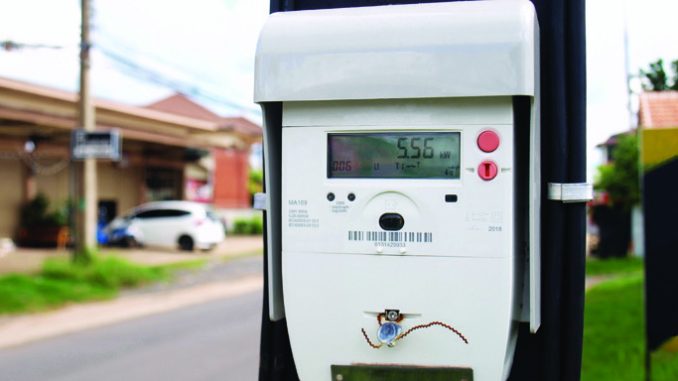
Smart meter testing and measurement play a pivotal role in ensuring the accuracy and reliability of collected data. By rigorously testing these devices, utilities can guarantee that the energy consumption readings provided are precise, which is crucial for both billing and energy management. Accurate meters enhance consumer trust in the system, providing reliable data for billing and eliminating concerns about overcharges or discrepancies. This reliability helps prevent disputes between consumers and utilities regarding energy usage, promoting a more transparent and equitable energy market.
Smart meter testing ensures that the data provided by smart meters is accurate and actionable, enabling consumers to trust the information they receive and use it to adjust their energy consumption. Smart meter testing ensures that these devices meet the stringent standards required for operation. Compliance with these standards is essential to avoid legal issues and ensure that smart meters can operate seamlessly with other components of the grid. By meeting regulatory requirements, utilities can avoid costly fines and penalties, and ensure the interoperability of their systems. This regulatory compliance is crucial for the widespread adoption and success of smart meter technology in the energy sector.
In an era where cyber threats are increasingly prevalent, the security of data collected and transmitted by smart meters is of utmost importance. Rigorous testing can identify potential vulnerabilities in smart meters, ensuring that appropriate security measures are in place to protect against cyberattacks.
Meters standards
The standards introduced by the Bureau of Indian Standards (BIS) cover a variety of parameters to ensure the stability, reliability, interoperability and precision of smart meters. Testing is done as per the IS 16444 Part 1 (2015) Amendment 1 and IS 15959 Part 2 (2015) Amendments 1 and 2 for whole current single-phase and three-phase meters, and IS 16444 Part 2 (2017) and IS 15959 Part 3 (2017) for transformer-operated smart meters. The communicability test is conducted on smart meters as per IS 15959 Parts 2 and 3.
IS 16444 Part 1 was adopted by the BIS in 2015. It encompasses the general requirements and tests for AC static direct-connected watt-hour smart meters Classes 1 and 2. IS 16444 Part 2 was adopted by in 2017 and covers the general requirements and tests for AC static transformer-operated watt-hour and VAR-hour smart meters Classes 0.2S, 0.5S and 1.0S. IS 15959 Parts 1 and 2 were adopted by the BIS in 2011 and 2016 respectively. These standards enable data exchange for electricity meter readings, tariff and load control, and companion specifications for static energy meters.
As per the Central Electricity Authority, the technical specifications of single-phase whole current smart meters and three-phase whole current smart meters should include the measurement of electrical energy parameters, integrated load limiting switch/relay, bidirectional communication, recording and reporting, tamper event detection, power event alarms as per IS 16444 Part 1, prepaid features at the meter data management end (as per IS 15959 Part 2), remote firmware upgrade, time-of-day features, net metering features (optional, as per the utility’s requirement), and on-demand reading. The meter should be BIS-marked as per IS 16444 Part 1 and the construction requirements must be as per IS 16444 or IS 13779.
On the communications side, the meter should be able to communicate with the head-end system (HES) using any one of the communication technologies included in IS 16444 Part 1 (radio frequency/ power-line communication/cellular), in a secure manner. The meter should have the ability to record energy under tamper conditions as defined in IS 15959 Part 2, log the event and send an alarm to the HES after detection of the defined theft features. The utility or the consumer can inspect the meter randomly as per a sampling plan for an acceptance test based on IS 16444 Part 1.
Tests for smart meters
Accuracy standards: Smart meters must adhere to stringent accuracy standards, such as those prescribed by the International Electrotechnical Commission. These standards ensure consistent and reliable readings for accurate billing and energy management. Testing involves calibrated procedures to verify that meters measure energy consumption within prescribed tolerance levels, fostering consumer trust and enhancing energy distribution efficiency.
Functional testing: Smart meters perform various essential functions beyond energy measurement. Functional testing ensures accurate energy measurement, reliable data transmission and user interface operation. It simulates real-world conditions to assess meter performance under varying loads and scenarios, providing accurate and timely energy usage information to consumers.
Environmental testing: Smart meters must withstand extreme conditions. Environmental testing evaluates meter performance under extreme temperatures, high humidity and significant electromagnetic interference, simulating harsh conditions to ensure reliability and longevity. This testing prevents service interruptions and ensures continuous, accurate energy monitoring.
Security testing: As smart meters integrate into the smart grid, they become targets for cyberattacks. Security testing assesses data transmission and storage security, and the meter’s ability to recover from cyber incidents. Robust security measures protect consumer data and maintain the integrity of the energy grid, identifying vulnerabilities and implementing safeguards.
Interoperability testing: Smart meters must integrate seamlessly with the smart grid. Interoperability testing ensures compatibility with various communication protocols, utility management systems and other smart grid devices. These tests verify harmonious operation within the network, facilitating smooth data exchange and operational efficiency and enhancing the energy infrastructure.
Issues and challenges
Smart meters are sophisticated devices with multiple components and functions, encompassing hardware, software, communication modules and sensors. Each component must work seamlessly to ensure accurate data collection and transmission. Testing these complexities requires advanced equipment and specialised expertise, making the process both time-consuming and costly. Additionally, ensuring that all functionalities, such as real-time data monitoring, remote disconnection and two-way communication, work correctly under various conditions adds to the complexity. The need for thorough testing protocols to cover all possible scenarios and interactions further complicates the process, necessitating significant resources and planning. Moreover, a key challenge in testing smart meters is the inadequate meter testing capacity, which results in significant delays. As the demand for smart meters continues to surge, testing facilities struggle to keep up due to limited resources and infrastructure.
The deployment of smart meters is governed by a variety of standards and regulations. These standards cover aspects such as accuracy, communication protocols and security requirements. Ensuring compliance with these diverse standards is challenging, as it requires a deep understanding of each set of regulations and the ability to adapt testing procedures accordingly. The field of smart meter technology is rapidly evolving, with continuous advancements in hardware, software and communication technologies. As these technologies evolve, so too must the methodologies and tools used for testing. Keeping pace with these changes requires ongoing investment in new testing equipment and the continuous training of personnel to stay abreast of the latest developments. The rapid pace of innovation can lead to shorter product lifecycles, necessitating more frequent testing and re-certification to ensure compliance and performance. This dynamic environment makes it challenging to establish stable and consistent testing protocols.
As smart meters become more integrated into the smart grid infrastructure, they increasingly become targets for cyberattacks. Ensuring comprehensive security testing is a significant challenge due to the ever-evolving nature of cyber threats. Smart meters must be tested for vulnerabilities such as data breaches, unauthorised access and tampering. This requires robust security testing protocols that can adapt to new and emerging threats. The challenge is compounded by the need to balance security measures with cost and performance considerations. Ensuring that security features do not negatively impact the meter’s primary functions or consumer experience is a delicate task.
The extensive data collected by smart meters includes detailed information about consumer energy usage patterns, which raises significant privacy concerns. Testing involves handling and analysing large volumes of this sensitive data. Ensuring that consumer data is protected during testing and used ethically is paramount, particularly in light of stringent data privacy regulations.
Comprehensive testing and measurement of smart meters require substantial financial resources. The high costs associated with advanced testing equipment, skilled personnel and prolonged testing periods can be prohibitive, especially for smaller utilities or those operating in developing regions. These costs are further amplified by the need for repeated testing to keep up with technological advancements and regulatory changes. Balancing the need for thorough testing with budget constraints is a significant challenge. It requires strategic planning and efficient resource allocation to ensure that testing is both effective and financially sustainable. For smaller entities, finding cost-effective solutions without compromising on quality and accuracy is crucial.
Conclusion
Smart meter testing and measurement are crucial for realising the full benefits of smart grid technology. While the process is complex and fraught with challenges, the benefits in terms of accuracy, reliability, consumer empowerment and energy management make it indispensable. By adhering to stringent requirements and overcoming testing challenges, utilities can ensure the successful deployment and operation of smart meters, paving the way for a more efficient and secure energy future.