


 Jyoti K. Parikh, Executive Director; Sudipa Majumdar, Director; Navpreet Saini, Senior Research Analyst, IRADe
The Ministry of Coal (MoC) has projected that domestic coal production will cross 1 billion tonnes by the end of FY 2023-24, as per the year-end review released in February 2024, having reached 96.6 million tonnes (mt) in February 2024. The growth of India’s coal sector aligns with the vision of “Atmanirbhar Bharat”, progressing towards self-sufficiency and energy security. However, this upward trajectory of coal production is likely to slow down since India has promised to achieve net zero emissions by 2070 at COP26 in Glasgow. In addition, the country also committed to carbon intensity reduction by 50 per cent over the 2005 level, along with a 50 per cent share of non-fossil in the country’s total power generation capacity. Following these commitments, it is evident that the dependence on fossil fuel will slow down and the process of mine closures may accelerate. In fact, the closure of old, depleted mines has been an ongoing phenomenon for the coal sector since the past decade, and studies have highlighted that these mines were mostly abandoned in an unplanned manner.
According to the MoC, nearly 50 mines in India were closed down during the 2018-22 period and another 299 mines have been identified for closure by 2035. The disposal of such unviable and unprofitable coal mines would result in the release of over 100,000 hectares of land, which will need proper closure or repurposing. Therefore, there is a need to plan and develop the road map for an energy transition by incorporating environmental and land use aspects. To ensure that this is done effectively, there should be mechanisms and protocols so that no one is worse off due to the closure of the mines. This is certainly possible if alternative land uses are deliberated within the legal framework and infrastructure is created to ensure sustainable development for all.
Coal mining scenario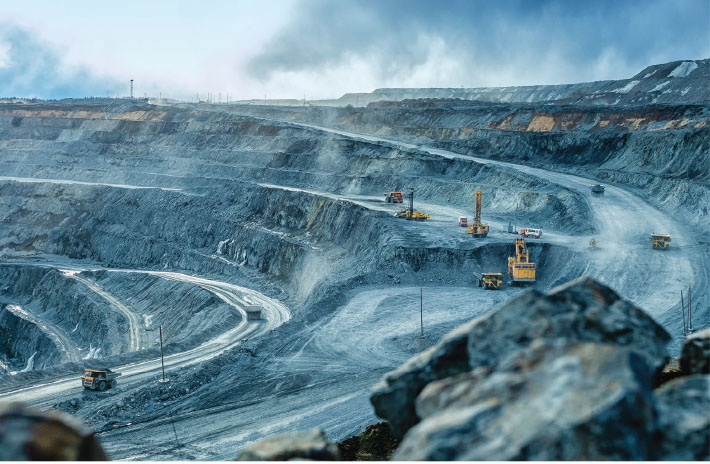
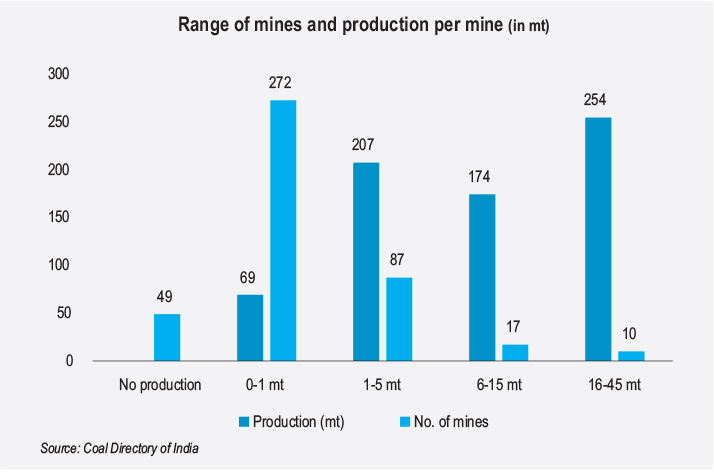
In India, the largest production of coal comes from a few mineral-rich states such as Odisha, Chhattisgarh, Jharkhand and Madhya Pradesh with 251 coal mines in 2022-23. These four states accounted for 80 per cent of the total coal production and 78 per cent of the coal reserves in India. Coal production from opencast mines in 2022-23 was 858 mt, while that from underground mines was only 35 mt. The share of opencast coal mines has increased over the years as it involves only surface mining techniques through the removal of the topsoil. Moreover, 74 per cent of the total coal mines in India produce less than 1 mt per mine annually and there is a strong negative correlation between coal production and the number of mines across production ranges. This also explains the random, unplanned abandonment of smaller opencast mines in the country and highlights the significant opportunity to improve the closure procedures and adopt sustainable practices for the closure of mines.
Adverse impact of unplanned closures
Studies that have examined these abandoned sites indicate that mines were closed with undesirable consequences – could this have been done differently? According to the Centre for Social and Economic Progress, existing mine closure legislation in India considers a few technical aspects such as dismantling building structures and decommissioning mining machinery. However, there is no clarity on who is responsible for monitoring the process of mine closure, how the abandoned land should be restored, the reclamation policies for vacant coalfield sites, etc. A mine closure policy needs to incorporate environmental, physical, social and economic aspects into the legislation. It should also focus on creating a suitable landform for future uses, enforcing mine reclamation policies, establishing financial mechanisms and promoting sustainable mining practices in consultation with stakeholders while integrating global best practices.
The proliferation of small open cast mines in the coal belt of central India has destroyed the vegetation and forests and disrupted the habitat and ecosystems at mining sites, resulting in dehydration and erosion of the soil, water contamination and air pollution. The physical stability of the mine site is critical, which involves implementing measures during mine operations to avert risks such as waste rock dump collapses or landslides. Acid mine drainage occurs when runoff water from precipitation comes into contact with reactive mine waste, resulting in the generation of acidic discharges that have severe adverse impacts on the environment. Water discharged from coal mines contains high levels of suspended solids, dissolved solids, heavy metals, sulphate, oil, grease and nitrate, and is often discharged without any proper treatment, which degrades both surface and sub surface water.
 Application of the circular economy principles for coal mines
At the World Circular Economy Forum (WCEF) in 2021, several countries deliberated on applying circular economy strategies to the mining sector, where the World Bank advocated for a “climate-smart mining” framework. It was emphasised that the “R” strategies (reduce, repair, refurbish, repurpose, recycle, recover) in the operations and closure of coal mines have the potential to eliminate waste and generate economic and environmental value for companies, workers and communities.
- Sustainable closure practices should be introduced during the extraction and production process, much before the decarbonisation efforts are under way. Mining companies need to recycle, reuse and redeploy during the production cycle for optimal usage of their existing resources.
- Circular economy practices will encourage companies to reduce water usage and energy consumption, as well as devise mechanisms to minimise waste generation. At the WCEF, there were discussions on developing mechanisms to extract and reuse residuals from mine wastes so that recovered coal could be used for electric vehicle batteries. These, in turn, will lead to cost reductions as well as lessen potential risks due to lower waste accumulation.
- Water management infrastructure already exists in coal mines, which include pumped hydro energy storage and generation systems used for producing power. These need to be utilised after mine operations stop – for example, water distribution systems should be channelised to cultivate and grow sustainable and productive crops that will bring long-term benefits to the region.
- The repair and replacement of worn-out and obsolete components of pumps or extraction equipment will significantly add to circular economy efforts. During operations, sharing on-site tools, equipment and storage through optimised and coordinated schedules will avoid duplicating equipment needs, ensuring optimal usage. In view of the energy transition to greener options, companies are also focusing on renovating and retrofitting older traditional equipment to automated efficient models.
- Once the MoC decides to discontinue the mining of coal at a particular site, all efforts should be made to reclaim, restore, regenerate and repurpose the land for activities that are economically and environmentally sustainable. The application of circular economy principles would optimise resource use and restore ecosystems, and at the same time create new opportunities to attract further investments.
Conclusion
With the target of achieving net-zero emissions by 2070, the Indian government aims to transition from fossil fuel to alternative clean energy. Therefore, coal production is expected to slow down in the coming years, which makes it imperative to plan a pathway for the energy transition in a sustainable manner. The process of mine closure should begin and develop throughout the mine’s life cycle, aligned with a shared vision involving local communities, regional authorities and other stakeholders. Therefore, the time is right to develop a road map with a comprehensive plan for utilising the vast areas of the abandoned coalfields for sustainable purposes.