
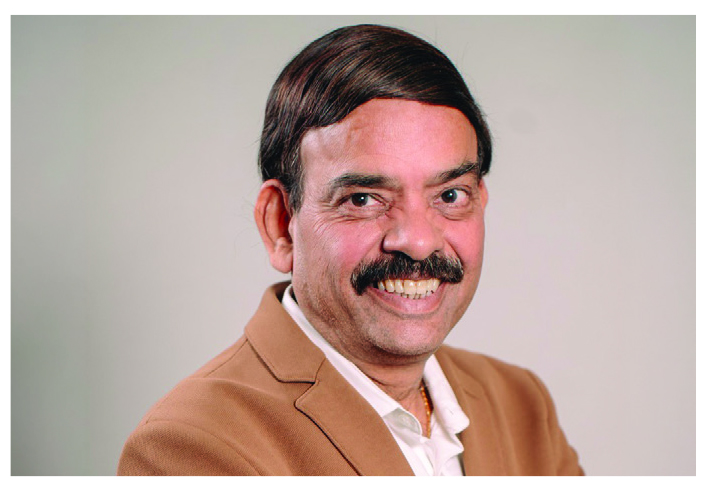
 AKA Logistics bridging the gap between thermal companies and assets across states
AKA Logistics Private Limited currently provides end-to-end operations and maintenance (O&M) and logistics services to power plants with a combined installed capacity exceeding 35,000 MW. With significant presence across West Bengal, Jharkhand, Uttar Pradesh, Haryana, Chhattisgarh, Rajasthan, Madhya Pradesh, Odisha and Karnataka, AKA Logistics Private Limited is bridging the gap between major coal companies such as MCL, NCL, BCCL, CCL and SECL and the country’s key thermal power assets. In a recent interview with Power Line, Pranab Kumar Mukherjee, President, AKA Logistics Private Limited, discussed the key parameters in coal handling, stages of the supply chain, operational and financial risks of the plant owner, etc. Edited excerpts…
What are the key parameters in coal handling that directly dictate the plant load factor (PLF) and the overall operational efficiency? What makes you a leader in your field?
Peak performance is built on two inseparable pillars – fuel security and operational continuity. You cannot have one without the other. If you procure the right coal but the coal handling plant (CHP) fails, your bunkers go empty. Conversely, if your CHP is world class but your logistics fail to deliver the right quality and quantity of coal, your generation efficiency drops. Any friction between sourcing and delivery creates a “coordination gap” that directly erodes your PLF and bottom line. To optimise generation, where we can, we treat the entire supply chain as a unified system where logistics, quality control and mechanical uptime are managed under one strategic vision.
Could you walk us through the critical stages of the supply chain?
The supply chain is a 24×7 ecosystem consisting of critical phases including actively securing EDRM sanctions and selecting favourable mine sidings with superior quality of coal with minimal extraneous materials; precise coordination of rake placement and scheduling, ensuring that the supply chain remains fluid and aligned with plant requirements; on-site supervision of loading operations, enhancing cost-effectiveness by minimising penal overloads and under-loads.
How is this scope of work typically contracted?
Currently, the scope is split into multiple, independent contracts – one for coal and rail logistics, another for CHP operations and maintenance, and often a third for the MGR system. Each function is managed by a different vendor with its own team and priorities, making it nearly impossible to create a harmonious outcome aligned with the plant’s singular goal.
What are the primary operational and financial risks this “siloed” model creates for a plant owner?
The fragmented model creates significant operational and administrative friction through several critical failure points: poor coordination between logistics vendors and CHP operators frequently results in wagon detention, critical bunker shortages and underutilisation of assets. Whether the issue is a rake delay or a conveyor failure, vendors instinctively shift responsibility. The plant owner must carry the full burden of supervision, leading to extended downtime, lower PLF and the constant risk of a stock-out.
What is the long-term, feasible solution to drive a step-change in plant effectiveness? How does this shift to a modern partnership structure redefine the day-to-day operational reality for a power plant?
The industry is at a stage where incremental improvements to fragmented models are no longer sufficient. From where I see, the way forward is the single integrated contract. By consolidating the entire “mine-to-bunker” value chain under one strategic partner, the plant owner replaces siloed services with a unified mission. This eliminates the “coordination gap” at its root.
What are the maintenance and long-term system benefits?
This will lead to superior plant upkeep, proactive preventive maintenance and more synchronised maintenance strategies, ultimately extending the plant’s operational life and lowering fuel costs. Furthermore, it ensures a significant reduction in railway overhead expenses.
As India marches towards a $5 trillion economy, how does the shift towards integrated coal logistics contribute to India’s national mission of energy security and economic resilience?
Energy is the heartbeat of a growing nation. The transition to an integrated model supports India’s evolution into a global powerhouse in three critical ways: Reliable energy security by eliminating coal shortages and overstocking, ensuring 24×7 power supply for industry and homes; lowering power costs by leveraging economies of scale, reducing the landed cost of coal and making manufacturing more competitive; maximising national assets by ensuring rail networks and thermal plants operate at peak efficiency, minimising waste and m