

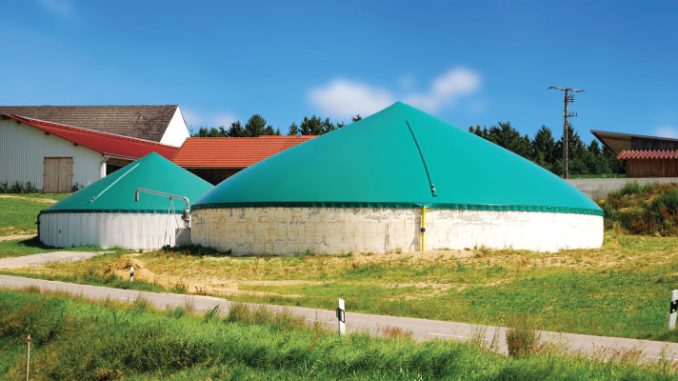
India has set a target to increase the share of gas in energy consumption from the current 7 per cent to 15 per cent by 2030. Compressed biogas (CBG), as a domestic renewable energy resource, holds substantial promise to bridge this gap and achieve the country’s clean energy objectives. Given this, the CBG sector in India is gradually gaining the attention it deserves due to its high potential of 40 mmt. Five states – Uttar Pradesh, Madhya Pradesh, Maharashtra, Punjab and Gujarat – contribute 50 per cent to the total national potential. These states also lead in terms of the number of functional plants and CBG production capacity. India’s significant CBG production potential can be attributed to the availability of surplus feedstock, with animal and poultry waste contributing 38 per cent and agricultural residue 31 per cent. Given this potential and the available opportunities, the CBG sector has attracted interest from several private and public companies. Overall, as of April 2024, 68 CBG plants and 194 retail CBG outlets have been commissioned, with around 750 plants expected by March 2029. Meanwhile, large urban waste-to-energy (WtE) projects, with a cumulative installed capacity of around 591 MWeq, are producing around 824,647 cubic metres of biogas per day and 450,735 kg of CBG per day.
Policy initiatives
Several policy initiatives have been announced to fully tap India’s CBG potential. The Ministry of New and Renewable Energy (MNRE) announced the National Bioenergy Programme with a budget outlay of Rs 17.15 billion for two phases for fiscal years 2021-22 to 2025-26. This includes a WtE programme of Rs 6 billion, a biomass programme of Rs 1.58 billion and a biogas programme of Rs 1 billion. The incentive for CBG generation from a new biogas plant is Rs 40 million per 4,800 kg per day, while the incentive for CBG generation from an existing biogas plant is Rs 30 million per 4,800 kg per day (maximum central financial assistance [CFA] being Rs 100 million per project). As part of the programme, the MNRE has supported 63 WtE projects, 24 biomass projects and 143 biogas projects so far. In November 2022, the government introduced guidelines for a CFA to bioenergy projects such as non-bagasse, CBG and biogas plants, for the period up to 2025-26.
In 2018, the Ministry of Petroleum and Natural Gas (MoPNG) had launched the Sustainable Alternative Towards Affordable Transportation (SATAT) scheme to promote the production and utilisation of CBG as an alternative green fuel for the transport segment and reduce India’s dependence on oil and gas imports by producing CBG using agricultural residues, cattle dung, sugarcane press mud, municipal solid waste and sewage treatment plant waste. The MoPNG had set a target of establishing 5,000 CBG plants producing 15 mmt per annum by 2024. As of March 2024, 53 CBG projects have been commissioned under the SATAT initiative.
Further, the government has issued guidelines for blending domestic gas with compressed natural gas (CNG) for the transport sector and piped natural gas for domestic use in city gas distribution (CGD) networks, to facilitate the synchronisation of CBG with CNG in the CGD network. Recently, after a long wait, the MoPNG issued guidelines for the development of pipeline infrastructure for injecting CBG into the CGD network. These guidelines outline the incentives available for pipeline infrastructure, as demanded by the CBG industry. The allocated budget for this initiative is Rs 9.945 billion for fiscal years 2024-25 to 2025-26.
The other key policy initiatives include obligations for blending CBG in the CGD network, the introduction of the (GOBARdhan) Galvanising Organic Bio-Agro Resources Dhan scheme, financial assistance for biomass aggregation machinery to CBG producers, and the inclusion of CBG plants in priority sector lending by the Reserve Bank of India.
Recently, the union cabinet has approved several amendments to the PM JI-VAN Yojana, which provides financial support to advanced biofuel projects. With the approved amendments, the timeline of the scheme has now been extended by five years until 2028-29. In addition, the scope of the scheme includes advanced biofuels produced from lignocellulosic feedstock, that is, agricultural and forestry residues, industrial waste, synthesis gas and algae. In addition, preference will now be given to project proposals with new technologies and innovations in the sector, in a bid to promote multiple technologies and feedstocks.
Project viability and bankability
A key hindrance in the setting up of CBG projects has been the high cost. In addition to the high initial capex, there is an opex that needs to be incurred. The capex part constitutes approximately 90 per cent of the total project cost, including capex for biomass collection, while the remaining is opex. The capex depends on the size of the plant and the offtake model, as well as the feedstock used. For instance, Verbio India estimates that the cost of a small CBG plant (less than 5 tonnes per day [tpd]) under the retail outlet model is almost double the cost under decompression injection and direct injection in the pipeline model. Meanwhile, for a medium CBG plant of 5-15 tpd capacity, the cost in the retail outlet model is almost triple that of decompression injection in the pipeline model and five times that of direct injection in the pipeline model. Further, the cost of a large CBG plant (over 15 tpd) in the retail outlet model goes up to 3.5 times for decompression injection and almost seven times for direct injection in the pipeline model.
According to SBI Capital Markets Limited (SBI Caps), the approximate project internal rate of return for 25 years is 5-7 per cent for a 50 tpd agri-residue-based CBG project with a CBG output of 6 tpd, which costs Rs 400 million-Rs 450 million. The average debt service coverage ratio (DSCR) for this scale of project is 1:1.2. When the project size and CBG output double to 100 tpd and 12 tpd respectively, the indicative project cost increases to Rs 600 million-Rs 700 million. At this scale, the project’s approximate internal rate of return (IRR) and average DSCR increase to 13-16 per cent and 1.5-1.8 respectively. When the project size and CBG output are again doubled to 200 tpd and 24 tpd respectively, the indicative project cost increases to Rs 1,100 million-Rs 1,200 million. At this scale, the approximate project IRR and average DSCR increase to 19-21 per cent and 1.9-2.2 respectively. Therefore, with a gradual increase in plant capacity, economies and streamlining of the supply chain, project returns become more viable. These calculations are based on certain assumptions. One, the CBG procurement rate is assumed to be Rs 62.86 per kg (corresponding to the CNG sale price of Rs 80-Rs 85 per kg); two, the debt-equity ratio is assumed to be 70:30; three, the loan tenor is assumed to be 15 years (construction period: one and a half years; moratorium; one year and repayment period: 12.5 years); and four, the indicative project cost is after adjustment of CFA.
CBG projects generally have long gestation periods, which impact their project viability and bankability. Critical factors affecting CBG project viability are feedstock arrangement, making it key to ensure a sustainable long-term feedstock arrangement; economies of scale (projects currently being implemented are small in size); mature technology (technology is evolving and its large-scale implementation is yet to be seen); offtake of products, with long-term offtake arrangements with oil marketing companies being preferred; and lastly, offtake of by-products, which is crucial for ensuring timely offtake and appropriate pricing.
According to the 17th report of the Standing Committee on Petroleum and Natural Gas titled “Review of Implementation of CBG (SATAT)”, banks and financial institutions are sceptical about CBG projects due to thin margins and perceived risks. This needs to be addressed going forward. To this end, low-cost funding at lower collateral is imperative for the expeditious development of this sector. Risk-sharing facilities and credit guarantee schemes should be introduced to improve the availability of finance at lower interest rates and lower collateral.
The way forward
One of the major challenges in the CBG sector is the supply chain management of feedstock. Ensuring supply chain assurance and quality consistency remain key concerns for scaling up operations. To address these issues, partnerships with aggregators and diverse feedstock sources are being explored. Paddy straw remains the most difficult feedstock to handle due to inconsistent moisture levels. Going forward, better data on surplus availability at the tehsil level will be required for expansion. Developers also need support for storage infrastructure.
Offtake faces significant hurdles, particularly for medium-scale projects. Marketing both gas and manure is challenging. The current 50 per cent offtake guarantees are insufficient, and the industry recommends 100 per cent offtake guarantees for the first three to four years to support the sector. For pipeline infrastructure, the existing 75 km limit on subsidies is inadequate for plants located far from the grid. Therefore, CBG producers need additional support for transporting and marketing such projects.
Overall, economic viability is currently low for CBG projects due to high set-up costs and operational expenses. Therefore, developers need to ensure a second revenue source by selling fermented organic manure, which faces significant challenges in meeting moisture content specifications and marketing. A third revenue source from the sale of carbon credits is also crucial going forward. This requires the development of the Indian carbon credit system. The sale of carbon credits could supplement gas and manure revenues, making the overall business model more viable.
Net, net, the CBG market in India holds immense promise, but several issues need to be addressed to achieve the sector’s full potential.
Sarthak Takyar