The power generation segment is making significant progress, driven by the country’s clean energy goals and energy transition efforts. While renewable energy capacity is seeing substantial growth, the role of thermal power is undergoing a major shift. Previously a primary source of steady power supply, thermal plants are now taking on a more supportive role by balancing intermittent renewable energy in the grid. Leading power developers share their views on the key developments, challenges and future requirements of the sector… 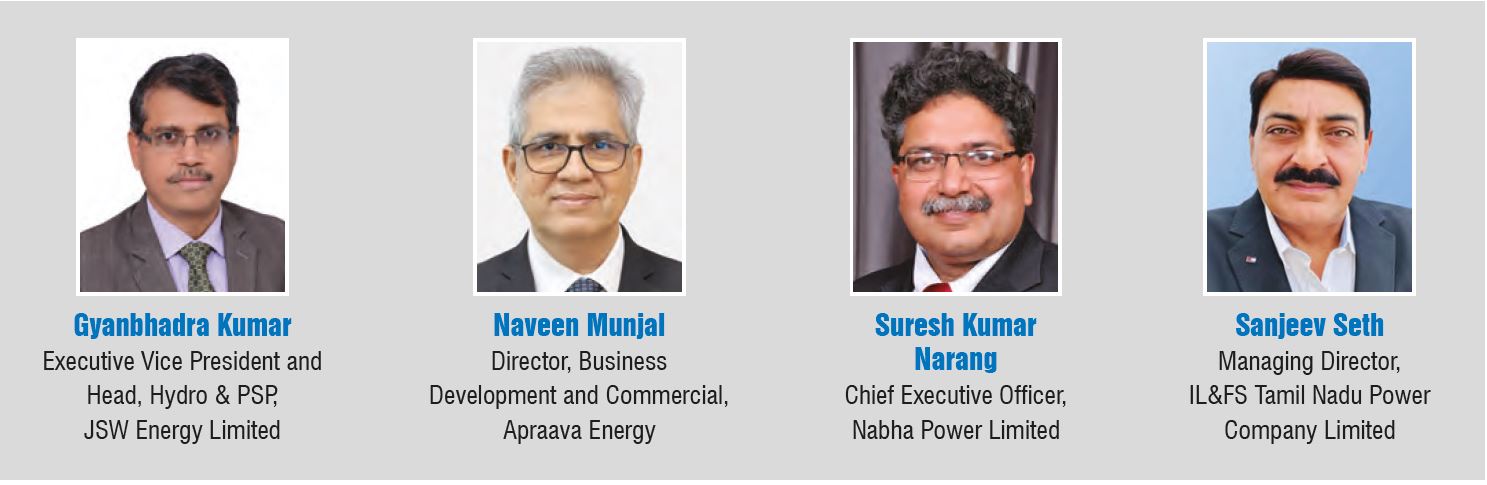 What is your assessment of the power sector’s progress during the past year?
Gyanbhadra Kumar
India’s renewable energy sector has witnessed significant progress in the past year, building on its impressive track record as a global leader in renewable energy deployment. Its renewable energy capacity has increased by 161 per cent over the past decade, rising from 76 GW in 2014 to 200 GW in 2024, which played a major role in India becoming the fourth largest renewable energy market globally.
The leading contributor to the country’s installed renewable energy is solar power with over 89 GW, followed by hydro and wind power contributing about 55 GW and 49 GW respectively.
The government’s aggressive policy push, coupled with significant private sector investments, has been the primary driver of this growth. To accelerate capacity addition, the government launched initiatives such as the National Solar Mission, green energy corridors and production-linked incentive schemes for solar and battery manufacturing.
Moreover, state governments are playing an important role by offering incentives and land for renewable projects, further driving growth. They are formulating their own policies to further support the renewable energy sector.
Naveen Munjal
India has one of the most diversified power sectors in the world, which is growing and brimming with opportunities. The government’s focus on energy transition to achieve its net zero goals is drawing sizeable investments to the renewable energy and transmission sectors. Over the past three years, there has been a significant increase in renewable energy capacity and evacuation infrastructure, in line with the nation’s goal of achieving 500 GW of renewable energy capacity by 2030. In addition, the government has laid down policies to promote green hydrogen and energy storage technologies. We are seeing an increasing number of auctions with a storage component and attractive tariffs, which will improve grid reliability and resilience.
With a focus on improving efficiency in the sector, the Revamped Distribution Sector Scheme has encouraged several states to adopt smart metering projects to reduce aggregate technical and commercial (AT&C) losses and make a realistic assessment of load requirements. Upon completion, these smart metering projects will narrow the gap between the average cost of supply and the average revenue realised, benefiting discoms.
Suresh Kumar Narang
India’s power sector has shown remarkable growth and resilience. The peak power demand grew by around 14 per cent to about 240 MW in 2023-24 from 210 MW in the previous year. The growth was driven by factors such as population growth, urbanisation, increased temperatures, income growth and rising demands in various sectors like construction, manufacturing
and services.
All-India demand crossed 1,600 BUs annually, registering a 7 per cent growth rate, with peak demand reaching 240 GW in 2023-24. Coal and lignite-based generation accounted for about 75 per cent of the overall generation, indicating that coal will maintain a dominant role and highlighting the nation’s reliance on the coal sector.
While the major capacity additions are occurring in the renewables sector, they bring a new set of challenges, as intermittency and reliability threaten grid stability and security. Thermal power is being harnessed to meet these varying demand profiles through the flexible operation of coal-based thermal power plants (TPPs).
On the regulatory front, we have seen quite a few changes over the past year, including a phased plan for achieving a 40 per cent technical minimum at coal-based plants, the mandatory offering of unrequisitioned power in the day-ahead market/real-time market, benchmark pricing for biomass pellet procurement and the establishment of a uniform renewable energy tariff. Further, the clarification issued by the Ministry of Power regarding the cost pass-through of biomass pellets in the energy charge for Case 2 Scenario 4 (in Section 63 of the Electricity Act, 2003) plants will accelerate the biomass co-firing in these plants. The late payment surcharge rules continue to provide relief for generators by effectively addressing long-standing issues related to delayed payments and non-payment by discoms to gencos.
The Indian power sector saw significant progress during financial year 2023-24, driven by policy reforms, increased renewable energy integration and improved grid infrastructure.
With regard to capacity expansion, India made major strides in expanding its renewable energy capacity, focusing on solar and wind power. The renewable energy capacity increased considerably, with the total renewables installed capacity reaching around 125 GW by end 2023-24. While there have been constant efforts to reduce dependency on coal-based power, thermal energy still accounts for a significant share of the country’s energy mix, constituting 55-60 per cent of the total generation.
There is a strong commitment towards decarbonising the power sector. The government’s intention of reaching its target of 500 GW of non-fossil fuel capacity by 2030 has been evident in various policy initiatives. The National Green Hydrogen Mission for promoting hydrogen production as an alternative to fossil fuels is already under way. Distribution reforms under schemes such as the Revamped Distribution Sector Scheme (RDSS) have been taken to address inefficiencies in the power distribution sector; this is expected to reduce AT&C losses, which stand at 17-20 per cent. The deployment of smart meters has been accelerated to help curb distribution losses and improve billing efficiency. By end 2023-24, over 15 million smart meters had been installed across the country. The grid modernisation initiatives included efforts to strengthen the transmission network to handle the increasing load from renewables and ensure seamless integration.
What has been the impact of the growing power demand on the segment? How will it impact capacity addition and segment performance going forward?
Gyanbhadra Kumar
India’s power demand has grown substantially in recent years, driven by rapid economic growth, industrialisation and growing population along with increasing electrification. In 2023, power demand grew by more than 8 per cent, marking one of the highest growth rates over the past decade. This demand surge has had both positive and negative impacts on the renewable energy sector.
On the positive side, rising power demand has highlighted the need for a diversified energy mix, reinforcing the importance of scaling up renewable energy sources. Fossil-fuel-based energy sources, particularly coal, have struggled to keep pace with this increasing demand due to their limited capacity expansion and environmental concerns.
Solar and wind energy have seen a spike in new installations to meet the increasing power requirements. In 2023-24, the total net addition to the energy capacity in India was 26 GW, of which about 19 GW (approximately 71 per cent) is from solar and wind energy. Solar power, in particular, has benefited from falling costs, improved efficiency of photovoltaic technology and faster installation timelines compared to traditional coal-based plants.
Moreover, the growing emphasis on corporate sustainability and environmental responsibility has led to a surge in demand for renewable PPAs from industries and commercial entities.
However, the growing power demand has also exposed the limitations of India’s renewable energy sector. Coal continues to account for over 48 per cent of India’s total power generation, posing a challenge for policymakers who seek to balance energy security
with sustainability.
Renewable energy sources such as solar and wind are inherently variable, and the current grid infrastructure is not yet fully equipped to handle the large-scale integration of intermittent power. This has led to occasional power shortages, especially during peak demand periods when renewable energy generation is low. The deployment of large-scale battery storage and pumped storage systems will help to ensure grid stability and meet the growing power needs during peak demand periods.
Naveen Munjal
India’s electricity demand has been increasing at a higher rate than GDP growth and this trend is likely to continue until per capita consumption reaches levels comparable to similarly large economies. Demand is projected to increase to 2.5 trillion units by 2030 from 1.5 trillion units by financial year 2023. This increase require additional capacities – both baseload and peak load. Renewable energy capacity addition is cost-effective and requires shorter gestation periods. The challenge of meeting the baseload requirement can be addressed by combining renewables with cost-effective
storage solutions.
Battery energy storage systems (BESSs), with their declining costs, can help meet evening peaks. Meanwhile, PSPs, though have longer gestation periods, are a good alternative for large-volume, longer-duration storage requirements. The development of PSPs could benefit from policy interventions that ensure offtake certainty.
Suresh Kumar Narang
A major impact of the growing power demand is the rising plant load factor levels of TPPs, which has increased to about 69 per cent in 2023-24 from approximately 55 per cent in 2019-20, indicating a higher utilisation of these plants to meet power demands. This increase has also resulted in peak power shortages.
While solar power effectively meets the daytime demand, evening peak power demand needs greater attention, as the power available during the evening drops significantly. This is reflected in market prices, which often reach their peak during evening hours.
In view of the country’s renewable energy goals and net-zero targets by 2070, firm and despatchable renewable power needs a greater policy push. In the recent solar plus storage tender, the discovered tariff was significantly low at Rs 3.42 per unit making it the most preferred solution for 2024 and beyond. These solutions not only meet daytime energy needs but also address peak demand periods. With the global decline in battery prices, solar plus storage is emerging as a more viable solution.
India’s ambitious plan to add 50 GW of renewable energy capacity annually over the next five years is aimed at achieving 500 GW of renewable energy capacity by 2030. However, with these major planned renewable capacity additions, it is expected that intermittency and grid reliability issues will become a new set of challenges for the power sector. The flexible operation of coal TPPs, along with BESSs and pumped storage systems, will be essential for managing the varying demand profiles. Frequent daily ramp-downs and ramp-ups will result in additional costs for coal TPPs due to lower efficiency and the need for secondary fuel support. A clear framework, along with budgetary support and incentives, is essential for the energy transition.
Coal being a dominant contributor to the energy mix, I expect it to remain so for the foreseeable future. Despite the rapid expansion of solar and wind energy capacity, coal is likely to maintain its dominant share in the energy mix.
Sanjeev Seth
The growing power demand in India has had a profound impact on the power sector, giving rise to both challenges and opportunities for development. The rapid economic growth, urbanisation, industrialisation, and an increasing push for electrification have all contributed to this increasing demand. We could see peak power demand touch record highs, crossing 230 GW during the summer of 2023-24. To meet this demand, there has been a push to add new capacity, particularly in renewable energy (solar, wind) and storage solutions. This has also led to an increased focus on hybrid models (solar + wind + storage), which can ensure stable power supply.
Further, the spike in demand has highlighted the continued reliance on thermal power, particularly as renewables can be intermittent. Coal-based power plants are crucial for managing baseload and peak demand. During the year, existing coal- and gas-based thermal plants had to operate at higher plant load factors, stressing outdated infrastructure and increasing maintenance costs.
The increasing demand has exposed the challenges of integrating large-scale renewable energy into the grid. Solar and wind power are variable and cannot fully meet the peak demand, which has raised concerns about grid stability. The growing demand has emphasised the need for advanced energy storage systems, such as battery storage and pumped hydro, to store surplus energy generated by renewables during off-peak hours.
In several areas, ageing infrastructure has struggled to handle the increased load, leading to inefficiencies and power outages. Higher power demand has also worsened the financial health of many state-run discoms. Increased purchase costs from generators, coupled with under-recoveries from consumer tariffs, continue to deepen discoms’ debt burden.
The rising demand, coupled with the need to rely more on coal during peak periods, led to higher generation costs. This, in turn, put pressure on power tariffs, particularly for industrial and commercial consumers. Governments, both at the central and state level, have faced pressure to continue subsidising tariffs for agricultural and residential consumers, particularly in rural areas.
The growing demand has necessitated reforms in the electricity market, including measures to allow more flexibility for interstate power trading, developing a real-time market, private sector participation and encouraging competition among generators.
What are the unresolved issues in the segment?
Gyanbhadra Kumar
Despite the remarkable progress in recent years, India’s renewable energy sector continues to face several unresolved challenges that could impede its future growth. These issues must be addressed to ensure the sector’s long-term sustainability and alignment with the country’s climate goals.
Grid infrastructure and integration: One of the most pressing challenges is the lack of adequate grid infrastructure to support the large-scale integration of renewable energy. The transmission and distribution network in many parts of India is outdated and inefficient, leading to grid stability issues when intermittent renewable energy sources, such as solar and wind, are added to the system. The Green Energy Corridor initiative is a step in the right direction, but more investments are needed to modernise the grid and improve its capacity to handle renewable energy. Currently, many under-development projects are getting delayed due to a lack of connectivity or delays in the readiness of power evacuation systems by transmission utilities.
Regulatory and policy bottlenecks: The hydro sector, in particular, has suffered from delays in obtaining necessary clearances, as well as land acquisition issues and inconsistent state policies. These regulatory bottlenecks have resulted in delays and cost overruns for several projects.
In hydro projects, frequent changes in policies/schemes lead to financial risks and delays in setting up projects. To safeguard the financial aspects of the business, policies must be formulated to ensure sustainability and long-
term consistency.
Financial challenges: Financially, the high upfront capital costs associated with hydro and pumped storage projects make them difficult to finance without strong government support or innovative financing models. Additionally, the rise in interest rates over the past two years has led to a sharp increase in financing costs. Delayed payments from state discoms have also been a problem, leading to cash flow issues for developers. While the government has taken steps to address the financial health of discoms, such as introducing the liquidity infusion scheme, the problem persists in many states.
E-waste and end-of-life management: With the large-scale deployment of solar panels and batteries, e-waste management is becoming a critical issue. India is projected to become the fourth-largest producer of solar panel waste by 2050. The country currently lacks a comprehensive policy for solar panel recycling. Although the Ministry of New and Renewable Energy had drafted rules in 2022, the absence of large-scale recycling facilities poses environmental risks.
Transmission charge waivers: The transmission charge waiver for renewable sources is likely to be removed in a phased manner from June 2025, which would make renewable power procurement costlier for discoms and may result in a lack of interest in future renewable procurements.
Naveen Munjal
As the government steps up its pursuit of a “Viksit Bharat” through the “Make in India” programme, the power sector will play an important role in supporting this mission. The government has strengthened the power sector over the past few years, with rapid renewable energy capacity additions, the promotion of green hydrogen technologies, a focus on expanding battery storage and the implementation of smart
metering programmes.
However, to meet the country’s growing power demand, the sector must collaborate to enhance transmission connectivity, which currently lags behind the planned capacity expansions. Increasing the pace of transmission capacity addition across all renewable-rich states will go a long way in addressing this challenge.
Although the Ministry of Power has amended the guidelines for right-of-way compensation, empowering local authorities to quickly resolve issues remains the need of the hour. Combined with existing land acquisition
challenges, these factors contribute to significant delays in project implementation timelines.
Lastly, expanding the country’s manufacturing capabilities and capacity for critical power equipment, such as transformers, reactors, solar panels and circuit breakers, will ensure the timely execution of projects, leading to a vibrant energy sector.
Suresh Kumar Narang
The regulatory environment remains challenging, with issues such as contractual logjams, disputes and delays in regulatory decision-making. Strengthening the functioning of regulatory commissions and the Appellate Tribunal for Electricity is crucial for quick dispute resolution and restoring investor confidence.
The financial health of discoms continues to deteriorate, impacting the entire upstream business of power supply and generation. Key challenges facing discoms include AT&C losses, lack of investment in enhancing power infrastructure and unsustainable high debts. Providing free electricity to consumers makes discoms overly dependent on government subsidies. Their revival can be supported primarily by reducing AT&C losses through better infrastructure and advanced technology such as prepaid smart meters, timely tariff revisions, prompt subsidy payments, and improvement in billing, collection and operational efficiencies.
Another important legislative reform for the power sector would be the early passage of the Electricity Amendment Act, 2022, which would promote competition, especially in the distribution sector. Despite Coal India Limited’s improvement in production and offtake in 2023-24, fuel security continues to remain a significant challenge, with the country importing about 20 per cent of its total coal requirement. Although India has ample coal reserves, annual shortages still persist. Accelerating the commercial coal mine auction process and ensuring timely clearances can help mitigate this issue. The amendment of the Scheme for Harnessing and Allocating Koyala Transparently in India policy is required to address the needs of power plants requiring additional coal to fulfil their contractual requirements by enhancing the long-term linkages.
Given that TPPs are incurring significant capital costs to install flue gas desulphurisation (FGD) systems to comply with emission norms, it would be beneficial to waive the GST compensation cess for TPPs that have installed FGD systems. This would help offset the financial burden and encourage compliance with environmental regulations. Additionally, creating a suitable policy framework to encourage the brownfield expansion of TTPs that were set up earlier on a tariff-based competitive bidding basis would be the quickest and most efficient way to augment capacity additions by leveraging existing resources such as land, infrastructure, rail and road connectivity, and evacuation facilities.
Achieving the ultimate goal of ensuring reliable and affordable electricity access for all citizens requires coordinated efforts from the government, regulatory bodies, discoms and other stakeholders.
Sanjeev Seth
Despite significant progress in recent years, the power sector continues to face several unresolved issues that hinder its sustainable development and efficiency. As of 2023-24, the total debt of discoms remained on the higher side despite several government bailout programmes like the Ujwal Discom Assurance Yojana (UDAY) and the RDSS. Discoms often sell power at tariffs lower than their cost of supply due to state-mandated subsidies for agriculture and low-income households. The delayed subsidy payments from state governments and inefficiencies in billing and collection further exacerbate their financial woes. Due to their poor financial health, many discoms are unable to make timely payments to power producers, leading to cash flow issues for generating companies.
Moreover, AT&C losses, which include the energy lost during transmission and distribution, and unpaid consumer bills remain a major problem in some states. Although the national average has improved, in some areas it still exceeds 20 per cent, leading to substantial financial losses for the sector.
Solar and wind projects require large tracts of land and robust transmission infrastructure, which are often difficult to secure. Issues related to land acquisition, environmental clearances, and the timely construction of transmission lines have delayed many renewable energy projects.
India’s power grid lacks sufficient energy storage solutions, such as large-scale battery storage systems, to store excess renewable energy generated during non-peak hours and supply it during peak periods.
The lack of real-time grid management systems, advanced forecasting tools, and a nationwide smart grid network limits India’s ability to efficiently integrate renewable power. Power sector reforms aimed at improving competition, transparency and efficiency have been delayed or met with resistance. For example, efforts to privatise discoms or introduce performance-based tariffs have faced pushback from state governments and unions.
Despite government deadlines, many coal-fired power plants have not yet complied with new emission standards for pollutants like sulphur dioxide and nitrogen oxides. Retrofitting plants with emission control technologies is costly and slow.
As the adoption of electric vehicles (EVs) grows, it will be imperative to put in place a sound public charging infrastructure. The increasing number of EVs will also put additional pressure on the grid, requiring better demand management and load balancing mechanisms.
I personally feel that the power sector is on a transformative journey, with ambitious goals to decarbonise, modernise and ensure affordable electricity for all. As the country moves closer to its 2030 targets, the sector is expected to attract increased investment, particularly in renewable energy, energy storage and grid management technologies.