
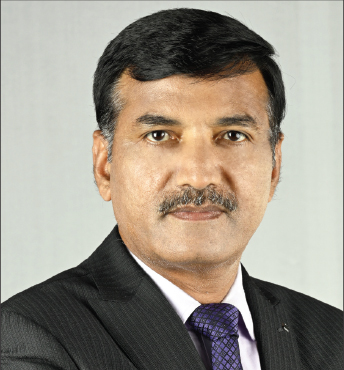
 In a recent interview with Power Line, R.K. Tyagi, Chairman and Managing Director, Power Grid Corporation of India Limited (POWERGRID), discussed the state of India’s power sector, particularly the transmission segment, amid the ongoing energy transition. He also outlined the steps needed to strengthen the grid to support the growing renewable energy capacity and highlighted the emerging technologies transforming the transmission sector, along with POWERGRID’s future priorities…
What is your assessment of the current state of the power sector, especially the power transmission segment?
The energy sector has been a crucial driver of growth in India, with the electricity sector reporting a substantial growth between FY 2023 and FY 2024. Renewable energy investments have surged, aligning with the government’s ambitious targets. As of today, India’s non-fossil energy capacity has crossed 200 GW, which accounts for about 46 per cent of the total capacity. Between 2014 and 2023, the clean energy sector in India attracted Rs 8.5 lakh crore ($102.4 billion) in new investments. An additional Rs 30.5 lakh crore in invest ments is expected between 2024 and 2030, creating significant economic opportunities. The energy transition is also expected to generate over 3.5 million jobs by 2030, according to the Council on Energy, Environment and Water, through investments in renewable energy and energy efficiency. The key drivers of future energy demand include industrial development, increased use of consumer durables, expansion of AI technologies and digital infrastructure, and growth of the green hydrogen economy. In India, energy demand is expected to rise from 1,752 BUs in 2023-24 to 2,473 BUs by 2031-32, with a major portion coming from non-fossil fuel sources.
India’s transmission sector has undergone a significant transformation over the years, transitioning from a fragmented network to a well-integrated and interconnected grid. The sector has taken significant strides in expanding the grid’s physical infrastructure and consolidating it into one of the largest synchronous grids globally. Looking ahead, as India aims to meet 50 per cent of its generation capacity from non-fossil fuel sources by 2030 and given the rising significance of electricity in the nation’s energy mix, substantial investments will be imperative in both the interstate and intra-state transmission networks.
The National Electricity Plan (NEP) projects that non-fossil-fuel-based capacity will increase from 200 GW in 2023-24 to 500 GW by 2029-30. To support this expansion, transmission schemes worth Rs 198,645 crore are under planning, bidding, or approval, and are expected to be integrated into the grid by 2028-29, according to Central Transmission Utility rolling plans.
What are the key issues and challenges facing the power transmission segment?
Key challenges in the power transmission segment include forest clearances, land acquisition and right of way (RoW). These issues are being addressed with the assistance of the Government of India, the respective state governments and innovative technological solutions. Due to massive growth in transmission, timely availability of critical equipment such as transformers and GIS is another challenge. Further, the integration of renewable energy itself presents challenges due to its variability and intermittency, which makes grid stability difficult to manage. To address these challenges, advanced planning is being undertaken along with the adoption of state-of-the-art technologies such as flexible AC transmission systems (FACTS), high voltage direct current (HVDC) systems, STATCOMs, battery energy storage systems and smart grid solutions. Apart from the above, in today’s interconnected world, cybersecurity is also a major challenge and protecting transmission infrastructure from cyber threats is essential to maintain grid security and reliability. We are proactively taking measures in this regard.
What steps are required to strengthen the electricity grid with the growing renewable energy capacity?
To support the large-scale integration of renewable energy, there is a need for grid expansion and upgradation, including the development of new transmission lines and substations, especially in renewable-rich areas, which are already taking place. As stated earlier, advanced technologies, such as HVDC and FACTS, should be deployed for efficient long-distance power transmission. To ensure grid stability, energy storage solutions should be implemented. Digitalisation, smart grid solutions and real-time monitoring of systems will play a key role in enhancing grid management and stability. Further, regional and international interconnections should be strengthened to optimise resource utilisation and support regional energy security.
What are the challenges associated with offshore wind evacuation?
Infrastructure development in offshore environments requires advanced technology and high capital investment, making it a complex process. As India prepares for its first offshore wind project, challenges related to various statutory clearances, unexplored work environment, availability of a skilled workforce, supply chain and logistics are anticipated. However, we are hopeful to overcome the above challenges and complete the project in time.
What emerging technologies are transforming the transmission segment?
Several emerging technologies are revolutionising the power transmission segment. Digital substations utilising advanced communication standards are being implemented to enhance operational efficiency. HVDC systems are expanding and enabling long-distance power transmission. Technologies such as STATCOM and static var compensator (SVC) are helping to manage voltage stability and support renewable energy integration. New-age technologies like AI and robotics, which have huge potential, are being increasingly used in our asset management. In addition, environment-friendly gas is being used in place of SF6. Mobile substations, tank rupture-proof transformers transformers, insulated cross arms, photonic coating on conductors, etc., are some of the other emerging technologies.
What have been the key performance highlights of POWERGRID in the past year?
As of March 31, 2024, POWERGRID operated a transmission network of around 177,699 ckt. km of transmission lines and a power transformation capacity of around 527,446 MVA with 278 substations spread across the country.
POWERGRID’s operational performance in FY 2023-24 showcased exceptional reliability, strategic foresight and a commitment to cutting-edge technology. Our transmission network achieved 99.85 per cent availability with tripping per line reduced to 0.28. During FY 2023-24, POWERGRID recorded a total income of Rs 46,913 crore and profit after tax of Rs 15,573 crore on a consolidated basis. The company’s gross fixed assets stood at Rs 275,991 crore, on a consolidated basis. POWERGRID emerged as a successful bidder in 13 TBCB projects with an aggregate tariff of Rs 2,888 crore.
Some of the key projects commissioned during the year include the 400 kV D/C Fatehgarh-III (Ramgarh-II)-Jaisalmer-II line, the 400 kV D/C Lower Subansiri-Biswanath Chariyali-II line linked with hydro generation of about 2,000 MW at Lower Subansiri, and the 400 kV D/C (Quad) Sitamarhi-Dhalkebar international line between Nepal and India. In total, assets worth Rs 7,618 crore were capitalised on a consolidated basis during the year. Despite difficult terrain, extreme weather conditions and RoW issues, POWERGRID achieved these milestones.
What are POWERGRID’s top priorities and key focus areas going forward?
POWERGRID’s top priorities and key focus areas include expanding the transmission network to support 500 GW of renewable energy by 2030. The company is focusing on deploying cutting-edge technologies and innovative solutions towards efficient project management and operation of assets. POWERGRID is committed to advancing green technologies, including alternatives for SF6 gas, use of natural ester oil in transformers and reactors, etc.
The outlook for India’s power sector in the near to medium term is poised for transformative growth, largely driven by the country’s ongoing energy transition and its ambitious renewable energy targets. Under the new NEP (Transmission), the transmission network in the country will be expanded from 4.85 lakh ckt. km in 2024 to 6.48 lakh ckt. km in 2032. During the same period, the transformation capacity will increase from 1,251 GVA to 2,342 GVA. Nine HVDC lines of 33.25 GW capacity will be added to the 33.5 GW currently operating. The interregional transfer capacity will increase from 119 GW to 168 GW.
One of the most significant upcoming projects is the development of the green energy corridor for Ladakh, which includes the construction of the Pang to Kaithal HVDC line along with state-of-the-art VSC stations at Pang and Kaithal being implemented by POWERGRID.
In the near to medium term, regional and international interconnections will be vital for optimising resource utilisation and ensuring energy security. Cross-border power exchanges are also expected to increase. POWERGRID is committed to fulfilling the country’s future transmission needs.