
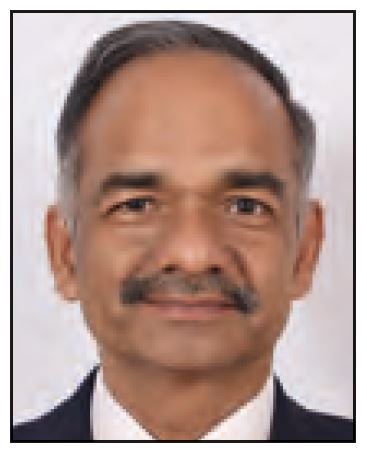
 Alok Kumar, Director, Lantau Group, and Former Union Power Secretary of India
India’s power sector has garnered global attention, as it is poised to grow at an unprecedented pace over the next two and a half decades. Additionally, being heavily dependent on coal, its decarbonisation, or otherwise, will be a major influencing factor on future global emissions. In many ways, it has been a success story so far, though significant challenges still remain.
India achieved universal access to electricity in 2019, while hundreds of millions of people worldwide are estimated to still be without access to electricity even in 2030. The country has left behind the era of severe shortages and is now able to successfully meet a peak demand of 250 GW. The development of the national grid has led to the emergence of an all-India electricity market, which received a further boost through the implementation of the General Network Access regime. We have successfully institutionalised tariff-based competitive bidding not only for bulk electricity procurement but also for the development of massive-sized transmission projects, resulting in substantial cost savings. Although we are still short of hitting the targeted pace of renewable energy capacity addition, our rate of growth is being appreciated the world over.
However, the sector needs to quickly overcome several challenges for India to achieve the vision of Viksit Bharat by 2047. This involves providing a reliable power supply of acceptable standards while meeting the demand – which is projected to grow four to five times – in a manner that ensures affordability, decarbonisation and energy security. It also has the potential to significantly create employment opportunities through green growth initiatives. Three key challenges are ensuring resource adequacy, improving the viability of discoms and achieving the projected reduction in the share of thermal generation. Actions required to address these challenges are somewhat inter-related. For example, the practical limit to which tariff can be revised to ensure the viability of discoms depends on effective optimisation in capacity expansion planning and day-to-day despatch and scheduling to achieve the least-cost solution.
Let us first discuss the challenge of resource adequacy. Not many years ago, several states faced the issues of over-capacity and substantial stranded fixed charges, and electricity prices in power exchanges were at historically low levels. This made the discoms wary of entering into new PPAs and became heavily dependent on purchases from short-term markets. A resurgence in power demand post-Covid led the Central Electricity Regulatory Commission to impose price caps in exchanges in 2022, which remain in effect today. The government had to issue emergency directives to generators several times and centrally procure gas-based generation during the supply “crunch period”. This situation made the stakeholders realise the importance of a national resource adequacy framework. While compliance with the resource adequacy requirement has been mandated in statutory rules and regulations, states are yet to acquire the necessary skill sets for effective implementation. This needs to be expedited to avoid repeating past phases of shortages and load shedding.
The resource adequacy exercise should be accompanied by the co-optimisation of generation and transmission planning, taking into account storage options, the development of capacity markets and redesigned PPAs with built-in flexibility for future procurement, in order to avoid excessive system costs. States still prefer new capacity additions within the states or cling to scheduling rights until the last moment, which leads to problems like suboptimal capacity expansion and unutilised capacity, even while there are shortages in the power exchanges. Several regulatory initiatives are being explored to address this. We need urgent action on these issues and strict regulatory oversight coupled with suitable penalties for discoms defaulting on the resource adequacy measure. One possible action could be the purchase of requisite capacity in short-term auctions by the system operator, even at a higher price, and allocating the same to discoms that fail to satisfy their resource adequacy obligations.
Another major challenge is restoring the financial viability of state-owned discoms. It cannot be overemphasised that the required investment to ensure the reliability of supply and greening of electricity cannot be mobilised unless this challenge is addressed, as approximately 85 per cent of the market share is held by government-owned discoms. Although there have been significant improvements in the operational efficiency of these discoms, with aggregate technical and commercial (AT&C) losses reduced to 16 per cent, annual losses remain close to Rs 700 billion. Additionally, the average cost of supply–average revenue realised gap per unit has increased from Re 0.33 in FY22 to Re 0.55 in FY23.
Various initiatives, such as the Revamped Distribution Sector Scheme (RDSS), the Late Payment Surcharge Rules, mandatory automatic monthly adjustment for fuel and power purchase costs, and reform-linked permission allowing states to borrow an additional 0.5 per cent of gross state domestic product, have begun to show positive impacts. Not only do these initiatives need to be strictly implemented, but several further actions are required to address this challenge. Most importantly, at the discom level, we must accelerate the pace of smart meter roll-out and overhaul corporate governance and organisational structure. The RDSS envisions installing 250 million smart meters within three years. However, as per the National Smart Grid Mission, the current pace is in the range of 5 million metres a year. There is already a slowdown in states like Gujarat and Maharashtra. Smart metering will not only bring down AT&C losses by more than 5 per cent through improved billing efficiency but it will also enable discoms to implement optimised power procurement. Proper demand management can significantly reduce the cost of network expansion across the entire power system. Consumer engagement needs to be prioritised for successful roll-out of smart meters. Further, the privatisation of discoms presents a significant challenge in India. Hence, we need to urgently restructure the government-owned utilities by giving central focus to commercial and IT functions, and also make their boards professionally manned and accountable for their performance. Predictable tenures and succession planning are the key areas. Three other interventions will be critical for controlling the increase in power purchase costs and enabling the implementation of cost-reflective tariffs. First, the implementation of state-level security constrained economic despatch is essential to achieve the least-cost despatch of power. Second, as the share of open access commercial and industrial (C&I) consumers is set to grow rapidly, regulators must fairly and transparently allocate network costs, other charges and ancillary service costs among the grid users to ensure that utilities do not incur losses and open access remains unhindered. Third, tariff subsidies need to be better targeted to create space for reducing cross subsidies, so that new C&I consumers do not take the captive route and utilities maintain a healthy consumer mix.
A major challenge facing the power sector is the need to accelerate the pace of decarbonisation. A significant problem exists – the share of thermal generation declined from 78.24 per cent in 2019 to only 74.58 per cent in 2023, hardly 1 per cent per annum. Our National Electricity Plan projects this to reduce to 51.4 per cent by 2032, requiring a much faster reduction rate of 2.5 per cent per year. A sluggish rather than targeted pace of renewable energy addition creates significant uncertainty in planning baseload capacities, which have long lead times and mismatches, resulting in resource adequacy issues. If managed smartly and predictably, an increased share of renewable energy in the generation mix can improve affordability and enhance energy security.
There are two key barriers to achieving the target of 500 GW non-fossil fuel-based capacity by 2030. The first is managing the integration costs of variable renewable energy (VRE) within state-level power systems. The second is the national strategy to rapidly increase the share of locally manufactured technology, such as solar cells and batteries, which requires a minimum lead time to develop. It can be argued that we need to pursue national-level renewable purchase obligations (RPOs) so that all the states contribute to achieving the national goals. But states should be given the flexibility to achieve the same in a least cost manner, and the Centre must assist the states in bearing any additional significant cost burden in implementing the same. What is the point in asking a state like Himachal Pradesh to procure wind or distributed solar as per mandatory targets, if it can fulfil its RPO in a more affordable manner through hydro generation? We must explicitly allow full fungibility to states in implementing RPOs, without any source-wise sub-targets. The next issue is how to further minimise the integration costs of renewable energy, including seasonal/long-duration storage costs, higher per unit network costs and balancing costs in terms of efficiency loss in part-load operations of thermal plants, as well as their increased per unit fixed costs. Since variable renewable energy is going to be a major contributor in the supply, there is also a need to revisit the must-run status for future projects. Limited curtailment on an economic basis may result in larger savings in transmission capex. Some states in the US are now proposing flexible connectivity options to renewable energy developers at lower connectivity charges.
Well-intentioned support measures for initial scaling-up, such as the waiver of interstate transmission system (ISTS) charges, when prolonged under the pressure of lobbies, can cause serious distortions and burden power system costs. By one estimate, the evacuation of one marginal unit of renewable power from Rajasthan now costs close to Rs 1.90, whereas it is only about Re 0.60 in the southern region. There is a huge rush for free connectivity in areas such as Rajasthan and Gujarat. Extensions of the ISTS charge waiver and pooling it on all the states have increased their costs significantly, whereas RPOs could have been achieved at lower costs by optimising purchases on an economic basis from outside states and inside. The point is that our approach should be to give states flexibility, and if the additional costs in meeting the RPOs are significant, the Government of India should mitigate them through adequate viability gap funding and subsidies instead of distortionary measures such as transmission charge waivers. Such support to states may need to be customised for state-specific situations.
On the local manufacturing front, it must be realised that it would take a minimum amount of time to come up to the required levels. We should set our targets, such as 43 per cent RPO or 500 GW of non-fossil capacity by 2030, in a more realistic manner so that the uncertainties in capacity planning are kept to manageable levels.