
In a key development for South Asia’s power markets, the landmark tripartite cross-border energy trade (CBET) agreement between Nepal, India and Bangladesh came into effect in November 2024. The agreement, which was previously signed by the three countries, enables Nepal to export surplus hydroelectricity to Bangladesh via India’s power transmission infrastructure. The first transaction with Nepal, with the export of around 40 MW of power to Bangladesh, was carried out on November 15, 2024, formally marking the first time Nepal sold electricity to Bangladesh and the first step towards creating a South Asian power grid.
Highlights of the agreement
As per the tripartite agreement, executed recently in October 2024 with Nepal’s National Electricity Authority (NEA), the Bangladesh Power Development Board (BPDB) and India’s NTPC Vidyut Vyapar Nigam Limited (NVVN), Nepal will export surplus electricity to Bangladesh during the rainy season, from June 15 to November 15 each year, leveraging India’s transmission grid. During this period, Nepal’s abundant rivers generate surplus hydroelectricity due to heavy monsoon rains.
In its initial phase, the arrangement will facilitate the export of 40 MW of hydroelectricity from Nepal to Bangladesh, providing a renewable energy solution for Bangladesh’s growing electricity needs. The power will be sourced from Nepal’s Trishuli (25 MW) and Chilime (22 MW) hydropower projects (HEPs), which have already been approved for export to India.
The electricity will be transmitted using India’s 400 kV Dhalkebar-Muzaffarpur 140 km transmission line and is the only extra high voltage operational interconnection between the two countries. Another existing link is Tanakpur HEP-Mahendra Nagar, which is a 132 kV S/C line. The transmission infrastructure plays a vital role in this collaboration, allowing Nepal’s energy to reach Indian territory before being routed to Bangladesh via the Baharampur (India)-Bheramara (Bangladesh) 400 kV transmission line. The metering point for the electricity trade has been set at Muzaffarpur in India, ensuring the proper calculation of energy transfer and revenue.
 Expected benefits
From this trade, Nepal is expected to earn approximately $9.2 million annually. The electricity will be sold at a fixed rate of $6.4 cents per unit, providing Nepal with a consistent revenue stream that can be reinvested into its energy sector. The NEA will cover the technical losses from Dhalkebar to Muzaffarpur, while Bangladesh will bear all taxes, fees and transmission costs from Muzaffarpur onward, bringing the final cost in Bangladesh to approximately $7.6 cents per unit. Bangladesh will also pay India the trading margin at the rate of Re 0.0595 ($0.001) per kW hour.
This represents a strategic move for Nepal, which has been primarily exporting electricity to India in recent years. As part of the SAARC Framework Agreement on Energy Cooperation (Electricity) and the MoU on BIMSTEC Grid Interconnection, Nepal has been eager to engage in a trilateral arrangement with neighbouring countries (India and Bangladesh) to sell electricity in the South Asian Association for Regional Cooperation (SAARC) and the Bay of Bengal Initiative for Multi-Sectoral Technical and Economic Cooperation (BIMSTEC) regions.
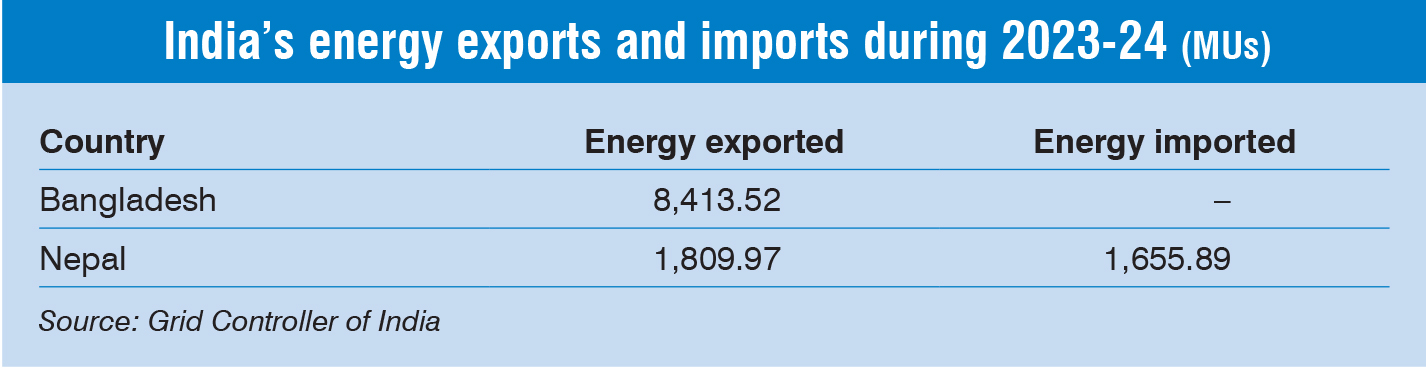
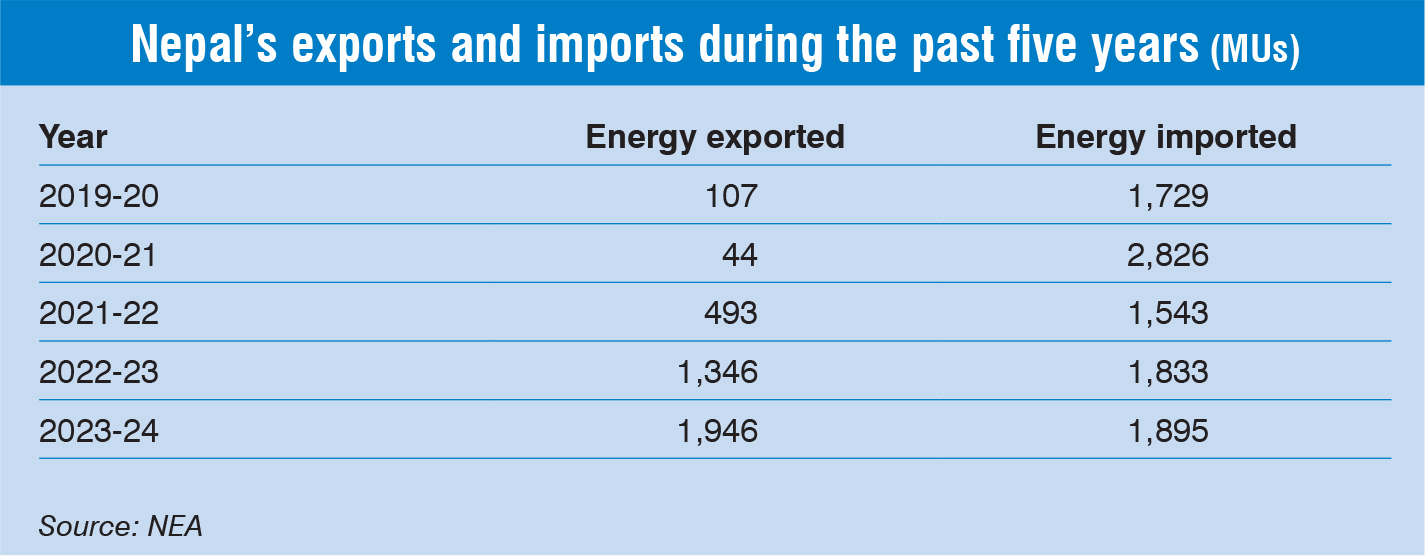
The NEA has been selling excess electricity to India at competitive rates through the Indian Energy Exchange, including in the day-ahead and real-time markets, as well as under bilateral medium-term power sale agreements to the states of Haryana and Bihar. To date, the NEA has been authorised to sell 941 MW of electricity generated by 28 projects to the Indian market through competitive markets and medium-term agreements. The agreement diversifies Nepal’s energy trade and helps it capitalise on its vast hydroelectric potential. Nepal became a power-surplus country after the 456 MW Upper Tamakoshi hydropower project came into operation in July 2021
 The latest agreement is a milestone in fostering regional cooperation. For Nepal, it opens new markets for its electricity exports and strengthens its energy sector’s economic viability.
Bangladesh, meanwhile, benefits from access to clean and renewable energy to support its rapidly growing economy and increasing energy demands. Natural gas currently makes up about 55 per cent of its total power generation. The Bangladesh government has set ambitious targets to achieve 40 per cent of its energy generation from renewable sources by 2041, a goal that is essential given the country’s rapidly growing energy demands and the need to reduce dependence on fossil fuels.
Currently, Bangladesh is importing electricity from India through a similar arrangement where NVVN sells power to the BPDB. Bangladesh also receives electricity from Adani Power, which is currently facing issues in recovering outstanding dues from the country after the political crisis in August 2024.
India’s role as a facilitator further highlights its strategic importance in South Asia’s energy dynamics, leveraging its infrastructure to enable CBET trade. So far, CBET by India has been done through bilateral connections. Transmission links ranging from 11 kV to 400 kV have been established between border states such as Bihar, Uttar Pradesh, Uttarakhand, Tripura, West Bengal and Assam. Currently, Bhutan and Nepal export hydroelectric power to India, which, in turn, supplies power to these countries during the lean hydro season. Earlier this year, India also revised its guidelines for the import and export of electricity. These revisions support reliable grid integration and transmission for cross-border trading, thereby strengthening regional energy cooperation.
Outlook
This power flow from Nepal to Bangladesh has broader implications for South Asia and is expected to boost sub regional connectivity.
In addition to the immediate trade agreement, the three countries have also reportedly agreed to jointly develop the Sunkoshi-3 hydropower project. This ambitious project will be built in a collaborative model involving all three nations. A technical and financial feasibility study has been planned to assess the potential for new transmission lines that could support future energy trade on a larger scale. These initiatives signal a long-term vision for deeper energy integration and infrastructure development in the region. Meanwhile, there is another proposal to export 500 MW of electricity to Bangladesh generated from the Upper Karnali hydropower project in Nepal, to be developed jointly by India and Nepal.
Meanwhile, by maximising the use of renewable resources such as hydroelectric power, the latest agreement promotes energy sustainability and addresses the region’s energy demands. It also sets the stage for enhanced economic growth by reducing energy shortages and creating new revenue opportunities for the exporting nations.
To conclude, the tripartite agreement among Nepal, India and Bangladesh, which has been in the works for many years, is a testament to the power of regional collaboration. It not only addresses immediate energy needs but also lays the groundwork for a more interconnected and sustainable future for South Asia.
Akanksha Chandrakar