

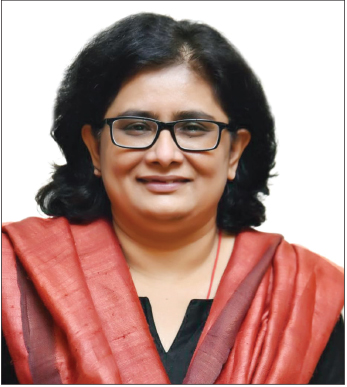
 Significant opportunities lie ahead for the electrical and allied electronics industry. Key growth drivers include renewable energy, smart grid technologies and electric vehicles (EVs), with the industry projected to reach $125 billion-$130 billion, as per the Indian Electrical & Electronics Manufacturers’ Association, (IEEMA). In a recent interview with Power Line, Charu Mathur, Director General, IEEMA, discussed the sector’s outlook, opportunities and challenges as well as IEEMA’s key priorities, plans and the upcoming ELECRAMA 2025 event…
What is IEEMA’s mission and mandate?
IEEMA’s mission is to promote the growth and development of the electrical and allied electronics industry. With its members contributing to more than 95 per cent of the power equipment installed in the country and representing a turnover of over $70 billion, IEEMA plays a critical role in the sector’s advancement.
The association focuses on advocating for favourable policies to create a conducive environment for industry growth, while promoting innovation and technological advancements. By encouraging research and development, IEEMA seeks to enhance global competitiveness within the sector. Sustainability is also a key aspect of IEEMA’s mission, as the association advocates for energy-efficient solutions and environmentally friendly practices that align with global sustainability initiatives.
With a strong presence across India, IEEMA facilitates collaboration and the sharing of best practices among manufacturers and stakeholders, creating new market opportunities. In addition,
IEEMA is dedicated to promoting industry standards and ensuring product quality, both critical for maintaining safety and competitiveness in domestic and international markets.
What are IEEMA’s priorities for the next few years? What will be its major focus areas?
In the coming years, IEEMA has set several key priorities to enhance the capabilities of its members and elevate the standards of the electrical and allied electronics industry. One of its key priorities is building member capabilities through targeted programmes that improve quality, productivity and efficiency standards.
As the voice of the Indian electrical industry, IEEMA plays a crucial role in policy advocacy, actively engaging with the government and its agencies. The association leverages its product divisions and technical expertise to respond to governmental inquiries and influence policy decisions affecting the industry, and it will continue to focus on this.
Furthermore, IEEMA aims to facilitate market expansion for its members, encouraging both domestic and international growth opportunities. By creating avenues for exploring new markets, the association aims to enhance its members’ global presence.
Additionally, IEEMA’s Power Skill Development Council is dedicated to upgrading the capacities of members in the sector. Ensuring adherence to quality standards remains another key priority. By promoting national and international quality regulations, the association seeks to enhance the industry’s reputation and competitiveness on a global scale.
Through these initiatives and focus areas, IEEMA is committed to enhancing the competitiveness and growth of the electrical and allied electronics sector.
What is IEEMA’s outlook for the power sector? What are the key opportunities?
IEEMA has a positive outlook for the power sector, anticipating high potential CAGR of about 12 per cent. With conducive policies, the industry could reach a size of $125 billion-$130 billion, contributing over 8 per cent to the GDP and generating new employment opportunities.
Key opportunities lie in renewable energy growth, smart grid technologies and the EV market. The rising demand stability in renewable energy is driving significant potential for power storage solutions. Additionally, government initiatives aimed at enhancing infrastructure can improve investment prospects.
In the future, Industry Vision 2047 envisions becoming India’s clean energy transformation partner, achieving 10,000 units per capita electricity consumption, and establishing global leadership in storage and green hydrogen value chains. The aim is to increase the industry’s GDP contribution to 3 per cent and double its exports to enhance energy self-reliance.
What are the key challenges facing the sector?
The sector is currently facing several key challenges that impact its growth and efficiency. One significant issue is the scarcity of components and raw materials, particularly for extra-high voltage (EHV) equipment. Critical materials such as cold rolled grain oriented steel, insulating materials and components for high voltage direct current (HVDC) and gas insulated switchgear have limited global sources, creating supply constraints.
Additionally, the sudden implementation of quality control orders (QCOs) poses a challenge, as over 150 upcoming QCOs notified by the Bureau of Indian Standards (BIS) will require adherence, potentially disrupting established supply chains. Compounding this issue is the lack of domestic testing facilities, which affects quality assurance for major HV and EHV equipment.
The industry is also grappling with a shortage of skilled manpower, which is essential for effectively developing, installing and maintaining advanced electrical equipment. Financial unviability and capital blockage further complicate matters, further limiting investment and innovation within the sector.
Moreover, upcoming challenges related to cybersecurity regulations and data protection requirements are anticipated to add another layer of complexity to the operational landscape, requiring organisations to make adjustments to ensure compliance and security.
How can these challenges be addressed by the industry and the government?
To address the challenges facing the sector, both industry stakeholders and the government must take specific actions. First, securing critical raw materials is essential. Advocating for the renewal of BIS licences for Amorphous Core and implementing a production-linked incentive scheme for key components in HVDC projects and transformers will help stabilise supply.
For QCOs, establishing a committee with stakeholders to resolve BIS certification issues is crucial. Seeking extensions for materials such as aluminium and copper, as well as expediting inspections for foreign manufacturers will minimise disruptions.
Supporting the Make in India initiative is crucial. This includes empowering local inverter manufacturers through the PM Surya Ghar: Muft Bijli Yojana, and strengthening the transformer and HVDC industries.
To improve testing infrastructure, large companies should be incentivised to import testing equipment and provide services to smaller manufacturers. Further, a phased approach to minimum local content requirements and the promotion of insurance surety bonds in government tenders will support growth.
Finally, IEEMA’s initiatives around quality, reliability and safety focus on forming committees, developing skills and collaborating with educational institutions to enhance workforce capabilities. By implementing these strategies, the industry and the government can
effectively address challenges and promote growth.
What are the main features of ELECRAMA 2025?
ELECRAMA positions itself as the world’s largest electrical show and a leader in “Reimagining Energy for a Sustainable Future” by focusing on sustainable practices and innovative energy solutions. This edition will feature nearly 500 international buyers from 80 countries, along with seven country pavilions and 14 exhibiting nations, bringing global attention to India.
What truly sets ELECRAMA apart is its holistic approach, featuring a diverse range of conferences, exhibitions and networking opportunities designed to highlight leading energy technologies. By cultivating an inclusive environment for knowledge sharing and showcasing cutting-edge products, ELECRAMA significantly enhances the global dialogue on sustainable energy.
How will it be different from previous editions?
ELECRAMA 2025 is set to surpass its previous editions, comparing it to ELECRAMA 2023, through various enhancements. The exhibition area will see substantial growth, providing greater visibility and engagement for exhibitors and visitors.
There will be a significant increase in international participation, with the number of country pavilions rising from four to seven and exhibiting countries increasing from 12 to 14. This diverse representation will enrich networking opportunities.
For the first time, ELECRAMA 2025 will feature focus countries and associate partner countries, fostering collaboration and partnerships. Moreover, the Hosted Buyer Programme is expected to generate $20 billion in business inquiries, double the amount recorded
in 2023.
In terms of high-level engagements, the presence of global CXOs will increase from one to four, elevating the event’s profile. Business visitor footfall is expected to increase from 350,000 to 400,000, reflecting a growing interest in the event.
The number of start-ups showcasing innovative ideas and solutions in the industry will increase significantly from 20 to 51. Overall, ELECRAMA 2025 promises to deliver a more expansive and dynamic experience for all participants.