
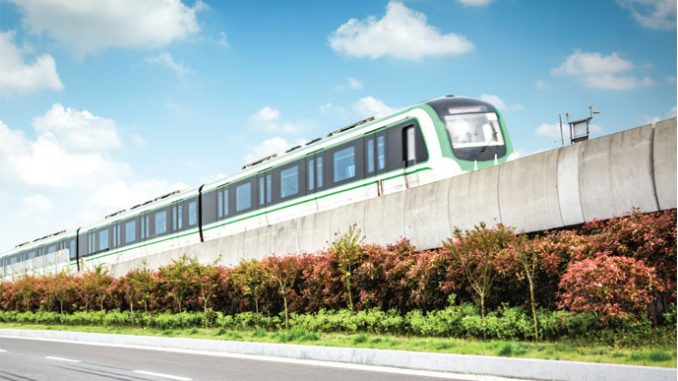
India’s expanding railway network is key to its infrastructure growth, ensuring seamless connectivity nationwide. While railways offer cost-effective mobility, their reliance on conventional energy affects the environment. To become a net zero transport system, Indian Railways (IR) is advancing solar and wind energy, electrifying its network and developing hydrogen-fuel trains, in collaboration with various stakeholders.
Railway electrification is a priority, with 97.05 per cent of IR’s network electrified as of February 2025. The pace has surged from 1.42 km per day (2004-14) to 19.7 km per day (2023-24). Northeast Frontier Railway (NFR) has electrified 2,827.74 route km (rkm) (66 per cent of its network) across Assam, West Bengal, Bihar and Tripura. To achieve full electrification by 2025-26, Rs 61.5 billion has been allocated in the Union Budget 2025-26. These initiatives reinforce IR’s commitment to sustainability, efficiency and economic growth.
Harnessing renewable energy
IR is rapidly adopting clean energy by harnessing solar and wind power. As of November 2024, 487 MW of solar and 103 MW of wind capacity had been commissioned. Railway zones are optimising power consumption, with Central Railway sourcing 10 per cent of its traction and 6.5 per cent of its non-traction power from renewables as of September 2024.
To meet rising energy demands, solar plants have been installed at 205 locations across Central Railway’s five divisions, reducing fossil fuel dependence and cutting power costs by Rs 46.2 million. The Mumbai division saved Rs 26.6 million, Bhusaval Rs 10.9 million, Pune Rs 6.9 million, Nagpur Rs 1 million and Solapur Rs 0.8 million.
South East Central Railway has also advanced in solar adoption, with its rooftop plants generating 0.38 MUs monthly as of October 2024, leading to Rs 1 million in savings and reducing carbon emissions by over 315 tonnes.
Integrating hydrogen power and nuclear energy
IR is reducing its carbon footprint by exploring alternative energy sources such as hydrogen and nuclear power. It is developing India’s first hydrogen train through indigenous efforts, generating electricity via a fuel cell that emits only water vapour. Aligned with IR’s net zero goal by 2030, this 1,200 horsepower train will soon operate on the 89 km Jind-Sonipat route in Haryana, making it the world’s most powerful hydrogen train. By 2025, 35 such trains will be deployed on non-electrified tracks still reliant on diesel.
IR is also considering nuclear energy to meet traction power needs. The Ministry of Railways (MoR) has approached Nuclear Power Corporation of India Limited and the Ministry of Power to explore sourcing power from existing and upcoming nuclear plants as a clean, efficient energy solution.
Other sustainable efforts through multilateral collaborations
IR is forging multiple collaborations to advance sustainable rail systems. In October 2024, the MoR signed an MoU with Spain’s Ministry of Transport for high-speed rail infrastructure, focusing on planning, design, safety and interoperability to enhance long-distance operations.
Research institutions are also aiding IR’s green transition. In November 2024, NFR partnered with IIT Guwahati to promote energy-efficient locomotives, renewable energy integration and eco-friendly construction.
IR is further improving efficiency with overhead equipment (OHE) and a head-on generation system, which replaces diesel-powered alternators by drawing power from OHE for train auxiliaries. In December 2024, NFR signed an MoU with IRCON International Limited for OHE maintenance in the Lumding and Tinsukia divisions, targeting completion by June 2025.
In sum
IR has evolved into a symbol of India’s green commitment, with dedicated freight corridors (DFCs) playing a key role. Fully electrified with a 2×25 kV system, DFCs minimise environmental impact and are expected to reduce carbon emissions by 457 million tonnes over 30 years. While the eastern DFC is complete, the western DFC is 93 per cent finished, supported by Rs 3.85 billion and Rs 6.6 billion allocations in the Union Budget 2025-26 for Phases I and II respectively.
IR is also enhancing sustainability in Mumbai’s suburban rail network through a study with IIT Bombay, focusing on efficiency and infrastructure planning, set for completion by July 2027. With continued investments in electrification, advanced technology and renewable energy, IR is poised to become a global leader in green rail transportation, driving India’s shift towards sustainability.