

Obtaining right of way (RoW) for transmission projects in India remains a significant challenge, primarily due to land acquisition hurdles, delays in environmental and forest clearances and resistance from local communities. Legal complexities, state-level policy variations and inadequate compensation further exacerbate the issue. However, recent policy changes such as revised RoW compensation guidelines and amendments to standard bidding documents (SBDs) for interstate transmission system (ISTS) projects are expected to streamline approvals, ensure fair compensation and de-risk project execution, provided there is effective implementation and cooperation across states. Industry experts discuss the implications of the new guidelines. Excerpts…
What are the biggest challenges in obtaining RoW corridors for transmission projects?

Rajasekhar Devaguptapu
Securing RoW remains critical to the timely execution of electricity transmission projects, and any bottlenecks lead to project delays and cost overruns.
The foremost challenge stems from land acquisition complexities due to population density, ecological criticality, and heterogeneity in administrative and regulatory frameworks. These lead to resistance from affected communities, procedural delays, varying compensation norms, etc. In urban areas, high land costs and infrastructure congestion make route optimisation difficult. In forest and hilly areas, concerns about environmental degradation and delays in securing forest and wildlife clearances pose a major hurdle.
The coordination between the central, state and local authorities is crucial, and the implementation of a single-window clearance system can ease the process. Additionally, public awareness campaigns are needed to raise awareness among stakeholders about the long-term public benefits of transmission infrastructure, helping reduce litigation and protests. Overall, addressing RoW constraints requires a multi-stakeholder, policy-aligned approach, backed by strong institutional coordination and public engagement.

Girish Kumar Kadam
One of the biggest challenges in obtaining RoW for transmission projects has been land acquisition, along with delays in securing forest/wildlife clearances, for areas where transmission lines traverse these environmentally sensitive areas.
Challenges pertaining to land acquisition are on account of disagreements over land compensation and resistance from local communities. Since transmission lines are long-route projects and often pass through forests or environmentally sensitive zones, they may face delays in obtaining clearances from environmental and forest authorities, which can be a time-consuming and complex process.
As per the Central Electricity Authority’s progress report on under-construction transmission projects, most project delays in FY2025 were on account of delays in the time taken to obtain forest clearances and Power and Telecommunication Coordination Committee clearances. Some projects also witnessed delays due to flooding as a result of prolonged monsoons during the year and delays in the supply of materials such as conductors and tower components by contractors.
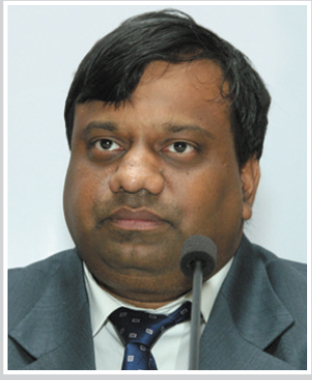
Sabyasachi Majumdar
The challenges in obtaining RoW for transmission projects can be broadly classified into three categories. First is the challenge of acquiring land. In many parts of the country, land records are neither digitised nor standardised, often leading to disputes or ambiguity over land ownership. This makes the land acquisition process cumbersome. Providing adequate compensation for and/or rehabilitating affected persons also pose challenges. Apart from landowners, multiple agencies are involved in the process – state governments, local governments and departments, and defence forces – making negotiations time-consuming.
Second are the socio-political challenges. Local communities often fear the adverse impact of transmission projects on their health and environmental wellbeing. This can lead to resistance against granting RoW. Third, there are policy challenges in obtaining RoW. Environmental/forest clearances are generally required, and each state follows a different policy regarding approvals, land acquisition and environmental clearances. Cutting through the maze of approvals can be challenging. Together, these issues can make obtaining RoW a very time-consuming and expensive process. If not managed properly, they can result in significant time and cost overruns
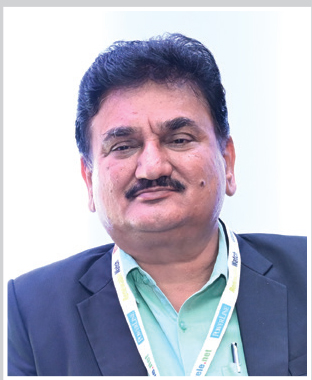
B. B. Mehta
Due to rapid industrialisation and the growth of urban housing, owners of agricultural land are reluctant to share their land parcels for transmission line projects. Once an extra high tension line tower is installed, the upset value of the land declines, and its future use becomes restricted. This poses one of the biggest challenge in obtaining RoW for tower base placement and power transmission corridors. The requirements often become more stringent if such a land parcel is earmarked as forest land. This necessitates clearance from the revenue and forest departments in line with established guidelines and acts.

M. Siddiqur Rahman
Obtaining RoW for transmission projects in India is a complex process due to various legal, social and administrative challenges. The major challenges are land acquisition and compensation issues such as multiple owners and unclear titles, which can delay negotiations. Since power is a concurrent subject, state-specific laws and policies for RoW vary widely, complicating uniform implementation and creating uncertainty and developers. Activism and resistance from local communities, NGOs and environmental groups, especially in ecologically sensitive areas, often emerge during the development and execution stages, posing a threat to the timely completion of these projects.
What additional measures need to be implemented to expedite RoW clearance processes?
Rajasekhar Devaguptapu
Securing RoW remains a major challenge for the timely completion of transmission projects. While earlier policies and frameworks have laid the foundation, additional measures are required to streamline and accelerate the process.
A centralised single-window clearance system is essential, integrating state and central agencies to provide end-to-end visibility and coordination. In addition, digitisation of land records and geographic information system (GIS)-based utility corridor mapping can facilitate route optimisation and help pre-approve transmission corridors.
Effective community engagement is also essential. This requires dedicated channels for grievance redressal to address local concerns and build public trust. In addition to the existing green corridors, renewable energy-rich states should explore the development of “green lanes” aligned with ongoing projects. Further, performance-linked incentives for states and local bodies can promote timely RoW clearances and facilitate better cooperation among various agencies.
Girish Kumar Kadam
Simplifying and expediting the regulatory approval process can help reduce delays. This may include the creation of a single-window clearance system, a unified process through which all necessary permits and approvals can be obtained.
Also, continuous engagement with local communities, along with initiatives for their development, can also help ease the resistance among local communities. Companies such as Power Grid Corporation of India Limited have appointed and set up teams of local women representatives to communicate with the locals, which has shown positive results on the ground. The use of advanced technologies such as GIS for route planning and drone surveys for land assessment can also improve the efficiency and accuracy of the planning process. In June 2024, the government revised RoW compensation norms for transmission lines in order to streamline the process for determining compensation for RoW corridors.
Sabyasachi Majumdar
Expediting RoW clearance processes requires coordinated efforts by both project developers and authorities. For project developers, this involves deep engagement with both local communities and government bodies to ensure buy-in from all stakeholders. A detailed social impact analysis is an important step towards this. Transparent and proactive communication with communities to highlight the benefits of the projects and address concerns about their impact is essential. Last but not the least, a fair and just compensation needs to be paid to the affected parties.
Project developers must engage proactively with the authorities to ensure that all approvals are secured before execution begins. On the part of the authorities, transparent guidelines are needed for approvals and clearances. There is also a need to harmonise regulations across states to minimise the duplication of efforts by developers. Finally, digitising and recording land records would go far beyond just expediting transmission project execution.
B. B. Mehta
Once the primary survey is undertaken, the process of obtaining RoW at all en-route locations should be initiated with the help of district administration, from the collector to tehsildars and gram panchayat officials. There is a need to clearly earmark locations to secure concurrence and support from landowners. The intervention and support of local political authorities and views expressed at the Gram Sabha matters also play a critical role. A holistic approach that considers the future development of the area can make RoW settlement more feasible.
M. Siddiqur Rahman
To expedite the RoW clearance process for transmission projects in India, a multi-pronged approach involving policy reform, stakeholder coordination and technology integration is essential. Implementing uniform RoW policies across all states and establishing an online, time-bound, single-window portal to fast-track approvals is crucial. Further, GIS-based route alignment tools can be employed to minimise impact areas, while integration with land record systems can help identify landownership early and reduce title disputes. Additionally, the use of technology and innovations such as compact tower designs and multicircuit towers can be explored to reduce the land footprint and underground cabling in high population density areas. Finally, effective stakeholder management from the early stages of the project will be helpful in communicating project benefits and preventing misinformation.
Will the recent policy changes such as the new RoW compensation guidelines and amendments to SBDs for ISTS projects help address RoW concerns?
Rajasekhar Devaguptapu
The recent policy changes in India’s electricity transmission sector, specifically the revised RoW compensation guidelines and amendments to the SBDs for ISTS projects, are aimed at addressing RoW challenges.
Key changes, such as revised compensation for the total base area; variable compensation for rural, municipalities and metro zones; and a revised structure for land valuation, bring in clarity and uniformity, facilitating efficient project execution. Additionally, the revised permissible location radius for load-serving substations supports developers in land acquisition and project planning. Collectively, these policy changes aim to expedite project timelines and reduce conflicts, thereby enhancing the efficiency of transmission infrastructure development.
Girish Kumar Kadam
These policy changes are expected to address several RoW concerns effectively. For example, introducing a market-based valuation system ensures that landowners receive compensation that reflects the actual market value of their land instead of inadequate compensation based on outdated circle rates. Also, the introduction of district-level members (district magistrate/district collector/deputy commissioner) to assess market values and determine compensation ensures that local conditions and land use categories are considered. This localised approach can lead to more accurate, transparent and fair compensation assessments. The amendments to the SBDs for ISTS projects streamline the bidding process, enhance financial provisions and prioritise environmental and social safety. These changes aim to make the projects more attractive to investors and ensure efficient implementation.
Sabyasachi Majumdar
The new RoW compensation guidelines provide for transparent guidelines for compensation to affected landowners. They mandate the creation of a committee comprising representatives from the district magistrate’s office, the landowners and the ISTS developer. The compensation for RoW is set at 30 per cent of the land value in rural areas, 60 per cent for municipal corporations and 45 per cent for other urban areas. The new guidelines also specify that if the cost of land acquisition differs from the base RoW determined by the ISTS scheme for TBCB projects, the difference will be recovered through additional tariffs under the change in law mechanism. According to CARE, these measures are likely to help address RoW concerns. However, timely implementation at the ground level is necessary.
B. B. Mehta
The recent amendment to the policy is highly encouraging and supportive for resolving RoW issues. The settlement of 200 per cent of the land value for the tower base provides reasonable compensation for landowners, and the decision to consider land value based on market rates is also a welcome step.
Further, the payment of corridor utilisation raised up to 60 per cent seems quite substantial and will get a good response for the resolution of RoW. However, this will increase the transmission line project cost, with around 30-40 per cent of the total project cost accounted for by RoW, tower base and corridor access. This could result in an additional tariff burden for consumers in the upcoming network. An interim approach, considering land value as determined by the collector, along with corridor payments of 15 per cent for rural areas and 45 per cent for urban areas, could be considered to minimise the impact on the transmission project cost.
M. Siddiqur Rahman
The recent policy changes, including the new RoW compensation guidelines and amendments to the SBDs for ISTS projects, are definitely steps in the right direction. They aim to streamline, standardise and de-risk the RoW process. However, their success will depend on effective implementation and state-level cooperation. As per the revised guidelines for RoW compensation issued by the Ministry of Power in June 2024, more realistic compensation norms (based on land use and market rates) will reduce resistance from landowners. Clear guidelines for tower base compensation and corridor usage compensation, particularly for high voltage levels, will standardise practice across states. The amendment to the SBDs for ISTS projects such as the inclusion of RoW status as a bid evaluation parameter encourages realistic project planning as bidders are now expected to factor in risks more transparently during the bidding stage. In the case of TBCB, RoW-related costs are being clearly defined and allowed as pass-through in certain cases, reducing financial risks for bidders. It also helps in attracting serious bidders, mitigating the risks of underbidding, project delays and cost escalations.