
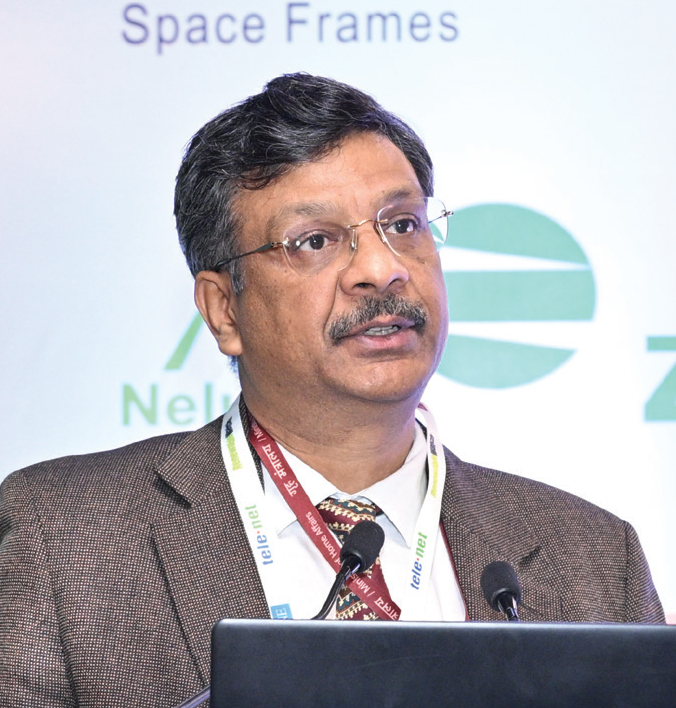
 India’s energy sector is undergoing a significant transformation to meet the needs of its rapidly growing economy. Thermal power continues to play a dominant role, with coal-based generation at the core of electricity supply. At a recent Power Line conference, Praveen Gupta, Member (Thermal), Central Electricity Authority (CEA), highlighted that the focus remains on enhancing efficiency, flexibility and sustainability within the thermal sector. He also discussed the efforts under way to improve plant performance, adopt advanced technologies and ensure integration with renewable energy sources. Edited excerpts…
India is one of the fastest growing economies globally. Its total installed capacity is around 457 GW, with more than half (around 244 GW) coming from thermal generation. AAmong these, coal-based plants are the cornerstone of India’s power sector, contributing approximately 218 GW to the grid. With regard to actual generation, during FY2023-24, the thermal sector accounted for approximately 75 per cent of the country’s total electricity generation. The majority, at around 72.5 per cent, came from coal-based power plants.
Coal’s plant load factor (PLF), which had been on a downward trend earlier, is now rising and currently stands at around 70 per cent. However, much more is required, as demand is growing rapidly at a pace of 5-6 per cent annually. The current energy requirement, which is at around 1,900 BUs, is likely to increase to 2,500 BUs by 2031-32. The peak demand, which has presently touched about 250 GW, is projected to reach around 366 GW by 2031-32, as per the 20th Electric Power Survey. The growing power demand underscores the need for substantial investments in new generation capacity to ensure reliable and affordable electricity for all.
Notably, the Indian government has already laid out a comprehensive long-term development strategy through international commitments. At COP27, India committed to meeting 50 per cent of its cumulative installed capacity from non-fossil fuel sources by 2030, reducing the emission intensity of GDP by 45 per cent by 2030, and, most importantly, achieving net zero emissions by 2070. These targets reflect the country’s commitment to addressing climate change while simultaneously ensuring energy security and affordability. The government has also committed to adding a minimum of 80 GW of coal-based capacity by 2031-32. Currently, there are around 30 GW of coal-based power plants under construction. Of this, 15.5 GW is being developed by the central sector, and the rest by the state and private sectors. In addition, about 19 GW of plants have been recently awarded, around 10 GW are under bidding, and around 37 GW are at various stages of approval. Coal has already been allocated to the plants, while other clearances are being pursued.
The focus remains on promoting pithead plants to minimise logistical infrastructure constraints.
To ensure that new thermal capacity addition is as efficient as possible, the government has mandated that all newly commissioned thermal power capacity in the country be based on supercritical or ultra-supercritical technology. These technologies have an efficiency of 40-42 per cent, thereby reducing emissions per unit of electricity generated. Presently, around 104 units aggregating 72 GW of capacity are deploying supercritical or ultra-supercritical technology, and the country’s first-of-its-kind 800 MW advanced ultra-supercritical project has also been announced. Bharat Heavy Electricals Limited and NTPC Limited are jointly developing the project, and is expected to have an efficiency of around 45 per cent.
There are several challenges in capacity addition, particularly the limited availability of engineering, procurement and construction contractors, which has led to instances of single bidding. To address this, the CEA has revised the qualifying requirements to enable greater participation from vendors, without compromising on quality. As a result, many vendors have started showing renewed interest in coal-based power generation.
Further, to enable the integration of renewable energy into the grid, coal-based power plants need to be made flexible to accommodate the intermittent and variable renewable energy sources. These coal plants must be capable of operating at low loads and managing daily ramp-ups and ramp-downs to maintain grid stability. In January 2023, the CEA issued a regulation requiring all coal-based power plants in the country to demonstrate their capability to operate at a minimum technical load of 55 per cent within one year. Around 75 per cent of the units are now capable of achieving this load level without oil support. Additionally, plants are required to demonstrate a minimum technical load of 40 per cent in a phased manner, as per the CEA guidelines. The Central Electricity Regulatory Commission has introduced part-load compensation for up to 40 per cent based on the CEA’s recommendation, which outlines the expected deterioration in heat rate and auxiliary power consumption at different load levels, so that it can be accounted for in the tariff.
Another way to improve the efficiency of coal-based power plants is through the Renovation and Modernisation (R&M) of older units. R&M not only helps recover the performance degradation caused by ageing but also improves efficiency by incorporating advanced technologies. The CEA has prepared a phasing plan for R&M covering around 233 units. This is a long-drawn process and is expected to continue up to 2040-45.
As of now, coal availability remains quite adequate. The combined efforts of the Ministry of Power (MoP), the Ministry of Coal and the Ministry of Railways have ensured adequate stocks at all coal-based power plants. Coal allocation has already been made for all upcoming plants. Under Para B(iv) of the Shakti policy, states have already been allocated coal for their planned plants, whether developed by themselves or through tariff-based competitive bidding. The process to revamp the Shakti policy is under way to further simplify coal allocation for all thermal power plants (TPPs), including IPPs.
The availability of water is also expected to be a major challenge in the future. To address this, air-cooled condensers are being installed. Many plants at NTPC have already adopted air-cooled condensers, leading to water savings of up to two-thirds. We are also considering such condensers for nuclear power plants where the water requirement, apart from power generation, is huge. However, this reduces the efficiency of power generation, and therefore it is best deployed when there is scarcity of water.
Additionally, the CO2 emissions database is published by the CEA every year, detailing the emission levels from coal-based and gas-based power plants. Currently, CO2 emissions amount to around 1,200 million tonnes annually, with an average emission rate of approximately 720 grams per unit of electricity generated. Further, around 960 grams of CO₂ is emitted when one unit of electricity is produced using coal.
To reduce SOx emissions, flue gas desulfurisation systems are currently being installed at approximately 537 units across the country. Of these, 49 units, representing a combined capacity of 25 GW, have already been commissioned. Contracts have been awarded for over 200 units, while the remaining projects are at various stages of the tendering process. In terms of fly ash utilisation, the MoP has updated its guidelines and continues to advocate for increased utilisation rates. Currently, around 95 per cent of fly ash is being utilised, with nearly 60 per cent being directed toward cement manufacturing and highway construction. To further mitigate emissions, coal-based power plants are exploring advanced technologies such as ammonia and hydrogen co-firing, carbon capture, utilisation and storage (CCUS) technologies, and biomass co-firing. The MoP issued a biomass co-firing policy in 2017, focusing on agro-residue-based biomass pellets. This policy mandates 5-7 per cent biomass blending with coal at TPPs. To support its implementation, the MoP launched the SAMARTH mission, which offers technical and training support. The ministry has also notified benchmark prices for torrefied and non-torrefied biomass pellets. Currently, 66 TPPs across the country have begun co-firing biomass pellets alongside coal. In the National Capital Region (NCR), all 11 TPPs are co-firing biomass, with an average blend of 2.5 per cent. So far, 1,560,000 tonnes of biomass pellets have been co-fired, including 1,000,000 tonnes in the past year alone. Awareness efforts are ongoing, and notable progress has been made, particularly in the NCR.
Achieving net zero emissions by 2070 will require a significant scale-up of CCUS technologies, which involve capturing, transporting, storing and utilising CO₂ emissions. The focus is gradually shifting from storage to the utilisation of captured carbon. However, these technologies are at an early stage, and extensive R&D is essential to ensure their commercial viability and scalability. The combined efforts of industry stakeholders, government bodies and research institutions will be crucial in this journey.
Another area of focus is the revival of gas-based power plants. India has an installed capacity of 23 GW of gas-based generation, of which 21 GW is connected to the national gas pipeline network. However, due to the acute shortage of domestic gas and the high cost of imported regasified liquefied natural gas (Rs 10-Rs 12 per unit), these plants are operating at an average PLF of only 15 per cent. In contrast, isolated gas fields, primarily in the Northeast and parts of southern India, are operating at a PLF of 30-35 per cent. These plants are often utilised during peak demand periods, particularly from March to October. A new scheme aimed at improving the utilisation of gas-based power plants is expected to be launched soon.