

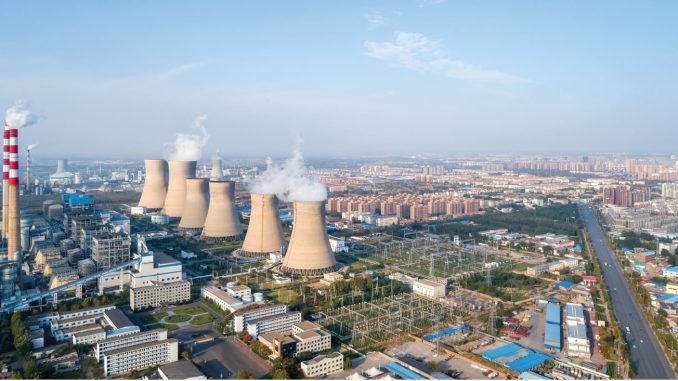
Despite India’s push towards cleaner energy, thermal power continues to play a major role in the country’s electricity generation mix. As per the Central Electricity Authority (CEA), energy generation from thermal sources accounts for 74.36 per cent of the total generation, while renewable energy sources contribute 18.52 per cent. This highlights the continued reliance on conventional thermal power. In this context, the renovation and modernisation (R&M) of thermal power plants (TPPs) is imperative to maintain operational efficiency and extend plant life. Other benefits include improved safety and environmental sustainability.
Many TPPs are currently not operating at their full potential, and a large number of thermal units, including the 200/210 MW units, have outlived their normal design life. The R&M of such units is essential for performance improvement as well as to comply with the stricter environmental norms to improve environmental conditions.
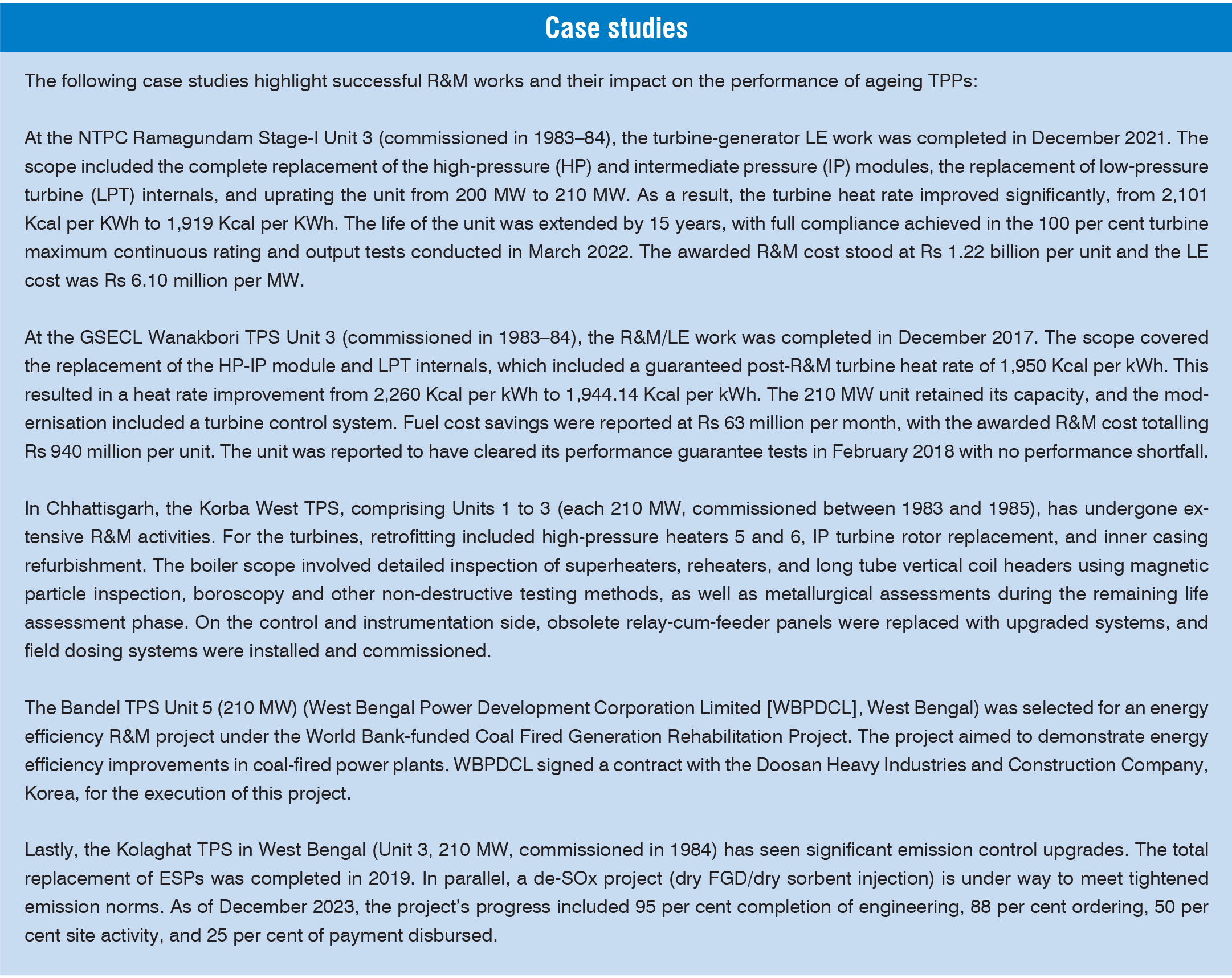
R&M is also a more cost-effective solution compared to setting up a new plant. The government has advised utilities to postpone retirement by at least 2030, making R&M a key focus area for gencos to enhance power generation at old TPP units and extend their lifecycle.
R&M practices are being increasingly adopted to reduce the environmental impact of TPPs and adapt to the changing energy scenario. Another key driver for its adoption is the implementation of state-of-the-art Industry 4.0 solutions such as industrial internet of things (IoT). These technologies help modernise operations and maintenance (O&M) through plant analytics and diagnostics and asset management based on the latest artificial intelligence (AI)-machine learning solutions. Preventive maintenance technologies such as IoT can also help stabilise plant operations, and analyse, inspect and diagnose issues to improve plant efficiency and reliability.
Prerequisites for R&M
According to the new R&M guidelines issued in 2023, the identification of thermal power generating units for undertaking R&M is based on several technical prerequisites. For instance, units with an installed capacity greater than 150 MW should be prioritised, while smaller units can be considered to meet performance and compliance standards.
Units that have been in operation for 8-10 years are usually considered, especially those that show a gross heat rate deviation exceeding 15 per cent from the design value. For these cases, it is suggested that R&M be performed on turbines, boilers and all other critical associated equipment. For life extension purposes, units that have completed 20 years of service are eligible for assessment. Another important requirement is the evaluation of the integrity and reparability of civil structures in the boiler turbine generator island and balance of plant areas. The residual life of key components should be checked after about 160,000 hours of operation to avoid the risk of serious failures. Additionally, a techno-economic analysis must be conducted to ensure the unit’s continued competitiveness in the merit order dispatch framework.
In addition to technical prerequisites, it is important to evaluate commercially viable models that enable the successful execution of R&M projects that are financially viable. Traditionally, conventional competitive bidding is used where R&M works are awarded through competitive bidding for activities such as turbine and boiler upgrades. A new company may also be established as a joint venture between a power utility and a public/private entity for O&M of the plant while R&M activities are underway. A service model has also emerged, where a service provider can be engaged through either competitive bidding or nomination to implement R&M projects. Then, the utility repays the investment from the savings through a performance-linked payment mechanism.
Flexibilisation
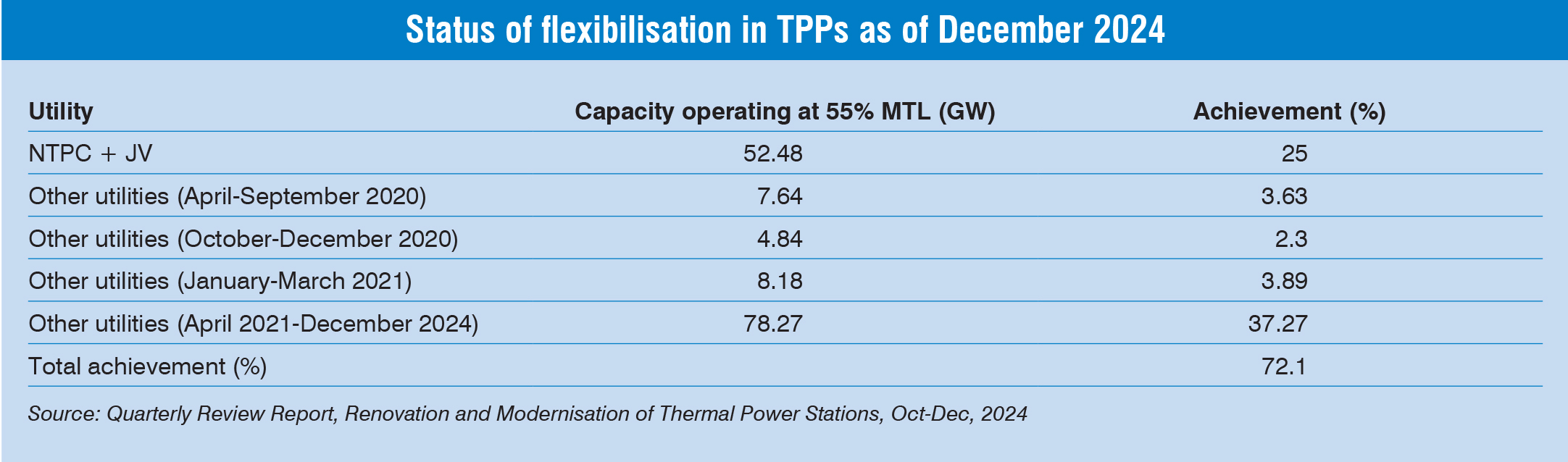
An important emerging trend in R&M is the flexibilisation of TPPs. As renewable energy penetration increases, maintaining grid stability becomes challenging due to the intermittency of renewable energy sources. Hence, flexibility operations are required to ensure frequent and rapid ramping of power capacity in a plant. To prepare plants for flexibilisation, modification of components and chemical regimes, as well as changes in operational practices, need to be undertaken.
Notably, the India-Denmark Energy Cooperation MoU, signed in June 2020, has facilitated knowledge exchange and pilot initiatives. Under this collaboration, flexibility tests have been successfully demonstrated at NTPC Limited’s Ramagundam Unit 7 (500 MW) and Karnataka Power Corporation Limited’s Raichur Unit 3 (210 MW). Flexible operation tests have also been conducted at the Durgapur Steel Thermal Power Station (TPS) in Adanl, West Bengal, operated by Damodar Valley Corporation, and at Maithon Power Unit 2 of Tata Power under the Indo-German Energy Forum.
In 2023, the CEA had notified regulations that mandated flexible operations in coal-based thermal generating units. Under the regulations, all central, state and private thermal power generating units are required to comply with a minimum technical load (MTL) of 55 per cent, and meet ramp rate requirements of 2-3 per cent per minute, within one year of notification. Additionally, phased plans must be developed to enable operation at 40 per cent minimum load, with ramp rates of 1 per cent per minute between 40-55 per cent, 2 per cent per minute between 55–70 per cent, and 3 per cent per minute between 70–100 per cent.
Under the phasing plan developed by the CEA to undertake R&M works and segregate potential thermal power units, there are currently 223 units with a total capacity of 63,440 MW. These units were older than 20 years as of December 2022. R&M/life extension (LE) works in these units must be implemented in nine phases to avoid any major energy demand-supply gap up to 2046. Under Phase I, 36 units of 7,750 MW of capacity are targeted to undergo R&M between January 2024 and June 2026.
 Emissions control
The Ministry of Environment, Forest and Climate Change’s Environment (Protection) Amendment Rules, 2015, has mandated the installation of emission control technologies across thermal stations, involving retrofits and modifications to technologies such as electrostatic precipitators, flue gas desulphurisation (FGD), and selective catalytic reduction to curb particulate matter, NOx and SO2 levels.
According to the CEA, as of January 2025, FGD systems had been planned for 537 coal-based units (204.16 GW of capacity), of which installation has been completed in 49 units (25.59 GW). In the National Capital Region, around 35 units are required to install FGD units, of which installation has been carried out in 13 units so far. Meanwhile, contracts/letters of award have been awarded for 211 units (91.88 GW). Further, bids have been opened for 47 units (16.19 GW) and notice inviting tenders has been issued for 85 units (26.53 GW).
Besides FGD retrofits, TPPs need to undertake electrostatic precipitator (ESP) upgradation and combustion modification, as well as implement measures to reduce water consumption and implement zero liquid discharge.
Further, R&M is being undertaken by TPPs for the augmentation of all associated/auxiliary equipment and systems, such as handling, storage, milling and operation (boiler modification and ash handling), to make TPPs capable of biomass co-firing.
Digital technologies and solutions
TPPs serve as a baseload power source, but their role has grown due to the increasing integration of renewable energy power sources. However, TPPs are susceptible to creep damage due to high steam temperatures, fatigue due to load fluctuation or start-and-stop operations, deformation, corrosion and erosion with age.
Today, a number of digital systems support boiler operation and boiler facility periodic inspection planning, enabling thermal power TPPs to continue to operate stably. These solutions are aimed at improving utilisation rates and efficiency by performing analyses, using a combination of facility inspection results and operation data that provide more sophisticated monitoring through automatic diagnosis through information and communication technology, which also reduces the need for manpower. Advanced flow pattern technologies are also being installed using computational fluid dynamics analysis to reduce secondary loss by controlling steam flow lines and mass flow distribution.
 Challenges and the way forward
One of the most significant challenges in the R&M of TPPs is procurement-related issues, as several critical components in FGDs, such as gypsum dewatering systems, agitators, borosilicate glass and clad plates (C276 and titanium), are largely imported. Policies that restrict procurement from neighbouring countries further exacerbate these challenges, leading to increased costs and longer lead times owing to the limited global supplier base for these specialised items. Another operational challenge arises from the integration of FGD systems, which are critical for meeting SO2 emission standards. Once FGD equipment, including new chimneys, is installed, it has to be connected to the existing TPP infrastructure, which leads to the rerouting of flue gases.
In addition to procurement delays, R&M projects often face difficulties related to complex design requirements and uncertain shutdowns. These issues are further compounded by evolving environmental regulations with regard to emissions control for SO2 and NOx. Financial constraints are another major barrier for public enterprises that usually operate under stressed balance sheets. Many utilities struggle to raise the capital needed for R&M initiatives due to the lack of structured incentives or centralised financial support mechanisms. Moreover, a shortage of skilled personnel experienced in executing technically demanding R&M projects often results in delays and suboptimal outcomes.
With coordinated effort and strategic execution, R&M can continue to serve as a critical pillar in India’s power transition. Focused efforts on coal flexibilisation and repair and maintenance of plants enhance operational efficiency and support renewable energy integration, ensuring energy supply and mitigating supply risks.
Mohammed Ali Siddiqi