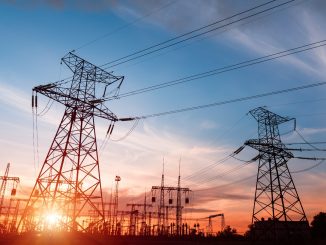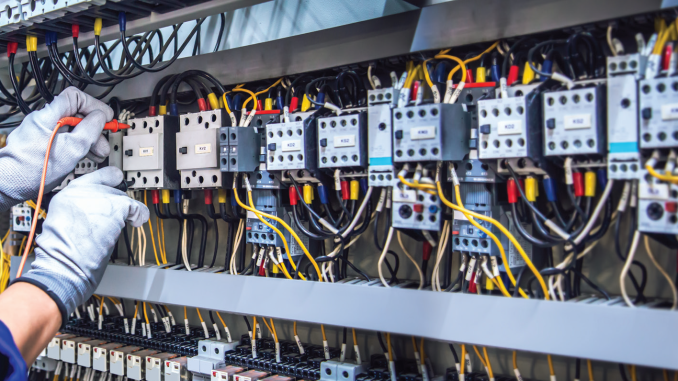
The integration of new assets into India’s power grid is dependent on accurate testing and measurement due to the country’s fast power system expansion and improvement. Maintaining efficient and effective equipment performance and assuring a constant power supply are both made possible by the testing and measurement practices of power equipment. The failure of even a single component in a power system can cause the entire grid to collapse, necessitating regular testing and maintenance of the system. Their indispensable role in facilitating early fault detection, grid modernisation, efficiency gains, regulatory compliance and technology integration makes them vital to India’s continuous energy transformation and growth.
Drivers
The industry relies on testing and measuring to ensure grid efficiency, safety and reliability at every level, from generation to distribution. Conducting this on a regular basis aids in predictive and preventive maintenance by revealing abnormalities, wear and flaws in machinery before they cause catastrophic breakdowns.
Testing and measuring ensure power quality and dependability by detecting, diagnosing and fixing flaws that might disturb electrical systems. This practice has become crucial in gauging parameters such as voltage, current, power factor and harmonics to ensure efficient functioning of the equipment deployed in electricity infrastructure. For instance, high voltages and currents are managed via transformers. To avoid accidents and equipment damage, some pre-commissioning tests, such as periodic/condition monitoring and emergency testing, are conducted at the consumer’s location, whereas type, routine and special tests are conducted at the production plant.
Transmission requirements
A new Central Electricity Authority (CEA) report on the “Failure of 220 kV and above Voltage Class Substation Equipment between July 2023 and December 2024” underscores the importance of testing power equipment. The report notes a total of 162 failure incidences involving transformers, reactors, instrument transformers, surge arrestors, circuit breakers, disconnectors, wave traps, coupling capacitors, gas-insulated switchgear bays, cables, and plug and switch system modules of 220 kV and above voltage ratings between July 1, 2023, and December 31, 2024. It was observed that in most cases, utilities typically withhold information on factory test records, pre-commissioning test reports, operation and maintenance (O&M) and repair histories, relay settings, environmental and system conditions pertinent to the failure, etc. The CEA suggested that depending on the state of the running equipment, the measurement frequency should be adjusted. It noted that it is more important to track the overall trend of test findings than to track their absolute levels. Another suggestion emphasised that it should be the standard practice for utilities to conduct tests on large electrical equipment at their sites around one or two months before the warranty period ends. This way, if anything out of the ordinary comes up during the testing, the utility can discuss it with the original equipment manufacturer (OEM) and take any further action that is needed during the warranty period.
In transmission, utilities use advanced testing tools such as relay protection testers to simulate fault events and examine the reactions of protection devices to guarantee quick fault separation and minimise outage durations. The growing number of transmission projects in India is expected to increase the demand for equipment testing and measurement, particularly with the development of critical 765 kV voltage level and high voltage direct current projects.
Smart metering testing requirements
Significant investments are being undertaken to improve and modernise the distribution network. Since 2015, the government’s National Smart Grid Mission (NSGM) has advanced smart grid operations across discoms. It helped establish an advanced metering infrastructure (AMI) ecosystem and demonstrate smart grid functions. Further, the Revamped Distribution Sector Scheme, with a total outlay of Rs 3,037.58 billion and a gross budgetary support of Rs 976.31 billion over a period of five years, from 2021-22 to 2025-26, aims to implement prepaid smart meters. As of June 2025, about 223,756,990 smart consumer meters have been sanctioned, of which 30,655,677 have been installed. With the installation of 250 million smart meters envisaged under the initiative, it is likely to drive the demand for smart meter testing labs across India.
Smart meters are required to adhere to relevant technical and quality standards and must have valid tests and Bureau of Indian Standards (BIS) certificates. Tests and inspections are under the complete purview of the AMI service provider and its sub-vendors.
The Standard Bidding Document covers detailed clauses for the supply, installation, integration, testing and commissioning of smart meters, as well as for tests, inspections and management of the quality assurance/quality control of smart meters.
All smart meters are required to undergo various tests. The factory acceptance test (FAT) is conducted on all the equipment, which includes the verification of all functional characteristics and requirements specified. After the successful completion of FAT, the field installation and integration test are performed to ensure the successful operation of the installed smart metering system. The site acceptance test is conducted to assess the functioning of the complete system, including cloud data centres and their hardware and software components, along with the supply, installation and integration of smart meters/data concentrator units (along with their related hardware and software equipment).
Generation equipment testing
In the power generation segment, thermal power plant efficiency, safety, reliability, regulatory compliance and operational cost-effectiveness depend on testing and measurement. Measuring devices such as resistance temperature detectors and thermocouples alert operators to aberrant circumstances, allowing them to act before safety is endangered.
In addition, India’s goal to achieve 500 GW of renewable energy capacity by 2030 is expected to drive the demand for renewable energy equipment, such as solar cells, PV modules and wind turbine generators. Hence, the testing and measurement of equipment used in clean energy projects will ensure the quality, reliability, efficiency and long-term success of the renewable energy market in the coming years.
In 2023, the CEA had notified guidelines for the field efficiency test in hydropower plants, including pumped storage plants. The objective was to guide hydropower generating utilities in the country, providing a uniform approach for carrying out tests, enabling its acceptance and minimising disputes between the project authority and the unit supplier for the project. This guideline mainly focuses on defining the terms and quantities to be used in the process, specifying the validity and acceptance period for tests, identifying the testing agency, outlining the methods for measuring the relevant quantities to determine the hydraulic/electrical efficiency of the units, and establishing the criteria for fulfilment of contract guarantees and penalties in the case of non-fulfilment. These guidelines are applicable to all types and sizes of units, comprising generators, motors and impulse/reaction turbines, and pump-turbines above 5 MW.
Testing and measurement ecosystem
OEMs, suppliers and third-party testing organisations make up the testing and measurement market. Many equipment manufacturers and utilities undertake the testing of ultra-high voltage/extra-high voltage systems, transmission towers, cables, meters and sophisticated switchgear. National Accreditation Board for Testing and Calibration Laboratories-accredited laboratories, such as the Central Power Research Institute (CPRI) and the Electrical Research and Development Association (ERDA), conduct tests and certify transmission and distribution equipment.
ERDA holds national and international accreditations for in-house and on-site testing. It has a laboratory that can evaluate many types of high-temperature, low-sag conductors, such as ZTACTR, TACSR, ACSS, ACFR, ACCC and GTACSR. In May 2025, ERDA opened a solar inverter test facility in Gujarat. In accordance with BIS standards and a quality control directive from the Ministry of New and Renewable Energy (MNRE), the lab can test solar inverters. Solar inverters with current ratings of up to 250 kVA are tested and evaluated in this lab for use by discoms, small companies, research and development (R&D) centres, and manufacturers.
Likewise, the CPRI is India’s leading electrical power engineering research, testing, certification and consultancy institution. The CPRI is an autonomous society within the Ministry of Power. The Power System Division of the CPRI provides sophisticated testing, measurement and advisory services for power system components and operations, making it vital to the Indian power sector.
The National Institute of Solar Energy (NISE), an autonomous specialised institute within the purview of the MNRE, conducts R&D, solar component testing and certification, capacity building, and solar product and application development. In April 2025, the NISE inaugurated a solar PV module testing and calibration lab in conjunction with the MNRE. The newly opened facility will ensure high-quality domestic solar modules to support the production-linked incentive scheme.
Similarly, the National Institute of Wind Energy (NIWE) is an autonomous R&D institution functioning under the MNRE. It has a testing, standards and regulation division that offers safety and function testing. Further, another division, called the Wind Resource Assessment Division, aims to offer world-class facilities to test full wind turbine generator systems to international standards. The division also facilitates load measurements and power performance measurements for wind energy infrastructure.
Key policy mandates
In April 2025, in a key development for the wind industry, the MNRE issued revised guidelines for the installation of prototype wind turbine models. The revised guidelines allow prototype wind turbines a maximum of three years to complete type testing and obtain certification from internationally accredited agencies. The guidelines form part of an updated framework for prototype wind turbine installations, to be implemented by the NIWE. As per the revised guidelines, prototype models will be installed solely for the purpose of type testing.
Meanwhile, in May 2025, the MNRE released draft guidelines for simplifying the testing of solar PV modules in labs for the implementation of solar systems, devices and components. The draft guidelines attempt to streamline the procedures for performance testing and the compulsory registration of solar PV modules with the BIS. The draft guidelines also aim to standardise testing techniques across certified laboratories and guarantee that all solar PV modules fulfil current Indian standards and quality control orders. Moreover, the laboratories are obligated to follow testing standards such as IS/IEC 61730-1: 2023, IS/IEC 61730-2: 2023, and IS 14286: 2023.
In February 2025, the MNRE notified the draft guidelines on the design, specifications, performance and testing procedure for solar cold storage with thermal energy storage (TES) backup. The guidelines outline a comprehensive procedure for testing solar-powered cold storage systems with TES backup across capacities ranging from 2 metric tonnes (mt) to 20 mt. Further, the draft guidelines stipulate a test setup that includes cold storage temperature measurement, electric air heaters with energy meters, energy meters on systems, energy meters for auxiliary load and other test procedures. It also highlights test procedures for the performance evaluation of solar-powered cold storage and emphasises the measurement of parameters such as temperature and electricity load, along with the calibration of the apparatus.
In November 2024, the CEA published draft guidelines aimed at standardising the periodicity of type tests for major equipment in India’s electrical power sector. Previously, the CEA introduced the “Guidelines for Type Test Validity” in 2022 to address the challenges faced by manufacturers and stakeholders due to varied testing requirements. The revised guidelines outline a rationalised approach for testing intervals. They propose a fixed periodicity for type tests across various equipment classes, taking into account environmental factors, the availability of testing infrastructure and standardisation requirements. The intent is to eliminate unnecessary retesting for equipment that has not undergone substantial design or manufacturing changes. According to the revised guidelines, periodicity is categorised based on equipment classes, with the aim of ensuring consistency across utilities, reducing costs and improving efficiency.
Likewise, in July 2024, the MNRE released the funding guidelines for testing facilities, infrastructure and institutional assistance for developing standards and a regulatory framework under the National Green Hydrogen Mission. This initiative is expected to help identify gaps in the current testing infrastructure for green hydrogen and its derivatives’ value chain components, technologies and processes. New testing facilities will be built and existing ones will be upgraded as part of the programme to ensure everything runs smoothly and securely. Up to FY2025-26, a total of Rs 2 billion is expected to be incurred on the scheme’s implementation.
Challenges and the way forward
The electricity sector in India faces several challenges when it comes to testing and measurement. As the pace of network addition grows, there will be a need for more reliable testing facilities for electrical equipment. This includes smart meters, transformers and other important components to avoid certification and deployment delays. Supply chain interruptions may delay testing and deployment, as the industry remains heavily reliant on critical imported components. Establishing a reliable domestic supply chain is essential, though it remains an ongoing challenge.
Further, thorough testing necessitates a substantial financial outlay towards state-of-the-art equipment, trained workers and several testing cycles. The quality and dependability of deployed equipment could be compromised if smaller utilities and manufacturers are unable to adequately test their products due to financial constraints. Nevertheless, innovative breakthroughs will bring about significant change in the testing and measurement industry in the future.
In recent years, digitalisation and automation have revolutionised data acquisition, analysis and usage in testing and measurement. The ability to easily save, retrieve and audit digital documents facilitates regulatory compliance and accreditation (such as ISO/IEC 17025). Automated testing systems can run tests faster than manual techniques. Artificial intelligence-driven thermal power measuring systems in power plants simplify data gathering, processing and reporting, eliminating human intervention and saving time and resources for complicated testing procedures.
Although automation entails significant initial investment, it decreases long-term expenses by reducing labour, errors and downtime owing to faster issue identification. In the future, the growing need for electrical infrastructure and networks will create significant opportunities for testing and measurement equipment manufacturers, driven by increased demand for testing practices.
Mohnish Makwana