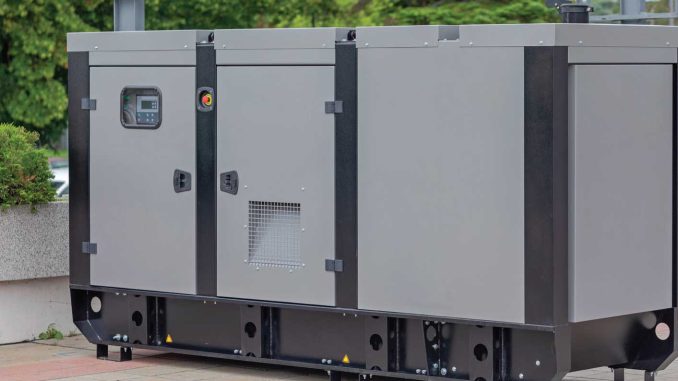
Diesel engines and gensets play a pivotal role in powering industrial operations and providing backup across sectors. Known for their reliability and durability, these systems continue to be highly relevant for power supply in both off-grid and remote locations. In recent years, the diesel engine and genset segment has witnessed a remarkable transformation, driven by a growing focus on sustainability. Recent technology advancements are enabling quieter operations, lower emissions, better fuel economy and greater power output of diesel gensets. They are now being integrated with digital controls that allow remote monitoring, predictive maintenance and risk mitigation with regard to engine failures. At the same time, technologies such as common rail direct injection (CRDi) and selective catalytic reduction (SCR) are increasingly becoming standard for emissions control.
Power Line takes a look at some of the key technologies used in diesel engines and gensets…
Electronic fuel injection systems
Electronic fuel injection (EFI) systems in diesel engines and gensets marked a major shift from mechanically controlled fuel injectors. Unlike traditional systems, EFI systems use electronically operated injectors that allow greater control over fuel injection into an engine’s internal combustion chambers. In this system, the timing and amount of fuel injected are determined using data received from various sensors that monitor parameters such as engine speed, air pressure and temperature. The ability to adjust fuel injection based on different loads and speeds has not only helped improve fuel efficiency and engine performance, but also led to lower emissions.
A notable example of EFI systems is the CRDi system in diesel engines. At the core of this system is a common fuel rail that stores fuel at a very high pressure. This fuel rail then supplies fuel to all injectors and delivers the fuel directly into the combustion chamber. In contrast, in older engines, fuel was first delivered into a small pre-combustion chamber before it moved into the main combustion chamber.
Emission control technologies
Emission control technologies in diesel engines and gensets aim to reduce harmful pollutants, such as particulate matter, nitrogen oxides (NOx), carbon monoxide and hydrocarbons, which are released during combustion. These technologies can be divided into two groups based on the stage of operation: in-cylinder and after-treatment. In-cylinder technologies minimise emissions right at the source, that is, during the combustion process itself. Later on, after-treatment technologies use add-on devices such as filters or catalysts to further reduce pollutants before they are released into the atmosphere.
One of the most commonly used in cylinder technologies is exhaust gas recirculation (EGR). This system reduces the NOx emissions released during the diesel combustion process by redirecting the exhaust gases back into the combustion chamber, which lowers the oxygen level and combustion temperature. Meanwhile, among after-treatment technologies, SCR is widely used. In this, a urea-based fluid called diesel exhaust fluid is sprayed into the exhaust stream of a diesel engine. It then reacts with NOx in the presence of a catalyst and breaks it down into harmless nitrogen, water and a small amount of carbon dioxide, which are then expelled through the vehicle’s tailpipe.
Following the implementation of the Central Pollution Control Board (CPCB) IV+ norms on July 1, 2023, for gensets up to 800 kW, retrofitting older gensets as a way to reduce emissions has quickly gained traction. To ensure compliance with regulations, many users are opting to install retrofit emission control device (RECD) upgrade gensets that pre-date CPCB IV+, instead of outright replacing them. These devices incorporate technologies such as SCR, EGR and digital controllers. The use of RECDs is particularly prevalent in sectors such as construction, mining and rural electrification, where older gensets continue to play a significant role.
Variable speed diesel generators
Variable speed diesel generators (VSDGs) are gaining traction as a more efficient alternative to traditional fixed-speed generators. In remote areas, peak electricity demand typically lasts for only a few hours each day, so regular generators often run under low load for most of the day. At low-load conditions, gensets face issues such as reduced fuel efficiency and buildup of fuel residue on engine cylinder walls, accelerated friction and engine wear and tear. VSDGs are capable of adjusting the engine’s rotational speed to match the electrical load. This leads to a substantial reduction in fuel consumption by up to 40 per cent, particularly during periods of low load. This further reduces emissions, wear and tear on engine components, and associated operating costs. Additionally, while VSDGs do require a higher initial investment along with additional components such as advanced control units to maintain power quality, the tradeoff is often justified by the long-term savings in fuel and maintenance costs, along with extended engine life.
Hybrid and multifuel gensets
Hybrid and multifuel gensets are relatively recent innovations that combine conventional diesel gensets with renewable energy sources, such as solar, and, in some cases, wind or biomass. This hybrid configuration ensures continuous power supply, even in areas with weak or no grid access. During daylight hours, solar power takes the primary load and reduces diesel consumption, while diesel steps in when solar power dips, thus ensuring uninterrupted power. By using a mix of fossil fuel and renewable sources, these systems not only maximise solar usage and minimise diesel consumption, but also increase efficiency, lower operating costs and reduce harmful emissions. Besides improving energy efficiency, hybrid gensets also significantly cut down on noise and air pollution. While the initial investment for hybrid systems may be higher, they are increasingly gaining traction due to associated long-term savings in fuel and maintenance costs, coupled with their reduced environmental impact.
Recently, diesel-battery hybrid systems that integrate lithium-ion battery packs with diesel gensets have been experiencing rapid growth and interest. These systems can significantly reduce diesel consumption and improve fuel economy. In this set-up, the battery handles load fluctuations, particularly during start-up spikes or low-load periods when diesel engines typically operate inefficiently. However, during peak demand or when the battery’s state of charge drops below a certain threshold, diesel usage kicks in. This not only optimises fuel usage but also extends engine life.
Dual-fuel systems that combine diesel with cleaner-burning natural gas are quite common, particularly in heavy-duty applications. These systems can easily operate on gas percentages of up to 70 per cent, while maintaining diesel-like performance in efficiency, stability and load acceptance. Moreover, by significantly displacing diesel fuel, they lead to a reduction in costs and emissions.
Another relatively new and promising development in this space is the use of hydrogen in dual-fuel diesel engines. Owing to hydrogen’s unique properties, hydrogen-diesel engines and gensets are characterised by improved durability, better engine performance, lower diesel consumption and reduced exhaust gas temperatures. Though still in the early stages, this technology is swiftly gaining interest for its potential to help decarbonise off-grid and backup power where full electrification is largely not feasible.
Artificial intelligence and digital controls
Smart diesel gensets equipped with end-to-end automation are emerging as a promising technology, offering improved control, efficiency, and reliability. Unlike traditional analogue systems, smart gensets are equipped with internet of things sensors that enable the real-time monitoring of key engine parameters such as fuel levels, oil pressure, engine temperature and battery status at scheduled intervals. This further allows for early fault detection, efficient combustion and better load distribution, thereby reducing downtime and operational costs. Since these systems can be operated remotely, the need for manual handling is eliminated by allowing users to start or shut down the genset from anywhere. This is particularly beneficial for users who operate their diesel gensets in remote locations with limited access. Similarly, system performance and safety can be monitored from any location via cloud-based dashboards. Whenever an anomaly is detected, such as low fuel, leakage, overheating, low oil pressure, increased engine temperature or any unforeseen breakdown, users receive automated alerts via email or text messages, preventing any further escalations.
Outlook
Over the past few years, the diesel engine and genset segment has undergone some major technological transformations. From technologies such as electronic fuel injection and emissions control to hybrid systems and artificial intelligence, the focus is shifting towards making power solutions cleaner, smarter and more efficient. However, as environmental norms tighten and energy demands rise, the future of the diesel genset market will depend on its ability to deliver a fully clean technology that can align with the growing shift towards renewables.