
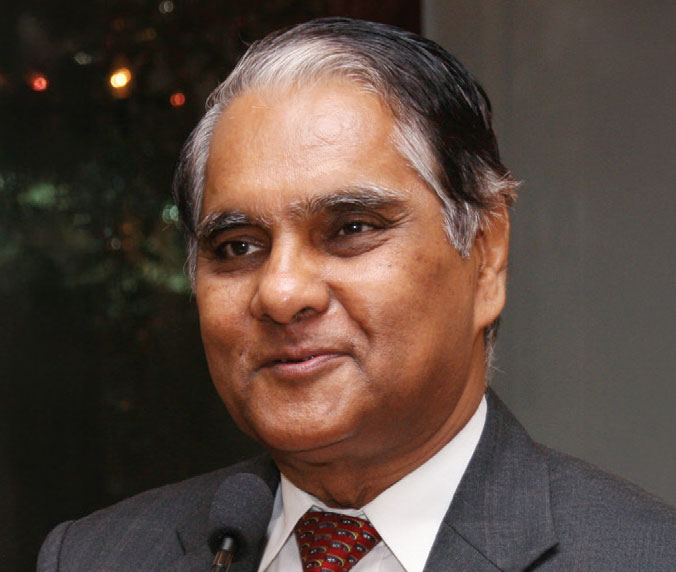
 R.V. Shahi, Former Power Secretary
The developed nations of the world – the initial G-7 countries – initiated and acquired maturity on economic development during the eighteenth and nineteenth centuries. Their development agendas, riding on expanding energy production and consumption, were naturally focused on accelerating energy growth, leading to rapid increases in national and per capita income. Exploring and researching various means of energy production as the prime mover of economic development prevailed over various other items on the agenda.
It was only during the second half of the twentieth century that environmental and climate change issues started receiving greater attention owing to the high amount of carbon emissions in the atmosphere. This happened with a greater degree of emphasis during the last 25 years of the century. Environmentalists and NGOs raised these issues predominantly, followed by the country’s governance systems and corporates. It is during this period that the developing and under-developed countries faced the consequences: they were confronted with the challenge of how to provide and enhance access to energy and catch up in terms of national GDP and per capita income.
The consequences of energy programmes in developed nations did get attention, but their impact was felt by the developing world, significantly affecting their economic agenda. This gave rise to the dilemma of energy access and environmental sustainability, which continued for a few decades. This has now been replaced with the trilemma of energy access, environmental sustainability and energy security. The third element, energy security, has emerged in the current century, more predominantly during the last 10 years when global geopolitics have witnessed a major shift. During the 1980s, globalisation emerged as a strong concept and strengthened over several decades with the expected benefits of large-scale international cooperation in business and trade, leading to industrial development and economic growth across the world. Globalisation did offer substantial benefits, but these were also severely constrained, particularly for developing and under-developed nations, under the expected agenda of environmental and climate change concerns.
During the initial years of this century, concerns regarding environmental sustainability became paramount and were further strengthened under the COP agenda. Following the Paris Agreement, several countries made net-zero commitments, with India committing net zero by 2070. The most significant outcome was the large-scale assimilation of renewable energy, mainly solar, in the energy programmes of different countries. This did have a positive impact on climate change due to the progressive replacement of fossil fuel-based electricity generation with carbon-free power. The RE Programme launched in India in 2015 was one of the most impressive initiatives, together with the International Solar Alliance.
Following the Paris Agreement, several international developments took place, which highlighted the need for nations to become more self-contained rather than to be over dependent, particularly in respect of energy. The need for energy security started getting more intense, and emerged as the most important area of concern. International diplomatic relations, groupings of various countries, and sanctions on international trade and business emerged as key factors driving energy and economic development in any country. Over the past 10 years, post the Paris Agreement, different countries have been planning and evaluating various options for energy transition. The most recent developments relating to US trade and tariff policies have brought the geopolitics of energy transition to the centre of energy management in the global context.
For India, this has led to many more challenges of different dimensions. In the electricity sector, the past decade has witnessed an exponential expansion of renewable energy capacity. The growth trajectory till 2050 may be even sharper. While this will have a highly positive impact on the decarbonisation of the energy sector, it is not free from challenges, particularly those created due to geopolitical situations. In solar manufacturing, India has been balancing imports with the domestic manufacturing of solar systems. However, substantial dependence on imports still continues, which has become the subject of geopolitical dispensation in recent years. Efforts to minimise import dependence in manufacturing also face the challenge of important minerals that need to be imported. Obviously, no case can be, or needs to be made to avoid imports altogether. However, if the expansion targets are moving on a highly accelerated path, concerns about imports and hence, geopolitical factors become relevant.
Considering that the power sector profile will dynamically move away from fossil fuel-based power to renewable energy, the most important energy asset that India possesses, coal, has rightly attracted attention for its pre-combustion and post-combustion treatments to ensure that the carbon emission impacts are significantly reduced. A few years back, when solar power provided an affordable cost of generation, it was felt that the decline of coal-based power could be faster. However, with the challenge of managing the grid due to solar availability only during the daytime, the need for larger amounts of power in the system and the emerging geopolitical situation, it was felt that thermal power would continue to play a significant role for a few decades till it is established that its decline could be accelerated.
To address the challenge posed by the accelerated growth of solar power and manage the grid’s requirement for a load pattern in the system, a major initiative that the country has taken is planning for a much larger expansion of hydro power projects, which can provide solutions to manage the grid despite the non-availability of solar power. This planning is being further strengthened by large-scale development of hydro pumped storage projects (PSPs), which will use surplus solar power during the daytime to pump and create the required water heads to run the PSPs. The PSP potential in the country is estimated at 215 GW, and currently about 10 GW of projects are under construction. Battery energy storage systems are an alternative solution to provide storage power. These will, however, undergo a phase of dependence, importing many items in the domestic production process. This would have a geopolitical dimension, but availability is not expected to pose a challenge due to competition in the global market.
Hydropower and pumped storage plants will, as mentioned above, provide substantial support in addressing the challenges of renewable energy – solar and wind. To complement these efforts, the government is enhancing energy cooperation with Bhutan and Nepal by developing hydropower projects and entering into long-term power trading arrangements. Recently, the Bhutan government has notified its revised energy policy, which, for the first time, allows private sector participation in the development of power projects in Bhutan. Tata Power and Adani Power have signed MoUs for the development of power projects aggregating 5,000 MW each. In Nepal, a number of power projects are being developed by Indian companies, which will have power trading arrangements with India. Interconnecting transmission infrastructure is also being developed. These initiatives will definitely have a positive impact on the management of energy transition.
The biggest challenge in the energy sector is India’s dependence on imports for petroleum products – crude and gas. These constitute more than 35 per cent of India’s energy basket. Import dependence in respect of crude is excessive – almost 88 per cent of consumption – and in gas, it is almost 50 per cent. Despite efforts in the past 10 years to reduce crude import, it has increased from 76 per cent to 88 per cent. In the petroleum sector, geopolitical considerations are at their peak. As compared to all other issues of energy, this is the most complex in terms of geopolitical dimensions. Several solutions are being attempted, including strong initiatives on compressed biogas and bio fuels. In recent years, several incentives have been introduced to accelerate production in these areas. India possesses large coal reserves, which are being considered for coal gasification, coal bed methane, etc. All these initiatives will have a positive impact in dealing with geopolitical challenges.
In the petroleum sector, in addition to producing substitutes, other important initiatives focus on consumption and are aimed at replacing petroleum consumption with other options. The country has launched a massive electric vehicle programme. In the coming few years, the proportion of petrol/diesel-based transport will be substantially reduced. During the past five years, almost 75 per cent of railway locomotives, which were driven by diesel, have been replaced with electrical locomotives. Rural agriculture is shifting rapidly from diesel-driven pumps to solar pumps or solar-powered pumps. All these initiatives will substantially change the structure of import-based petroleum fuels and, in turn, provide positive solutions to geopolitical challenges.
Energy transition challenges are being faced by all countries across the world. The nature and intensity of the challenges may vary. Developed countries, which have excessively high per capita carbon emissions, have formidable tasks of reducing them. Developing countries have access to energy, but face the challenge of raising per capita consumption. Creating and maintaining a right mix of energy options is a challenge for each of them. In recent years, what has made these challenges quite different are the unpredictable and fast changing geopolitical situation. Mutual interdependence, including energy trading with other countries, cannot be ruled out. However, the extent to which countries are frequently confronted with unpredictable situations on the energy front obviously needs to be minimised. India’s efforts in this regard are moving in the right direction. These approaches have been summarised in this article.