
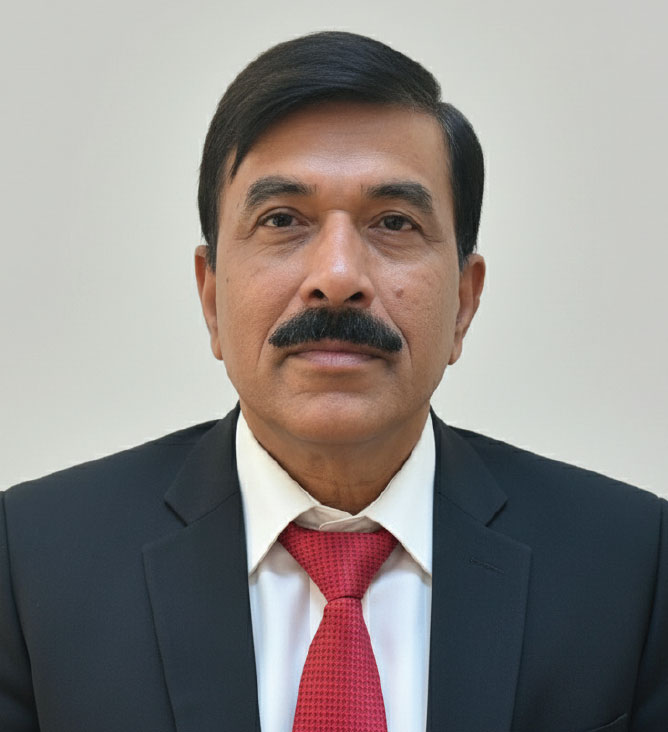
 In a recent interview with Power Line, Akhilesh Kumar Dixit, Chief Executive Officer, Energy Efficiency Services Limited (EESL), shared his insights on accelerating the large-scale roll-out of energy efficiency initiatives and expanding national programmes. He spoke about innovative financing models, challenges in setting up electric vehicle (EV) charging infrastructure and potential solutions. He also highlighted EESL’s key achievements, priorities and focus areas. Excerpts…
What measures are needed to accelerate the large-scale roll-out of smart metering?
Accelerating the large-scale roll-out of smart metering across states requires a holistic strategy that integrates policy alignment, technological readiness, financial innovation and consumer participation. Under the Revamped Distribution Sector Scheme (RDSS), success depends on coordinated efforts between the Ministry of Power, state governments and distribution companies. The first step is to ensure streamlined procedures for approvals, tendering and contracting, supported by strict adherence to the standardised technical specifications notified under the RDSS. Policy coherence and accountability frameworks are also crucial. Establishing dedicated project monitoring units at the state level can enhance oversight and coordination between discoms, system integrators and meter suppliers. Digital monitoring dashboards at the national and state levels should be mandated to track progress and flag implementation risks in real time.
The smart metering ecosystem demands a reliable IT and communication backbone tailored to regional diversity. Depending on geography, technologies such as RF mesh, PLC, NB-IoT and hybrid models should be deployed to ensure interoperability and scalability across vendors. Discoms must also invest in training their workforce for system integration, data analytics and consumer grievance resolution to ensure smooth adoption and long-term sustainability.
Innovative contracting approaches such as totex or the design-build-finance-own-operate-transfer model are essential to ensure vendor accountability throughout the life cycle of smart metering projects. A phased roll-out, starting with high-loss urban and semi-urban clusters, will enable early results in reducing aggregate technical and commercial losses and boosting billing efficiency, thereby creating successful demonstrations for replication in rural areas. Technology adoption cannot succeed without consumer participation. Prepaid smart meters must be supported with structured awareness campaigns that clearly communicate the benefits: consumption transparency, flexible recharge plans, ease of payment and prevention of bill shocks. Effective consumer outreach will build trust and accelerate acceptance. EESL is leading the Smart Meter National Programme and has already installed 4,250,815 such meters in states/union territories like Haryana (851,666), Uttar Pradesh (1,204,049), Bihar (1,929,353), Rajasthan (124,700) and the Andaman Islands (74,961), in collaboration with discoms.
What are the key hurdles in expanding EV charging infrastructure? How can these be addressed?
India’s shift to electric mobility is no longer about whether it will happen, but about how quickly it can be scaled up. While the government has laid out a compelling vision to decarbonise transport and promote EVs, the expansion of charging infrastructure faces several structural and operational hurdles. One of the biggest challenges in establishing an EV charging network is the high upfront investment required. To overcome this, innovative financing models, viability gap funding and strong public-private partnerships are needed. Additionally, aggregating demand through fleet operators and offering targeted government incentives can enhance utilisation and improve business viability.
The sudden rise in charging demand can overwhelm the existing power distribution networks. The solution lies in integrating EV charging loads with power distribution planning, installing smart meters and linking charging stations with renewable energy. India currently lacks uniformity in charging protocols, connector types and billing systems. This creates inconvenience for EV users and uncertainty for investors. National-level standardisation of hardware, software and communication protocols is essential to achieve interoperability and consumer confidence. Standardisation will also lower costs through economies of scale and encourage greater private participation. Finding suitable land in high-demand urban areas is another bottleneck as land costs are high and multiple clearances delay projects. Streamlined policy mechanisms, single-window approval systems, and integration of EV charging with urban planning, parking facilities and highway infrastructure can simplify deployment and accelerate roll-outs.
Range anxiety remains a key psychological barrier for many users, compounded by limited awareness of charging station availability. To address this, nationwide awareness campaigns, transparent pricing models and digital platforms providing real-time charger status must be developed.
Even after installation, ensuring chargers work reliably round the clock is a major challenge. Frequent downtime erodes user confidence and hinders adoption. Building robust operations and maintenance (O&M) frameworks, deploying remote monitoring technologies, and developing local service networks can ensure smooth, uninterrupted operations. The success of India’s EV revolution depends on overcoming these challenges through three foundational pillars – strong policy incentives, technological standardisation and innovative business models. By combining government support with private sector efficiency, India can create an accessible, affordable and dependable EV charging infrastructure.
How can the country’s energy efficiency programmes be expanded further? What are some of the innovative financing and business models in this space?
The expansion of the energy efficiency programme is a lifeline for the country and depends largely on policies and mandates, market development and financing, infrastructure and technology, awareness and capacity building, and collaboration and strategy. For the development of an energy-efficient India, the government is enforcing energy efficiency norms and standards for buildings, appliances and industries, backed by effective monitoring and compliance mechanisms. It is also continuing and expanding the Perform, Achieve and Trade scheme, which sets energy consumption targets for energy-intensive industries, while exploring next-level actions such as the Carbon Credit Trading Scheme.
On the marketing front, we need to foster markets for energy-efficient products by developing sustainable business models, implementing consumer awareness campaigns and providing financial incentives, to encourage their adoption. Bulk procurement programmes should be leveraged to create demand for energy-efficient appliances, which can drive down costs through economies of scale.
Infrastructure and technologies can play a significant role in expanding energy efficiency. Investment in modernisation, such as the deployment of energy storage solutions and smart grid systems, can help manage peak loads and integrate renewable energy more reliably. Further, leveraging the electrification of transport and other sectors can deliver significant energy efficiency gains while supporting the domestic manufacturing of EVs and related infrastructure, thereby advancing the energy efficiency programme. Other much-needed aspects are public awareness, behaviour change and professional training. On the collaboration and strategy front, private-public partnerships, including energy service companies (ESCOs), can play a key role in energy audits and retrofitting. In addition, we need to leverage international platforms and knowledge sharing to accelerate progress and spearhead global initiatives on energy efficiency.
Innovative financing and business models are playing a pivotal role in accelerating the adoption of energy-efficient and sustainable technologies. One such model is cooling-as-a-service (CaaS), which eliminates the need for consumers to buy or maintain cooling equipment. Instead, users simply pay for the cooling they consume. EESL has been preparing to deploy CaaS across government buildings, commercial set-ups and industrial facilities, paving the way for large-scale adoption.
Similarly, energy-as-a-service (EaaS) and EVs-as-a-service (EVaaS) are reshaping the efficiency landscape of India. EVaaS, often provided through leasing arrangements, bundles critical offerings such as charging infrastructure, fleet management, maintenance and insurance, typically over five years. This approach reduces operational complexities, financial risks and ownership costs while encouraging clean mobility adoption.
What have been the key business highlights for EESL in the past year?
Some of the major programmes launched in 2024-25 are Urja Volunteer for Energy Efficiency Revolution (UrjaVEER), National Efficient Cooking Programme (NECP) in anganwadi centres, Solar Powered Micro Cold Storage (SPMCS), and e-NIRMAN (Energy-efficient Nationwide Initiative of Reliable and Modern Appliances for New PMAY Homes). In December, EESL launched UrjaVEER, the NECP and e-NIRMAN in Andhra Pradesh, in the presence of the union minister of power and housing and urban affairs and the chief minister of Andhra Pradesh.
UrjaVEER aims to empower grassroots citizens to promote energy-efficient appliances via EESLMart.in, earning supplemental income while enhancing energy-efficiency awareness. The e-NIRMAN initiative converges the government’s PMAY-G and PMAY-U programmes with the UJALA scheme to provide newly constructed PMAY homes with energy-efficient appliances. Each household receives a package of four LED bulbs (6W, 5-star), two LED tubelights and two BLDC ceiling fans (5-star). This intervention reduces electricity bills, improves comfort and lighting, and eases pressure on the electricity distribution network.
The NECP aims to promote the widespread adoption of electric cooking by creating awareness and enhancing public acceptability through the distribution of induction cooktops across households and institutions such as anganwadi centres. Under NECP, EESL has successfully distributed induction cooktops in Ladakh, Tripura and Andhra Pradesh. In Andhra Pradesh, EESL has supplied induction cooktops and utensils in 11,400 centres, with a target to cover all 55,607 operational anganwadi centres, creating a scalable and replicable model for national adoption.
In addition, under the SPMCS initiative, EESL has piloted decentralised, off-grid cold storage units in Himachal Pradesh with capacities of 5-10 mt and a 36-hour thermal backup to reduce post-harvest losses for small and marginal farmers. The programme is backed by partnerships with the Asian Development Bank, NCCD, MNRE, NISE and OEMs, and is expected to be expanded to Andhra Pradesh, Rajasthan, Uttar Pradesh and Odisha. The initiative addresses crop losses worth an estimated Rs 70 billion annually, strengthens food security and integrates renewable energy with agricultural infrastructure. EESL’s key business highlights over the past year include notable initiatives in housing, agriculture and clean cooking that advance energy efficiency, sustainability and social welfare. We have also piloted Efficient Space Heating Solutions in Ladakh, under which EESL has implemented air- and water-based heat pumps, including a geothermal pilot at the Thiksey Public Health Centre to provide sustainable heating for schools, hostels and health centres. The programme reduces dependence on carbon-intensive fuels, provides reliable heating in extreme winters and contributes to Ladakh’s carbon-neutral vision.
What new business models or partnerships is EESL exploring?
EESL has been actively exploring new business models and partnerships to expand its portfolio and impact in the energy efficiency and renewable energy sectors. It is foraying into several innovative segments, including smart metering, solar street lighting, decentralised solarised micro cold storage, decentralised solar photovoltiacs PV-based power projects, and cooling technologies such as heat pumps.
EESL is entering into strategic partnerships with various industry players, government entities and international organisations to co-develop and implement projects. For instance, it has signed MoUs with companies such as the Aditya Birla Group for implementing energy efficiency solutions in manufacturing and facilities. Additionally, EESL explores decentralised solar power solutions including solar street lights and solar micro cold storage units, aimed at enhancing energy access and efficiency at the grassroots level.
EESL’s evolving business models emphasise service-based approaches such as ESCO models, capex and opex models, CaaS, EaaS and EVaaS. EESL promotes rooftop solar PV projects through capex and opex models. In the capex model, clients invest while EESL provides installation and five-year maintenance support. In the opex model, EESL funds the system and provides 25 years of O&M services. In the EV space, innovative models such as EaaS and EVaaS are reshaping India’s energy efficiency landscape. EV leasing, typically over a five-year term, provides clients with bundled packages including charging infrastructure, maintenance, fleet management and insurance. This service-based model reduces upfront capital costs and operational complexity, making clean mobility more accessible for businesses and individuals.
EESL aims to venture into solar-enabled decentralised solutions, cooling technologies and EV deployment through innovative service-based business models and strategic partnerships that prioritise scalability, energy savings and sustainable development goals.
What are EESL’s near- to medium-term priorities? What are its key focus areas?
EESL has outlined a set of near- to medium-term priorities that align with India’s broader vision of a sustainable energy transition and climate commitment targets. Its strategic focus areas emphasise digital innovation, renewable energy deployment and decentralised clean technologies that directly impact communities at the grassroots level. A key priority is the rapid scale-up of smart metering solutions. By enabling real-time consumption tracking, automated billing and improved demand management, smart meters are all set to transform the efficiency of India’s power distribution sector. EESL is also focusing on the large-scale deployment of solar-powered street lighting systems. These not only reduce dependence on conventional electricity, but also play a critical role in enhancing safety, lowering carbon emissions, and improving rural and semi-urban infrastructure in a cost-effective manner.
In the renewables space, EESL is prioritising decentralised solar PV-based power projects. Particularly for agricultural and rural communities, such projects provide reliable, sustainable and affordable energy access. EESL is promoting solarised micro cold storage units, a critical innovation for India’s agricultural ecosystem. These decentralised facilities help farmers preserve perishable produce, reduce post-harvest losses and increase market linkages, thereby enhancing rural livelihoods while reducing carbon footprints.
Recognising the rising demand for cooling, EESL is working to promote efficient heat-pump-based cooling technologies. These solutions provide sustainable alternatives to conventional cooling systems, significantly reducing energy consumption and greenhouse gas emissions. Meanwhile, Convergence Energy Services Limited (CESL), a subsidiary of EESL, is all set to lead India’s transition into hydrogen buses and e-trucks. It combines government backing, proven execution capacity and innovative financing approaches with the ability to scale solutions nationally. In alignment with the government’s vision for sustainable transportation solutions, CESL will promote green hydrogen and e-trucks across the country.
In essence, EESL’s near- to medium-term priorities firmly rest on advancing energy efficiency, expanding distributed renewables, and creating climate-smart solutions for both urban and rural India.