
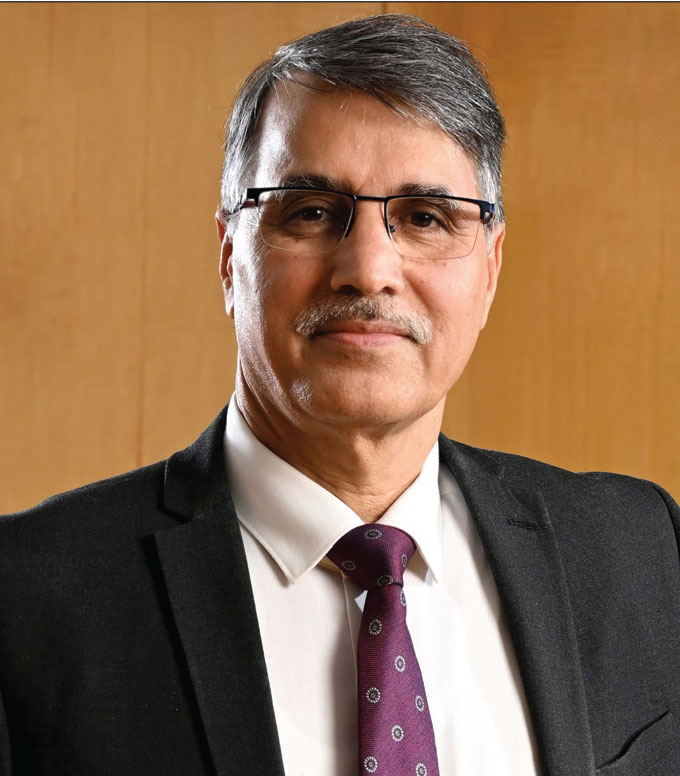
 In a recent interview with Power Line, Bhuwan Chandra Pathak, Chairman and Managing Director of Nuclear Power Corporation of India Limited (NPCIL), shared his views on the current state of the power sector and the nuclear segment. He spoke about the opportunities and challenges, NPCIL’s major projects under development, exploration of new technologies, and the corporation’s future plans and key priorities. Edited excerpts…
What is your view on the current state of the power sector, especially the nuclear power segment?
The power sector is undergoing a transformative shift not only in India but across the global landscape. In this evolution towards cleaner options, the nuclear segment is emerging as a pivotal player. There is a rising demand for power in the country as it is a fast-developing nation. Our energy consumption is surging due to population growth, urbanisation and digitalisation. We are moving towards meeting this demand while cutting carbon emissions.
While there is a strong global decarbonisation push in the form of renewables, nuclear power is a promising complementary option. The credentials of nuclear energy – provision of baseload power, 24×7 availability, environment friendliness and sustainability – make it an inevitable option, which is finding its place in the energy mix of the country.
The resurgence of nuclear power, not only in India but worldwide, is a recognition of the need for mitigative action towards climate change. The government has already taken up the expansion of nuclear power in the country on a larger canvas. NPCIL will contribute with the technology and experience it has garnered, adopting an inclusive approach.
As an institution spearheading this technology, we plan to increase our installed nuclear power capacity base in alignment with the sequential indigenous three-stage nuclear power programme envisioned by Dr Bhabha.
What are the biggest challenges and opportunities in the segment?
Globally, the nuclear power sector has been navigating a complex landscape of challenges and opportunities, generally shaped by extant perception, technological innovation, policy shifts and global energy demands.
Some of the specific challenges identifiable with the nuclear power segment are land acquisition issues, significant project completion costs, stringent regulatory/statutory requirements, public perception and safety concerns.
While there are challenges, there are opportunities as well. Nuclear power is an alternative to conventional power sources, with life-cycle carbon emissions comparable to the best of renewables. Thus, climate and decarbonisation goals can be achieved with the support of this clean power source. Competitive tariffs, low land requirement per MW, un-interrupted supply at high plant load factors and environment friendliness are further advantages. It is, therefore, being considered predominantly for energy-intensive conventional industries and AI data centres.
What is the expected role of nuclear in the country’s energy transition and decarbonisation goals?
In line with the Intended Nationally Determined Contributions and the Panchamrit strategy to reduce carbon emissions, utilise cleaner sources of energy and target achievement of net zero by 2070, the government has taken various initiatives. The Nuclear Energy Mission is one such ambitious step towards adopting cleaner energy sources. As such, the country is positioning nuclear energy as a cornerstone of its long-term energy transition and decarbonisation strategy.
With ambitious targets of nuclear capacity addition, we as a nation aim to fulfil our responsibility to contribute to development, apart from addressing the global concern of climate change. While aligning with its broader goals under the Viksit Bharat initiative, NPCIL will be contributing over 50 per cent of the targeted 100 GW installed nuclear power capacity in the country.
When we generate 1 billion units of clean electricity from nuclear power, we prevent the release of about 0.86 million tonnes of carbon dioxide (CO2) equivalent into our environment. Till date, we have prevented over 810 million tonnes of CO2 emissions into the environment.
NPCIL has also floated a request for proposals for setting up Bharat Small Reactors for industrial decarbonisation, focusing on heavy industries such as steel, aluminium and cement – sectors that are difficult to decarbonise.
What are the policy and regulatory measures needed to promote the development of nuclear power in the country?
Policy and regulatory measures are the domain of the government. I believe that the necessary facilitative mechanisms for enhancing nuclear power capacity are in place, as per the needs of the country.
What is your outlook for the power sector in the near to medium term, and NPCIL’s role in it?
The country’s power sector is poised for dynamic growth, largely driven by increasing energy demand across sectors, the clean energy goals and, of course, infrastructure expansion.
As a developing nation growing at a rapid pace, our energy needs must be met commensurately. Also, to account for our responsibility towards a cleaner environment, clean energy sources have to make up a larger share of the mix. Nuclear power is a promising clean energy source, as I have stated earlier. It is going to play a vital role in the near and medium term as an integral part of the energy mix. The momentum required to address the clean energy surge can be achieved with enhanced nuclear power expansion.
NPCIL, with a legacy of expertise and experience, will be a mother organisation. We are aiming to reach about 22 GW of installed capacity by 2031-32 and about 54 GW by 2047. This will be achieved through progressive completion of projects that are at various stages of implementation, as well as those planned subsequently. Basically, we are focused on the implementation of the first stage of the country’s sequential three-stage nuclear power programme. Our mainstay will be 700 MW capacity indigenous pressurised heavy-water reactors (PHWRs). We will also collaborate with foreign partners to set up large capacity reactors using different technologies, as additionalities.
What are the major projects currently being developed by NPCIL?
We have 24 operational nuclear power plants (excluding RAPS-1) in the country, aggregating about 9 GW of capacity. Seven reactors totalling a capacity of over 6 GW are at various stages of construction/commissioning. This includes RAPP-8 (700 MW) at Rawatbhata in Rajasthan, KKNPP-3 to 6 (4×1,000 MW) at Kudankulam in Tamil Nadu, and GHAVP-1 and 2 (2×700 MW) at Gorakhpur village in Haryana. RAPP-8 will commence operation soon.
Additionally, ten 700 MW indigenous PHWRs are at the pre-project stage. These are KGS-5 and 6 at Kaiga in Karnataka, CMPAPP-1 and 2 at Chutka in Madhya Pradesh, GHAVP-3 and 4 at Gorakhpur village in Haryana, and MBRAPP-1 to 4 at Banswara in Rajasthan. These are being implemented in fleet mode. Of these, MBRAPP is being implemented by NPCIL’s subsidiary ASHVINI, which is a joint venture between NPCIL and NTPC. Recently, the honourable prime minister laid the foundation stone for this project.
Apart from the above, we have multiple in-principle approved sites for new nuclear power plants, and we are engaging with states to explore potential sites for future projects.
How is NPCIL exploring new technologies such as small modular reactors or advanced fuel cycles?
Being a learning-focused organisation, NPCIL embraces research, innovation and upgradation on a continual basis. We have not only obtained expertise in in-core complex jobs, but also developed indigenous solutions to strengthen our existing and new project implementations. Moving forward, we are working with the Bhabha Atomic Research Centre to develop Bharat Small Modular Reactor technology. We also customise our designs and adopt the best-suited deployment strategies. Our BSR initiative is one such example. Our tech-forward approach is positioning us as a competitive global player.
What are NPCIL’s future plans and key priority areas?
As a central pillar of the country’s nuclear power future, we have charted our priorities to align with the nation’s goals for energy security, decarbonisation and technological leadership. As the nation works to achieve the target of 100 GW of nuclear capacity by 2047, NPCIL will not only contribute to it by setting up more capacity, it will also leverage its expertise following an inclusive approach.
We have always promoted handholding of the domestic industry to enable it to develop its capabilities to the required exacting nuclear standards. We also contribute by sharing expertise and experience; extending support in developing standards; and aiding the development of vendors including micro, small and medium enterprises, SC/ST and women entrepreneurs, etc.
We are strategising to expand our programme, mainly based on our indigenous, proven PHWR technology, planned to be implemented in fleet mode. We are also open to collaborating with foreign partners and other central public sector enterprises in the form of joint ventures. We also plan to diversify our presence in various horizons such as clean hydrogen production and domestic radio-isotope production. We have been aggressively augmenting manpower to meet the upcoming human resource requirement, besides expanding our state-of-the-art training facilities.