
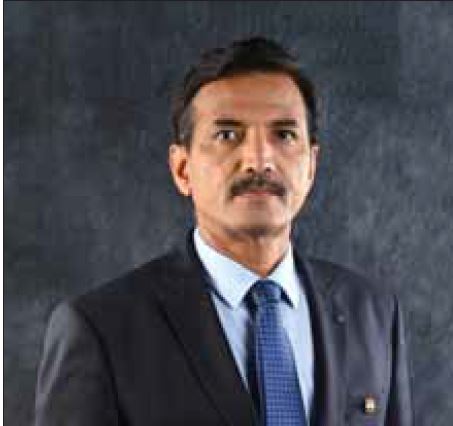
 Dr Ravindra Kumar Tyagi is the Chairman and Managing Director of Power Grid Corporation of India Limited (POWERGRID), a Maharatna CPSU under the Ministry of Power. He is spearheading the development of a sustainable and reliable transmission network across the country. Recently, he was conferred the Doctor of Science (Honoris Causa) by Punjab Engineering College (Deemed to be University), Chandigarh, in recognition of his outstanding contributions to the growth of India’s power sector.
Dr Tyagi has been instrumental in advancing 1200 kV transmission systems (the highest transmission voltage in the world), environment-friendly transformers, artificial intelligence (AI)-based asset management systems, process-bus substations, mobile GIS bays, and indigenous development of emergency restoration systems (ERS).
In a recent interview with Power Line, Dr Tyagi shared his perspective on the state of the transmission segment, the emerging opportunities and challenges, the company’s recent achievements and its priorities for future growth. Edited excerpts…
What is your view on the current state of the power transmission segment? What are the key challenges?
The expansion of India’s transmission infrastructure has kept pace with its growing generation capacity. From isolated regional grids, India has developed an extensive national grid that facilitates seamless power flow across states and regions. Currently, India’s transmission network ranks among the largest globally, supporting both conventional and renewable energy sources while ensuring grid stability. Investments are being channelled into modernising infrastructure, deploying advanced technologies, and improving interconnectivity to adapt to the dynamic energy landscape.
The national grid is undergoing continuous expansion through the addition of transmission lines and power transformation capacity to accommodate rising electricity demand and increasing generation capacity. In parallel, advancements in high-voltage transmission and emerging technologies are enhancing the efficiency and scale of bulk power transfer.
However, some critical challenges remain such as obtaining clearances for forest and wildlife areas, securing land for substations, and managing right of way through forests, agricultural land, urban areas and industrial zones. Moreover, the projects are affected by shortages in skilled manpower and manufacturing capacity of some equipment/items in the country. Upgrading transfer capacity to match evolving power flows and coordinating with multiple external agencies continue to be major areas of concern.
How do you view the outlook for the power transmission segment over the next decade? What are the biggest opportunities?
India’s transmission network is entering a period of unprecedented growth, driven by rising electricity demand, accelerated renewable energy integration, and emerging clean energy applications. Under the National Electricity Plan, around 191,000 ckt km of transmission lines and 1,270 GVA of transformation capacity (220 kV and above) are planned to be added by 2032. Interregional transfer capacity will expand significantly, from 120 GW currently to 143 GW by 2027, and further to 168 GW by 2032, ensuring that power can move seamlessly across regions to balance generation and demand. The plan also envisions the deployment of 47 GW of battery energy storage systems (BESS) and 36 GW of pumped storage, which will play a critical role in managing renewable variability and enhancing grid flexibility.
A key future demand driver will be green hydrogen, with coastal hubs such as Mundra, Kandla, Paradeep, Tuticorin and Visakhapatnam identified as major production centres. These hubs are expected to generate an additional power demand of about 70,500 MW by 2031-32, necessitating the development of dedicated high-capacity transmission systems.
In parallel, cross-border transmission capacity is set to rise with potential extensions to Southeast Asia and the Gulf. Existing cross-border grid connectivity with Nepal, Bhutan, Bangladesh and Myanmar is proposed to be strengthened. An agreement has been signed with Nepal for the implementation of two 400 kV interconnections through the formation of joint ventures.
There is also a growing opportunity in industrial transmission, as large consumers such as hydrogen plants and data centres opt for dedicated transmission lines to ensure reliable, high-quality power supply. In the longer term, the development of ultra-high voltage corridors will further enhance bulk transfer capacity while conserving right of way, enabling the grid to keep pace with rapidly expanding generation and demand.
In the near future, we will witness the growth of 1100 kV transmission systems, which will form a key component of the inter-state transmission system.
What are some of the new and emerging technologies that POWERGRID is deploying?
POWERGRID is integrating machine learning (ML)-driven solutions for predictive maintenance and faster corrective action. Technologies such as AI-based defect detection, online condition monitoring, and remote operation systems are helping reduce outages, lower failure rates and optimise operations and maintenance costs. The company has also received a patent for a transformer and reactor health assessment system, which enables centralised monitoring of critical assets. POWERGRID, in association with IIT Kanpur, has developed a robot for the inspection of substations. For transmission lines, drone inspections, combined with AI/ML analytics, are improving inspection accuracy and safety, while AR/VR headgear is enabling remote expert-assisted maintenance, reducing downtime and enhancing reliability.
Emergency Restoration Systems, developed with Indian partners, are improving the speed of recovery after extreme events. Also, for substations we are developing mobile GIS bays. One such bay at the 220 kV voltage level has already been developed. We are adopting advanced technologies to enhance grid stability, capacity and resilience. So far, 17 STATCOMs and 3 SVCs have been commissioned, with 10 more STATCOMs under implementation to support dynamic voltage regulation and renewable integration.
High-Temperature Low-Sag (HTLS) conductors are being deployed to increase line capacity without major right-of-way challenges. Insulated cross arms are also being developed for reducing RoW requirements.
We have entered into a master agreement with EPRI USA for collaborative research and development. We have signed an MoU with the Indian Space Research Organisation (ISRO) to develop a Spatial Decision Support System to identify vulnerable towers, monitor vegetation in challenging terrain such as the Himalayas, and train personnel in advanced mapping technologies. We are also working with IIT Madras on offshore pooling substations and undersea export power cables.
POWERGRID has established dynamic line loading on the Madurai-Tuticorin corridor for better system operation. The Company has also set up the Transmission Experience Centre, a state-of-the-art training facility with specialised workshops on AIS and GIS bays, auxiliary equipment, transmission line hardware, and AR/VR-enabled simulations, providing hands-on learning for engineers. POWERGRID has been at the forefront in introducing the best technology in the grid. We are committed to leading the foray of the Indian transmission industry in Industry 4.0.
POWERGRID is also leveraging 3D printing and scanning technologies for rapid prototyping and on-site fabrication, supporting maintenance of complex systems such as HVDC, GIS and SVC. Lately, POWERGRID has started exploring the deployment of technology for construction work, also through erection of transmission towers using cranes and stringing of conductors using drones. For better monitoring, we have set up a Project Monitoring control centre for observing the real-time status of our projects through the use of camera/ drones. AI application in project construction is being done in addition to operations and maintenance.
What have been POWERGRID’s key recent performance highlights?
Our transmission system availability remained at 99.82 per cent in 2024-25, with trippings per line at 0.27, which are among the best globally. We achieved a capital expenditure of Rs 262.55 billion and capitalised Rs 90.14 billion worth of assets.
Our interregional capacity stands at 101 GW, out of the national total of 120 GW. On a consolidated basis, our total income was Rs 474.59 billion and profit after tax stood at Rs 155.21 billion during FY 2024-25. Our market capitalisation reached Rs 3.4 trillion on September 25, 2024. We also emerged as the successful bidder for 24 TBCB projects, including our first HVDC project under this route.
We commissioned several key projects during the year, including the world’s largest digital substation at New Navsari and substations at Kurnool III, Sikar II and Navi Mumbai. Several major transmission lines were also commissioned, including 765 kV Fatehgarh II-Bhadla II, 765 kV Bhadla II-Sikar II, 765 kV Kurnool III-Kurnool New, 400 kV Neemrana – Sikar II, and 400 kV Raipur-Dhamtari. We are compressing execution timelines through innovations. For instance, the Dausa substation was commissioned in eight months from land acquisition, while the Namsai – Kathalguri line was completed five months ahead of schedule.
How do you plan to incorporate Sustainability and Inclusion in your business?
Sustainability remains a strong focus in all our operations. We have been publishing integrated BRSR-aligned report since 2022–23, indicating the impact of our activities on the environment. Our SF6 leakage rates are among the lowest globally.
In a first-of-its-kind initiative in India, a 132 kV transformer at the HVDC Pusauli Substation has been retro-filled with natural ester oil, significantly reducing the environmental footprint of transmission operations. In addition, the company is exploring eco-friendly alternatives to SF6 gas and phasing out diesel vehicles in favour of electric and hybrid options as part of its broader sustainability strategy.
POWERGRID, through its wholly owned subsidiary, POWERGRID Energy Services Limited (PESL), has commissioned its first large-scale solar PV plant of 85 MW at Nagda, Madhya Pradesh, marking a key step in its clean energy journey. Rooftop solar installations are being implemented across all offices to achieve 50 per cent renewable energy consumption.
A pilot green hydrogen project is also underway at the Neemrana Substation, aimed at building operational experience in this emerging area.
Towards inclusion, POWERGRID has been encouraging women employees. In this regard, we have established eight numbers of “Pink” substations in various parts of the country. These substations are headed and operated by women employees, providing them exposure and increased participation in the operations of the organization.
What are your investment plans for the near to medium term?
We currently have projects worth approximately Rs 1.8 trillion under execution, including Rs 990 billion under TBCB, Rs 90 billion of RTM, and Rs 370 billion of new RTM projects. Our planned capex is Rs 280 billion for FY2026, Rs 350 billion for FY2027, and Rs 450 billion for FY2028.
Between now and 2032, we anticipate investments of around Rs 3 trillion. Major upcoming projects include large systems such as the Pang-Kaithal transmission system, and the 6,000 MW Khavda-Nagpur HVDC line, which will be our first HVDC through the TBCB route.
These investments will be instrumental in achieving India’s 500 GW renewable energy target by 2030 and ensuring that the grid remains reliable and resilient as generation capacity expands.
How do you see the broader power sector evolving, and what role will transmission play?
India’s ambition of Viksit Bharat @2047 will drive significant growth in electricity demand through industrialisation, urbanisation, energy transition and e-mobility. The installed capacity is projected to rise from 500 GW at present to more than 2,000 GW in 2047. The per capita electricity consumption, which currently hovers at around 1,500 units, is expected to cross 4,000 units by 2047. Electricity will form approximately 50 per cent of the total energy requirement.
Such a huge addition of demand and generation will require a commensurate transmission network. Transmission will be the backbone of this transformation. Beyond domestic expansion, initiatives like One Sun One World One Grid will create opportunities for cross-border interconnections. Reducing the carbon footprint of the power sector and the use of advanced digital technologies will be the key transformative factors.
The power sector of the future is going to be Green, Global and Digital.