

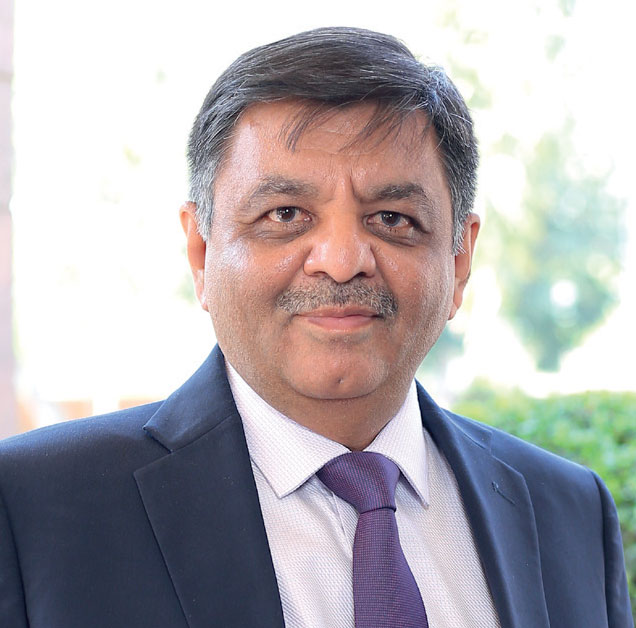
 In a recent interview with Power Line, Sandeep Zanzaria, Managing Director and CEO, GE Vernova T&D India Limited, shared his perspective on the performance of India’s power sector and its future outlook, the key trends in the T&D segment, and major opportunities and challenges in the sector. Edited excerpts…
How would you assess the power sector’s performance over the past year? Do you feel it still has the same positive momentum as the previous year?
The power sector delivered a strong performance in 2024-25. Electricity demand grew by about 8 per cent during the year, while peak power demand touched around 250 GW. The total installed capacity by the end of the year was close to 470 GW. One of the key national targets was to have 50 per cent of the installed capacity coming from renewables by 2030, and that milestone was achieved last year itself. In that sense, the sector is ahead of schedule.
There have also been early signs of carbon emissions easing. In the first half of 2025, emissions declined by nearly 1 per cent year on year. The transmission segment has become more stable and profitable, including Power Grid Corporation of India Limited, private utilities and several state utilities.
Going forward, the target of adding 500 GW of renewable energy capacity by 2030 will require a significantly stronger transmission backbone. The outlook for the transmission segment remains highly positive, alongside strong prospects for the generation sector. The government is planning to add 90-100 GW of conventional capacity by 2035 and nearly 100 GW of nuclear capacity by 2047. Since transmission is generation-agnostic, it will continue to be one of the most stable and growth-oriented segments in the coming years.
What do you see as the biggest opportunities and challenges for the sector?
In terms of opportunities, the 2032 targets outlined in the National Electricity Plan envisage investments of around $110 billion in the transmission segment. Installed generation capacity is projected to double while peak power demand is projected to rise by about 80 per cent by 2032. To address this, the plan includes the addition of approximately 20,000 ckt km of high voltage transmission lines and around 125 GVA of substation capacity each year through 2032. Looking further ahead, under the government’s Vision 2047 for Viksit Bharat, installed generation capacity is expected to quadruple.
Another major opportunity lies in the continued addition of renewable capacity, which adds variability to the grid. This presents both challenges and opportunities. For technology providers, it creates significant scope to deploy advanced solutions aimed at enhancing grid stability. These include technologies such as static compensators (STATCOMs), high voltage direct current (HVDC) systems, digital solutions and forecasting tools.
Right of way remains a major bottleneck, with land acquisition for substations and transmission lines often causing significant project delays. Another emerging challenge is equity participation. Large projects such as HVDC systems require investments of Rs 250 billion-Rs 300 billion and typically span five years. While transmission has traditionally been viewed as a stable and attractive segment for post-commissioning investment, the growing scale of projects is stretching the financing capacities of stakeholders.
Finally, the irregular project flow remains a concern. The current tendering pattern – characterised by bulk tenders followed by lean periods – creates a cyclical challenge for manufacturers and EPC players.
Could you share some examples of technologies or solutions that GE Vernova is working on with clients to address these challenges?
We are working closely with our customers across multiple areas, spanning both hardware and digital solutions. On the hardware side, transformers, reactors, gas-insulated switchgear (GIS) and circuit breakers remain core offerings. On the digital front, growing grid variability and the scale of asset additions make manual data processing and decision-making unviable.
To this end, a grid digitalisation solution has been rolled out, with upgrade projects under way in the northern and eastern regions. A key initiative is the deployment of advanced digital tools at despatch centres nationwide, anchored by GridOS® – a new global platform being introduced in India. GridOS® leverages artificial intelligence and machine learning to manage variability, enable autonomous decision-making and create a self-learning grid capable of responding dynamically to renewable integration. To further mitigate transmission line challenges, we have launched a unique solution called Digital Dynamic Line Rating, which can increase transmission line capacity, reducing the need for new infrastructure and improving grid efficiency. It can also help reduce the risk of power outages by allowing transmission lines to safely operate at higher capacities.
On the hardware side, the focus is on high-impact technologies. In renewable-heavy regions such as Rajasthan, stability depends on supporting infrastructure. STATCOMs are critical for maintaining voltage stability, while HVDC systems enable cost-effective long-distance power evacuation and strengthen networks impacted by solar and wind variability. In addition, utility-scale battery energy storage systems are being deployed to balance supply and demand in high-renewable zones.
What is your policy wish list to address these issues?
First, a more sustainable and uniform project pipeline is essential. Instead of clubbing large volumes of projects together at one time, a steady flow of opportunities would enable the industry to plan better and allocate resources more efficiently.
Second, support is needed to address the skilled manpower shortage. The industry is making substantial capital investments to expand capacity, but talent availability remains a constraint. A coordinated effort between the government and industry on technology-oriented skill development is crucial.
Third, long-term framework agreements for critical technologies such as HVDC should be considered for a 10-15-year horizon, in line with the government’s large investment plans. Such visibility would enable companies to plan capacity expansion more effectively.
Finally, more balanced terms and conditions from state utilities are needed. A more equitable approach would enable greater private sector engagement in the state segment.
What have been the key business highlights and achievements of GE Vernova T&D in the last year or so?
The key achievement has been the strong growth in revenue of 35 per cent recorded last year. Based on first-quarter numbers this year, a similar growth over last year’s revenue is expected to be maintained. Profitability has been healthy and in line with shareholders’ expectations, supported by strong cash flows. Notably, profit after tax has been fully converted into cash. This performance, driven by robust market demand, has strengthened the confidence to invest in new manufacturing technologies in India. These include thyristor valves and insulated gate bipolar transistors for STATCOM at Pallavaram, along with control platforms at Noida.
The outlook for order inflows this year remains equally positive. Apart from a few large projects secured last year, the aim is to maintain order inflows at similar levels this year – significantly higher than current revenue levels.
Significant orders have been secured not only in terms of projects but also for equipment such as transformers, reactors, 765 kV GIS, air-insulated switchgear and grid automation systems. Capturing the HVDC market is also going to be key.
Another major achievement was securing a large export order. Exports remain a strong focus area, currently accounting for about 30 per cent of the order backlog, with new geographies being continuously added. Moreover, two significant digital orders were won for upgrading load despatch centres in the northern and eastern regions.
The company has also worked closely with the government and customers to expedite deliveries and help meet project targets. Overall, it was a very strong year – recognised and appreciated by shareholders, customers and employees alike, who take pride in the collective success of the business.
Lastly, what is your outlook for the Indian power sector, and how do you see GE Vernova T&D positioning itself going forward?
Over the next decade, India is expected to remain a strong growth story for the energy sector, with similar momentum reflected in the transmission segment.
For GE Vernova T&D India, in addition to a strong conventional AC business, significant opportunities are emerging in HVDC, STATCOM and digital solutions. These areas will play a key role in driving overall growth. On the technology front, digitalisation is a major focus. Given the shortage of skilled manpower, the company is working closely with customers to support them through advanced technology deployment. Asset performance management is being positioned as a key differentiator, helping customers optimise both capex and opex strategies.
Overall, urbanisation, rising per capita energy demand and increasing investments in industries, data centres and green hydrogen are creating strong drivers for energy growth. These trends will naturally translate into higher demand for transmission infrastructure. Technology will play a critical role in strengthening the company’s position among the top transmission players in the country. It is indeed an exciting time to be a part of this sector.