India’s power generation sector is witnessing a major shift in its capacity mix, led by clean energy expansion and a rising demand for power. Renewables are growing rapidly, while thermal power remains vital for ensuring reliable baseload power. Advances in storage, smart grids and flexible operations are reshaping the landscape. In this context, leading power developers share their views on the sector’s progress, the challenges ahead, and the priorities for the next phase of growth….
 What is your assessment of the power sector’s progress over the past year?
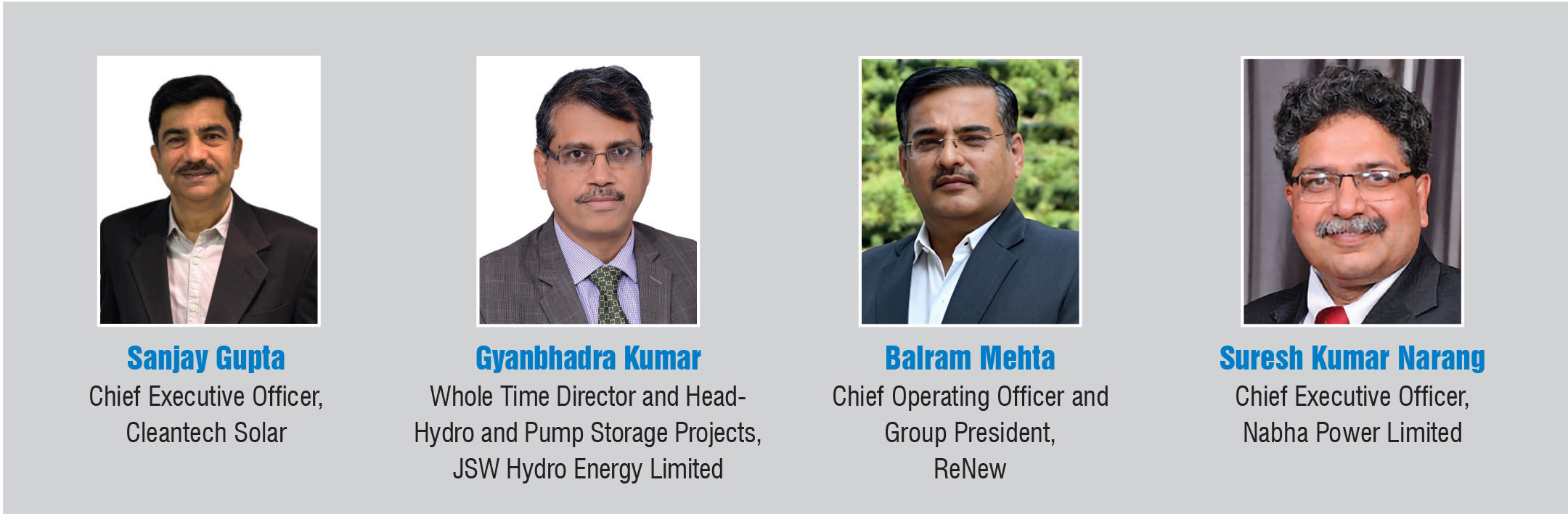
Sanjay Gupta
Last year, India made significant strides in renewables, with very strong capacity growth. The pace has been phenomenal, with the country adding substantial capacity in both the commercial and industrial (C&I) and utility sectors.
Another standout has been the reduction in the levellised cost of energy for solar-plus-battery storage. Storage is critical to displacing coal, and this development allows companies such as Cleantech Solar to offer a higher plant load factor on a cost-efficient basis, making renewables competitive with fossil fuel-based generation.
On the “misses” side, there has been a slowdown in tenders and auction volumes in recent quarters, with relatively low auction clearance rates. Land acquisition and connectivity also remain challenges, creating execution risks and delays in achieving commercial operation dates.
Gyan Bhadra Kumar
Over the past year, India’s power sector has made remarkable progress, particularly in advancing clean energy goals. The country has already crossed the 100 GW solar milestone and added a record 29.5 GW of renewable capacity in 2024-25, a 59 per cent increase over the previous year. By July 2025, the total renewable capacity, including large hydro, reached 237.5 GW, reinforcing India’s leadership on the global clean energy stage.
For JSW Energy, this has also been a milestone year. We surpassed our 10 GW target ahead of schedule, with renewables now contributing over 57 per cent of our 13 GW portfolio. Our renewable capacity grew from 4,028 MW in the first quarter (Q1) of FY 2025 to 7,110 MW in Q1 FY 2026. A key highlight was the commissioning of the 240 MW Kutehr hydro project in August 2025, which has set new benchmarks for time and cost efficiency in hydro development.
That said, sectoral challenges persist, such as transmission bottlenecks, private and compensatory afforestation and land acquisition challenges, and forest clearance delays. Addressing these issues effectively will be vital for sustaining the sector’s growth momentum.
Balram Mehta
India’s power sector has made notable progress over the past year (2024-25), driven by advancements in renewable energy, an increase in demand, improved grid infrastructure, and a focus on sustainability and efficiency. The following are a few points worth mentioning about the sector (reference data from the Ministry of Power):
- There was a 5 per cent growth in generation over the previous year. Generation growth took place across all sources – renewables were up 11 per cent, hydro 18 per cent and thermal 3 per cent.
- Installed capacity increased to around 470 GW. Solar and wind additions continue to lead.
- A record power demand of 250 GW was met. Energy shortage was only 0.1 per cent compared to 4 per cent in the previous year.
- Electricity supply to rural feeders increased to around 22 hours a day.
- Per capita consumption went up to 1,395 units.
- Aggregate technical and commercial losses (AT&C) are still high in many states.
- The weak financial health of discoms remained unsolved.
- Cross-subsidies and political pressure on pricing (consumer tariff) remained a complicating factor, resulting in delays in tariff reforms and the timely issuance of tariff orders.
- Capacity utilisation of conventional plants was not optimum due to coal supply issues, logistics challenges or because cheaper renewables were being prioritised for despatch.
India is expanding solar and wind energy, aiming for 500 GW of non-fossil fuel capacity by 2030. Significant steps towards green hydrogen production also position India as a future leader. Despite the growth in renewables, coal retains its predominance.
Some areas of notable progress in this sector include hydrogen and storage solutions, improved electrification with quality power, smart grid implementation, privatisation, efficiency gains, development of green corridors, tariff reforms, production-linked incentive (PLI) schemes to promote local manufacturing, decarbonisation commitment and emphasis on energy efficiency.
Challenges like discoms’ financial issues, coal supply problems, grid expansion and modernisation are still present. Overall, India’s power sector shows steady progress and a strong focus on sustainability, though structural issues remain.
Suresh Kumar Narang
India’s power sector continues to demonstrate strong growth and resilience, making significant strides in FY 2025. All-India electricity consumption crossed 1,820 BUs, registering a 5 per cent year-on-year growth. Peak power demand rose by about 4.2 per cent, rising from 240 GW in FY 2024 to 250 GW in FY 2025. This increase was driven by population growth, rapid urbanisation, higher temperatures, rising incomes and stronger demand across construction, manufacturing and services.
Coal-based generation remained the backbone of India’s power supply, though its growth slowed down. In FY 2025, coal-fired generation grew by only 2.8 per cent year on year, the slowest since FY 2021. Still, coal accounted for about 73 per cent of the total generation in FY 2025, underscoring its dominant role and the nation’s continued reliance on thermal power. Reflecting this, India has laid out plans to add 97 GW of new coal-based capacity by FY 2035.
At the same time, renewable energy posted robust gains. Installed renewable capacity (including large hydro) reached approximately 220 GW by March 2025, representing 46 per cent of the total installed capacity. Renewables accounted for about 22 per cent of the total generation in FY 2025. These gains are reshaping the power mix and gradually tempering future growth in coal dependence.
However, the intermittent nature of solar and wind means that coal-based thermal power plants (TPPs) remain essential to grid stability. The flexible operation of TPPs continues to play a critical balancing role, ensuring reliable supply as India transitions towards a more diversified and cleaner energy system.
Key regulatory measures introduced in FY 2025 included the mandate for unrequisitioned power to be offered through power exchanges and a phased road map to reduce the technical minimum of coal plants to 40 per cent. The clarification issued by the Ministry of Power regarding the cost pass-through of biomass pellets in the energy charge for Case 2, Scenario 4, Section 63 plants has been instrumental in ensuring compliance by TPPs.
What are the biggest challenges facing the segment, particularly with the changing power mix, and how can these be resolved?
Sanjay Gupta
We operate across different markets in South Asia, and we feel India is probably the most attractive market, owing to its large size, growing demand and relatively stable regulations. Compared to Southeast Asia, where project sizes are much smaller, India has significantly larger projects, even in the C&I sector, with project sizes sometimes reaching 150 MW or more.
The challenges in India, however, include grid flexibility and transmission capacity issues. Grid connectivity remains a struggle across states, and more needs to be done to expand evacuation capacity. Energy storage has started to take off, but it is still a long way from delivering reliable and affordable 24×7 renewable power.
The financial health of state discoms is another constraint. While some have improved, in many states, the situation remains precarious. Policy continuity is also critical for investment. For example, the proposed banking and settlement mechanism in Maharashtra, where solar generation needs to be consumed in the daytime slot, reduces operational flexibility. These restrictions, along with higher open access costs and regulatory uncertainty, undermine project economics and dampen investor appetite, potentially stalling growth in a state that has otherwise been a leader in renewable energy.
Gyan Bhadra Kumar
As India transitions to a greener power mix, the sector faces several challenges:
Grid integration: Managing the variability of renewables requires scaling up pumped storage, battery systems and flexible thermal capacity. Strengthening interstate transmission through the green energy corridors is equally critical.
Energy security: While coal still accounts for 69 per cent of generation (though only 46 per cent of capacity), a just transition road map for coal-dependent regions and workers is essential.
Storage readiness: With solar and wind expanding rapidly, storage deployment must accelerate. However, many pumped storage projects face delays due to challenges in land acquisition and forest clearances. Streamlined, time-bound approvals are crucial.
Domestic ecosystem: Building robust supply chains from solar modules to advanced batteries is vital for India’s energy self-reliance. PLI schemes have helped, but scaling advanced manufacturing capacity is key.
Balram Mehta
The Indian power sector has made significant progress over the past 10 years, but certain unresolved issues continue to pose challenges to its overall growth and efficiency. These challenges span across generation, transmission, distribution, policy and financial sustainability.
Investors are concerned about the financial status of the state discoms. High transmission losses are affecting financial viability. Subsidies and inefficient tariff determination further compound discom instability. Grid strengthening, renewable integration at a totally different scale, and a mismatch between consumption and generation are other issues. Further, rural electrification and the quality of supply still need to improve.
Renewable intermittency, the lack of storage, and under-investment in transmission infrastructure may affect the growth of renewables. Acquiring land for large-scale renewable projects remains a challenge due to delays on multiple counts and local issues. Despite strong interest, accessing affordable financing for renewable energy projects remains a challenge, especially for smaller players. Foreign investors still consider this market a highly regulated one.
Thermal dependency and generation from inefficient old thermal plants are a concern. Despite being the backbone of India’s power generation, coal supply chain inefficiencies lead to frequent shortages, affecting power availability. The environmental impact of coal mining and consumption continues to be a significant concern, with limited progress in adopting cleaner technologies.
Suresh Kumar Narang
The growing power demand in FY 2025 has been reflected in the rising plant load factor of TPPs, which climbed to about 69 per cent in FY 2025, up from 55 per cent in FY 2020. This highlights stronger utilisation of coal-based capacity to meet surging demand. Even with robust solar output during the day, evening peaks remain a concern. Market prices often hit the ceiling during evening hours due to supply constraints.
Even as India pursues its renewable energy goals and net-zero target by 2070, there is a growing recognition of the need for firm and despatchable renewable energy. Recent solar-plus-storage tenders in FY 2025 discovered tariffs in the range of Rs 3.09-Rs 3.52 per unit, making it the most cost-competitive solution for addressing both daytime and evening peak requirements. Declining global battery costs are making solar-plus-storage increasingly viable for India’s needs.
By March 2025, India’s installed renewable capacity (including large hydro) reached approximately 220 GW. The government’s ambitious plan to add 50 GW of renewable energy annually over the next five years is central to achieving the 500 GW renewable capacity target by 2030.
However, with these large-scale additions, intermittency and grid reliability are expected to become critical challenges. This is evident from the instances of high frequency, above 50.05 Hz, for prolonged periods during solar hours in May 2025. During these hours, power prices on the exchanges touched an all-time low, with near-zero prices in some blocks.
In view of the above instances, the flexible operation of coal-based TPPs will remain necessary, alongside the deployment of battery energy storage systems and pumped hydro storage. Such frequent daily ramp-down and ramp-up cycles for coal plants impose additional costs in the form of lower efficiency and higher secondary fuel consumption. A clear regulatory framework, with budgetary support and incentives, will be essential to ensure that the energy transition is both reliable and economically sustainable.
The recent Ministry of Environment, Forest and Climate Change notification, removing the mandatory installation of flue gas desulphurisation (FGD) systems for Category C TPPs, is expected to help contain electricity tariffs. However, it is equally important that the government provides appropriate compensation to those TPPs that have already initiated or nearly completed FGD installation.
Overall, coal continues to dominate India’s power mix, accounting for 73 per cent of electricity generation in FY 2025. Despite the rapid expansion of solar and wind, thermal power remains critical for maintaining grid stability and meeting the rising demand for power, and is expected to retain this position in the foreseeable future.
What is your outlook for the power generation segment?
Sanjay Gupta
Energy storage and 24×7 renewable power supply are major focus areas, as many corporations are increasingly ready to replace a substantial portion of their fossil fuel power with renewables. This shift is driven by falling costs and the need for green certification, especially among export-oriented units targeting Europe. This provides opportunities for firm and despatchable renewable energy, effectively replacing fossil fuel power by leveraging lower storage costs. Our core focus area has been open access renewable energy parks, and we are also exploring anchor sourcing (one large customer with multiple smaller ones).
Green hydrogen is another opportunity. While we will not produce hydrogen ourselves, we are in discussions with hydrogen producers to supply them with green power. For manufacturers, indigenising the electrolyser supply chain is also an opportunity. We are also digitalising asset performance, and operations and maintenance.
In project finance, environmental, social and governance (ESG)-linked debt instruments have emerged, making renewable energy financing easier and more attractive. These areas – storage, 24×7 renewables supply, open access parks, green hydrogen partnerships, supply chain localisation, digitalisation and ESG-linked financing – are all opportunities that we are actively pursuing.
Gyan Bhadra Kumar
India’s power generation landscape is entering a transformative phase, led by clean, flexible and sustainable energy. Most new capacity additions will come from solar, wind and storage, with thermal playing a supportive balancing role in the medium term.
Energy storage will be a true game changer, utility-scale battery projects are under tendering, and pumped hydro is gaining renewed traction. Integrated renewable solutions combining solar, wind and long-duration storage will be the cornerstone of round-the-clock clean power.
In essence, India’s generation segment is shifting from simply adding capacity to building a smarter, more resilient and low-carbon energy system. With continued reforms and collaborative execution, the sector is well placed to meet the 500 GW non-fossil target by 2030 and support India’s net zero vision for 2070.
Balram Mehta
Renewables push: India appears to be on track to reach its non-fossil fuel installed capacity target of 500 GW by 2030. But the focus needs to shift to ensuring that those plants generate power reliably by integrating storage and managing intermittency. Renewable energy has a major role to play in India’s energy security.
Storage an important element: The greater the integration of renewables in the system, the more important will storage become, along with grid modernisation. Other related mechanisms such as battery storage mandates, pumped hydro storage systems, improved forecasting and enhanced grid flexibility will become more central.
Self-sustained discoms: The financial health of discoms requires sustained attention. Without financial viability in distribution, investments become risky and supply reliability may suffer. Discoms need to operate autonomously without any political interference or intervention.
Role of conventional sources: Even as renewable energy grows, coal/thermal sources are likely to remain significant for some time for baseload, peaking, balancing power supply, etc. These plants need attention in terms of retrofitting, efficiency improvements and emissions control.
Policy and regulatory support: Policy support is needed for demand-side management and ensuring energy efficiency. What is also needed to accelerate growth is faster clearances, more supportive land acquisition and right-of-way rules, and more predictable investment frameworks.
The growing power demand in India, driven by population growth, economic expansion and industrialisation, has significantly impacted various segments of the power sector, including generation, transmission, distribution, renewables and power market trading. The increasing energy needs are reshaping how the sector operates, prompting significant capacity additions, regulatory reforms and policy changes to meet this demand sustainably and efficiently.
India’s total installed capacity is over 470 GW at present, but as demand grows, there is a need for further capacity expansion. This has led to a renewed focus on thermal power, particularly coal, which still generates over 50 per cent of the country’s electricity. However, demand growth has also accelerated the renewables push (solar, wind and hydro), as India aims to meet its commitments under the Paris Agreement. The gap between peak demand and supply has put pressure on generation infrastructure to maintain reliability and avoid outages, particularly during periods of high demand.
Rising electricity consumption (demand) is increasing the stress on the transmission network, necessitating large-scale upgrades and expansions to evacuate power from generation points (especially from renewable-rich regions) to load centres. The push for renewables has also led to the need for stronger interstate transmission systems, such as green energy corridors, to integrate variable renewable energy into the grid without disruption.
Some state discoms remain a weak link in the chain due to financial stress. The known reasons are inefficiencies, high ATC, and inadequate tariff structures (which can be attributed to political compulsions). The privatisation of distribution is being pursued to improve efficiency, reduce losses and enhance customer service.
To manage demand fluctuations and ensure reliability, there will be a focus on diversifying the energy mix, including investments in renewables, hydropower, nuclear energy and battery storage systems (including pumped hydro).
Finally, India’s commitment to net zero goals and energy self-reliance (energy security) will shape the future of the energy sector.
Suresh Kumar Narang
India has renewed its focus on coal-based thermal generation due to its ability to provide reliable, predictable and flexible firm power to balance an increasingly variable renewable fleet. The government has proposed adding about 80 GW of coal-based capacity by 2031-32 to meet projected baseload and peak requirements. To accelerate build-out, it has encouraged utilities to place equipment orders and fast-track projects, and a material tranche of capacity is already at advanced planning/award stages. Over the past couple of years, multiple tenders and project orders have been issued, and tenders for additional capacity are expected to be launched in phases. The renewed push has also prompted some large groups that had earlier downscaled or exited thermal generation to signal renewed investments or participate in new tenders.
However, expanding capacity alone is insufficient without assured fuel availability. Despite India’s record coal production, which surpassed 1 billion tonnes in 2024-25, with a 5 per cent increase year on year, coal imports remain substantial, totalling 244 million tonnes in FY 2025 (a 7.9 per cent decline from FY 2024). Structural bottlenecks in logistics and domestic supply came to the fore during peak summer shortages. Addressing these challenges will require faster statutory clearances, acceleration of the commercial coal mine auction process, and timely amendments to the Shakti Policy to provide power plants with greater flexibility in securing coal to meet contractual obligations.
The financial health of discoms continues to be a weak link, affecting the entire value chain of power supply and generation. Persistent issues include high AT&C losses, inadequate investment in network infrastructure and mounting debt burdens. The practice of providing free electricity to consumers has made many discoms heavily reliant on government subsidies. Revival efforts must focus on reducing AT&C losses through infrastructure upgrades and technology adoption (such as prepaid smart meters), timely tariff revisions, prompt subsidy disbursals, and improvements in billing, collection and operational efficiency.
At the same time, India’s power markets are evolving rapidly. The introduction of electricity derivatives is expected to deepen market liquidity and give discoms, gencos and large consumers effective tools to hedge against price volatility and lock in predictable cost structures. In parallel, planned market coupling of the day-ahead market across all exchanges by 2026 will unify price discovery, reduce fragmentation and improve despatch efficiency.
Ultimately, achieving the vision of reliable, affordable and sustainable electricity for all demands coordinated efforts by the government, regulators, discoms and industry stakeholders.
(Mr Balram Mehta’s views presented above are his personal views.)