
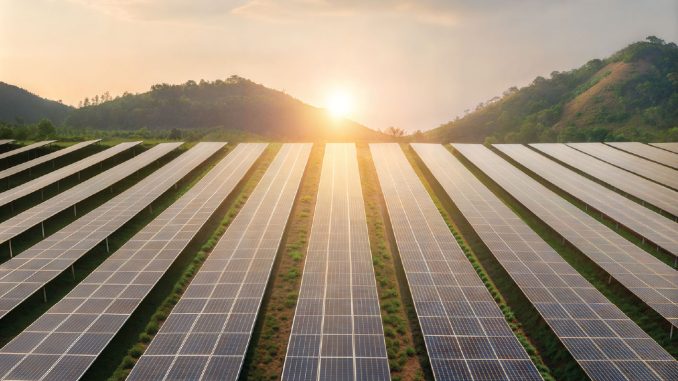
India’s renewable energy sector is undergoing a rapid transformation, driven by ambitious government policies and significant investments across segments. The landscape is expanding beyond the well-established solar and wind segments, with increasing momentum across emerging segments such as hybrids, energy storage systems (ESSs) such as battery energy storage systems (BESSs) and pumped storage projects (PSPs), compressed biogas (CBG) and green hydrogen. Once considered peripheral, these segments are now moving to the forefront, attracting significant attention from both the government and industry.
An overview of the renewable energy sector, highlighting the latest developments and trends shaping India’s green growth…
Solar
As per the Ministry of New and Renewable Energy (MNRE), the cumulative solar capacity stood at 123.13 GW as of August 31, 2025, the highest among all renewable segments. This includes 93.9 GW from ground-mounted solar plants, 20.85 GW from rooftop solar (including under the PM Surya Ghar: Muft Bijli Yojana), 3.26 GW from hybrid projects (solar component) and 5.12 GW from off-grid solar.
Solar energy continued to lead India’s renewable capacity expansion, with 23.83 GW added in 2024-25, a significant increase from the 15.03 GW added in 2023-24. This addition can be attributed to an active auction pipeline, rising demand from the commercial and industrial (C&I) sector, increasingly attractive cost economics, and low tariffs discovered in the utility-scale solar segment. In 2024-25, 11 auctions were conducted. The lowest utility-scale solar tariffs discovered ranged from Rs 2.48 per kWh, in the Solar Energy Corporation of India’s (SECI) XVI 1.2 GW auction (August 2024), to Rs 3.04 per kWh, in SECI’s XVIII 1 GW auction (December 2024).
Apart from this, the segment has witnessed a rapid shift towards distributed solar deployment. While residential rooftop adoption has surged under the PM Surya Ghar scheme, C&I installations and projects under the PM-KUSUM scheme have also gained momentum, resulting in diversified solar capacity growth. Under the PM Surya Ghar scheme, 6,234,531 applications have already been received, as of October 4, 2025. Of these, 1,619,703 installations have been completed, contributing to a total installed capacity of 6,049.17 MW. Substantial financial support has been provided under the scheme, with subsidies worth Rs 117.15 billion disbursed so far. That said, the C&I segment continues to dominate India’s rooftop solar installations. According to the Institute for Energy Economics and Financial Analysis and CareEdge Research report dated April 14, 2025, the C&I segment accounted for 73 per cent of India’s rooftop solar market, while the residential segment held a 27 per cent share in FY 2024.
Under the PM Surya Ghar scheme, several new guidelines and amendments were introduced in the past year to accelerate implementation. These include calls for proposals under the Innovative Projects component of the scheme, a start-up challenge on rooftop solar and distributed renewable energy, central financial assistance (CFA) for real estate developers and residential consumers under the renewable energy service company (RESCO) and utility-led aggregation models, streamlined vendor operations, a payment security mechanism for RESCOs, and a mandate for original equipment manufacturers to integrate inverter communication devices with the programme portal.
The PM-KUSUM scheme also witnessed record progress in 2024-25. Under Component B, 0.44 million pumps were installed, 4.2 times more than the previous year’s deployment. Meanwhile, Component C saw 0.26 million pumps solarised, a 25-fold surge since 2023-24. With these additions, the cumulative number of solar pumps installed or solarised under the scheme has surpassed 1 million.
The solar manufacturing segment has also witnessed notable growth. As per the MNRE, the solar module manufacturing capacity under the Approved List of Models and Manufacturers (ALMM) has grown to 109.5 GW, as of September 19, 2025. As per Lok Sabha questions dated July 30, 2025, the current installed solar cell manufacturing capacity in India is 26.35 GW. The solar cell manufacturing industry is poised for further growth, supported by recent policy developments. In December 2024, the MNRE announced the inclusion of solar PV cells in the newly introduced ALMM-II, from June 1, 2026 onwards. Recently, in August 2025, the MNRE released ALMM List-II for solar cells, listing nine domestic manufacturers with a cumulative annual production capacity of 13,067 MW. Moreover, in September 2025, the MNRE proposed to issue ALMM List-III for solar wafers, which will come into effect from June 1, 2028.
Overall, the solar sector is witnessing renewed momentum, with record-high installations, rising interest in distributed solar and a clear policy thrust for domestic solar cell manufacturing. The 17.5 GW added between April 1, 2025 and August 31, 2025 marks the fastest growth yet. If this trajectory continues, India will be well on track to achieve its 280 GW solar target by FY 2030.
Wind
As of August 31, 2025, India’s wind power capacity stood at 52.68 GW, making it the second highest within the renewables sector. The installed wind capacity from April 1, 2025 to August 31, 2025 stood at 2,643.38 MW. In 2024-25, the country added 4.1 GW of new wind capacity, compared to 3.25 GW in 2023-24. Much of this recent capacity addition has been concentrated in leading wind-rich states such as Gujarat, Tamil Nadu and Karnataka.
The onshore wind segment has received significant impetus in recent years, driven by factors such as the 10 GW annual bidding target from 2023 to 2027, guidelines for a tariff-based competitive bidding process to standardise procurement, sector-specific renewable purchase obligations (RPOs) until 2030, and waiver of interstate transmission system (ISTS) charges until June 2025. The lowest utility-scale wind tariffs discovered in tenders have ranged from Rs 3.56 per kWh (Gujarat Urja Vikas Nigam Limited’s VIII 200 MW auction in October 2024) to Rs 3.98 per kWh (SJVN Limited’s 600 MW auction in January 2025).
The offshore wind segment also gathered momentum in 2024, following tender announcements and policy interventions. However, the segment received a setback in August 2025, when SECI cancelled two offshore wind projects – a 500 MW project in Gujarat and a 4 GW seabed lease rights allocation – more than a year after the tenders had been issued, citing a lack of developer participation. This development comes despite the government’s efforts to promote offshore wind through VGF support in FY 2024 and extended bidding timelines.
While offshore wind faces early-stage hurdles, onshore opportunities remain strong. In particular, repowering ageing wind farms in high-potential states such as Tamil Nadu, Gujarat and Maharashtra could deliver substantial capacity gains and improve generation efficiency. Meanwhile, India’s manufacturing growth has strengthened the segment’s global position – the country now ranks as the world’s third largest wind manufacturing hub, according to the Global Wind Energy Council’s India Wind Report 2025. Manufacturing capacity has expanded from 12 GW in 2022 to 20 GW in 2024, marking a 74 per cent increase and enabling India to cater to nearly 10 per cent of global wind demand.
Overall, meeting India’s long-term energy transition goals will demand decisive action – scaling annual wind installations to 10-15 GW by 2030 while converting offshore ambitions into concrete projects and maximising onshore gains.
Bioenergy
India’s bioenergy sector is steadily gaining traction, with total installed capacity reaching 11.6 GW as of August 31, 2025. This includes 9.82 GW from biomass power/bagasse cogeneration, 921.79 MW from non-bagasse biomass cogeneration, 309.34 MW from waste-to-energy (WtE) and 545.11 MW from off-grid WtE. Over the past 11 years, biopower capacity has grown from 8.1 GW to 11.6 GW, driven by a broader policy shift and expanding opportunities across the bioenergy value chain.
The MNRE’s National Bioenergy Programme (NBP), launched in November 2022 with a total outlay of Rs 17.15 billion for the FY 2021-26 period has been a key driver. To make the programme more industry-friendly, the government amended the guidelines in June 2025, removing several documentation and clearance requirements for briquette and pellet manufacturing plants. Moreover, guidelines under the WtE component of the NBP were revised in the same month, in order to improve performance monitoring and accelerate CFA disbursement. Building on this momentum, in September 2025, the MNRE approved an additional budget of Rs 1.4 billion for Phase I of the NBP, signalling its continued commitment to sector growth.
To harness the full potential of the segment, newer areas such as CBG, ethanol blending and biomass co-firing in thermal plants have received strong policy and industry support. As per the Sustainable Alternative Towards Affordable Transportation (SATAT) portal, 113 CBG plants have been commissioned, with 1,103 active letters of intent issued as of October 5, 2025. With SATAT as the backbone, policy support has played a vital role in promoting the CBG sector. Key recent initiatives include the introduction of a new transportation fee structure for CBG supplied via cascade systems – Rs 1.50 per kg for distances of 50-75 km and Rs 2.50 per kg for over 75 km; no fee is applicable within 50 km. Furthermore, the updated CBG price has been fixed at Rs 1,478 per metric million British thermal units (excluding GST), applicable from June 1, 2025 to October 31, 2025. In July 2025, the Ministry of Petroleum and Natural Gas revised the CFA disbursement process for CBG projects to support the purchase of biomass aggregation machinery. As per the updated guidelines, CBG plants with a minimum capacity of 2 tonnes per day that use over 50 per cent biomass as feedstock are eligible to receive a CFA of Rs 9 million.
Complementing these efforts in the bioenergy space, India’s ethanol blending programme has gained strong momentum. According to Lok Sabha questions dated July 24, 2025, the Ethanol Blended Petrol programme has driven an increase in blending levels from 1.53 per cent in 2014 to 19.92 per cent in June 2025, supported by a sharp increase in ethanol procurement, from 380 million litres in 2014 to 4.4 billion litres in 2025. Biodiesel procurement has also grown substantially, reaching 439.9 million litres in 2024, up from just 11.9 million litres in 2015-16.
Overall, with strong policy support and emerging subsegments, bioenergy is fast becoming a key pillar of India’s clean energy transition.
Hydropower and pumped storage
According to the MNRE, as of August 31, 2025, India’s installed large-hydro and small-hydro capacities stood at 50.11 GW and 5.1 GW respectively. The growth in these segments has been modest, up from 41 GW and 4.06 GW, respectively, in March 2015.
Amidst this tepid growth, PSP uptake has witnessed renewed momentum. As per the Central Electricity Authority (CEA), as of August 31, 2025, India has 74 PSPs at various stages of development, with a total capacity of 92.5 GW. This includes 6.69 GW of operational capacity, 12.11 GW under construction and 2.14 GW under examination, 5.08 GW with detailed project report approved by the CEA, 17 GW under survey and investigation (S&I), and 49.49 GW under S&I (not in the CEA).
The central government has renewed its focus on hydropower and PSP development by launching various reforms. In the hydropower space, it has announced Rs 41 billion in equity support for the north-eastern states. To be implemented from 2024-25 to 2031-32, the scheme will support the development of 15 GW of hydropower capacity. In addition, the union cabinet has approved a Rs 125 billion budgetary support scheme for developing hydropower and PSP projects totalling 31,350 MW and 15 GW respectively. Additionally, the government has extended the ISTS charges waiver for hydropower plants. To promote innovation in the hydro sector, the CEA has officially recognised surface hydrokinetic turbine technology.
The government also announced plans for a comprehensive PSP policy in the Union Budget 2024. This builds on the policy framework introduced in April 2023, which includes measures such as no upfront premium for project allocation, simplified approval processes, monetary benefits such as reimbursement of state GST and stamp duty, no obligation to supply free power to the home state and eligibility to participate in the hydropower purchase obligation market. A key recent policy development is the MoP’s tariff-based competitive bidding guidelines for procuring stored energy from existing, under-construction or new PSPs.
Overall, this renewed focus is timely as PSPs play a critical role in maintaining grid stability and provide a reliable and cost-effective solution in the long term.
Green hydrogen
The government has taken significant steps to promote the adoption of green hydrogen and its derivatives. The release of the Green Hydrogen Policy in February 2022 and the National Green Hydrogen Mission (NGHM) in January 2023 has provided a clear framework for the development of the green hydrogen ecosystem in India. A central element of the NGHM is the Strategic Interventions for Green Hydrogen Transition programme, which provides financial incentives to promote domestic electrolyser manufacturing (Component I) and green hydrogen production (Component II). Under the NGHM, the MNRE has further released guidelines to initiate pilot projects across the mobility, steel and shipping sectors.
The policy momentum in this space continues to grow with the launch of tender auctions, as well as the introduction of various guidelines and incentives. Recently, SECI’s Mode 2A, Tranche I green ammonia auction witnessed record-low bids. In total, there are 13 green ammonia auctions for this tender, collectively targeting a procurement capacity of 724,000 million tonnes per year for fertiliser plants. The winning bidders include ACME Cleantech Solutions, Suryam International, NTPC Renewable Energy Limited, Oriana Power, Jakson Green, Onix Renewable and a consortium of SCC Infrastructure and InSolare, with tariffs ranging from Rs 49.75 per kg to Rs 64.74 per kg. The success of these consecutive auctions signals India’s growing price competitiveness in the global green ammonia space and increasing industry confidence in the Indian green ammonia market.
To strengthen the sector, in July 2025, the MNRE released revised guidelines for setting up hydrogen valley innovation clusters and green hydrogen hubs in India. The ministry also released the second round of proposal submissions under the research and development scheme of the NGHM. Furthermore, it launched the Green Hydrogen Certification Scheme of India to monitor, verify and certify the greenhouse gas emissions intensity of hydrogen produced from renewable energy sources. This was followed by a programme launched in August 2025 to drive innovation in green hydrogen production and utilisation across decentralised production. The scheme has a budget of Rs 2 billion through 2025-26. Recently, in September 2025, the MNRE, with the National Institute of Solar Energy, invited proposals for pilot projects from start-ups developing innovative green hydrogen production or utilisation technologies. Under this initiative, the total fund allocation is Rs 1 billion until 2025-26.
While these policy initiatives are a positive development, the aim should be to make green hydrogen and its derivatives more competitive to fully realise its export potential.
Storage and hybrids
The demand for BESS is growing rapidly, prompting government action. This is evident from the 16 standalone BESS auctions conducted since FY 2024-25, driven by falling battery prices. Of these, nine standalone BESS auctions have been held since April 2025. These auctions have revealed pricing trends, highlighting the impact of VGF and project specifications on tariff outcomes. The lowest discovered tariff was achieved in NHPC Limited’s 500 MW/1,000 MWh auction (June 2025) at Rs 208,000 per MW per month. Meanwhile, Bihar State Power Generation Company Limited’s 125 MW/500 MWh (July 2025) yielded a higher tariff of Rs 444,000 per MW per month. Notably, the NHPC tariff was achieved in a non-VGF tender, signalling growing commercial viability in the sector. Looking ahead, it is possible that significant VGF may no longer be necessary, given the fall in battery prices.
Going forward, the activity in the storage market is expected to grow, with initiatives such as a second VGF tranche for 30 GWh of BESS capacity, a 100 per cent ISTS charge waiver for co-located projects, an advisory on integrating ESS with solar power projects, and a revised target for BESS deployment, up from 4,000 MWh to 13,200 MWh under different components.
There is also a growing focus on the uptake of firm and despatchable renewable energy (FDRE) and hybrid projects as both utilities and C&I clients demand cleaner energy sources. Since the beginning of 2024-25, 12 auctions have been conducted in the hybrid space and six in FDRE, resulting in a wide range of tariffs. For hybrid projects, the lowest tariff recorded was Rs 3.19 per kWh in SJVN’s III 1,200 MW auction in November 2024. Meanwhile, the highest tariff of Rs 3.60 per kWh was observed in Maharashtra State Electricity Distribution Company Limited’s 500 MW and 1,650 MW tenders conducted in June and October 2024 respectively. For FDRE projects, the lowest tariff recorded was Rs 4.25 per kWh in SJVN’s II 1,200 MW auction (October 2024). Meanwhile, the highest tariff of Rs 8.50 per kWh was observed in SECI’s 8,000 MWh FDRE-VI (January 2025).
Meanwhile, only one RTC auction has been conducted since 2024-25, SECI’s 1,200 MW tender in May 2025. Hero Solar Energy and Hexa Climate Solutions won 120 MW and 100 MW, respectively, at a tariff of Rs 5.06 per kWh each. Jindal India Power and Sembcorp Green Infra won 150 MW and 50 MW, respectively, at Rs 5.07 per kWh.
The way forward
India’s renewable energy sector is witnessing significant activity across segments. The focus is clearly shifting from ambition to execution, with policies evolving to support capacity expansion, integration and manufacturing growth. While each segment faces its own set of challenges, the overall trajectory remains positive. Sustained policy momentum, timely project implementation and stronger coordination among stakeholders will be key to translating this momentum into meaningful progress in India’s clean energy transition.