
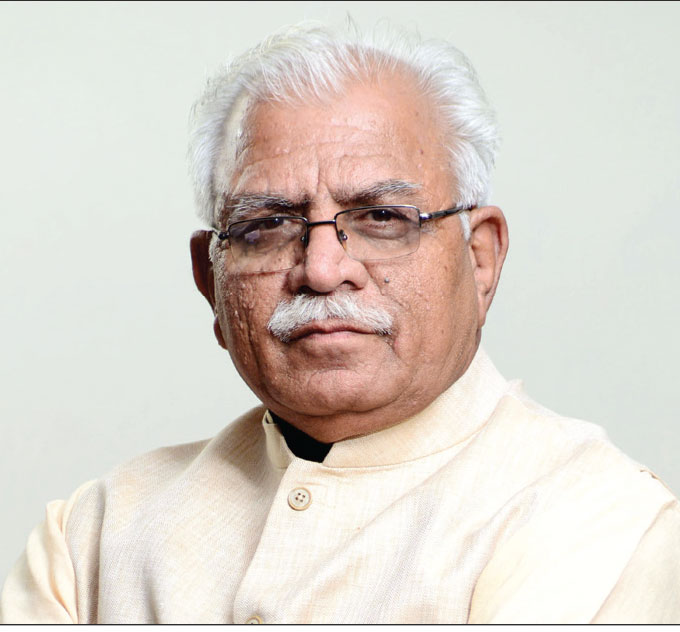
 At various industry events, Union Minister for Power Manohar Lal outlined the transformation of India’s power sector over the past decade and shared the government’s vision for future growth. He noted that the government has placed the power sector at the centre of its mission to make India a developed nation by 2047. He also underscored the importance of energy efficiency and environmental conservation, particularly in the micro, small and medium enterprises (MSME) sector, to enable sustainable industrial growth. Looking ahead to 2047, he stressed that India’s journey from a $4 trillion economy today to $5 trillion within two years and $17 trillion by 2047 will hinge on industry, employment and, above all, reliable and adequate power supply. Edited excerpts…
Power demand
India’s electricity demand has expanded rapidly, with peak power touching 250 GW in May 2024, nearly double the level recorded in 2014. Peak demand could rise to 270 GW in 2025-26. India’s system has managed well so far and is planning ahead for both thermal and renewable capacity additions. While peak shortages have been eliminated, with no gap recorded in recent months, the overall energy shortage stood at a marginal 0.1 per cent in April 2025, a sharp improvement from the 4.2 per cent level of shortages recorded in 2013-14. This marks a shift towards self-sufficiency, with the possibility of the country soon moving into a surplus situation, which would open up greater opportunities for exports. Rural areas now receive an average of 22.6 hours of supply per day, while urban areas receive 23.4 hours, with the small gap attributed to technical factors.
Generation
The generation segment has seen significant progress. Coal availability has remained stable, ensuring smooth generation, and coordination with the coal department is functioning effectively. Comprehensive plans have been formulated under the Shakti Policy to support this. Further, hydro additions have been scaled up, with 3 GW commissioned during 2024-25 and another 3 GW lined up for next year.
The expansion in capacity has been a key enabler. In 2024-25 alone, the country added 34 GW of new generation capacity, of which 29.5 GW came from renewable energy – the highest-ever in a single year. This has raised the total installed capacity to 475 GW as of March 2025 from 249 GW in 2014. Total electricity generation grew by 5.2 per cent in 2024-25, rising from 1,739 BUs in 2023-24 to 1,829 BUs in 2024-25. On the export side, India supplied 4,665 MW in 2023-24 and is preparing for more, including through joint ventures with Saudi Arabia and the UAE for two 2 GW each subsea HVDC transmission projects involving a combined investment of about Rs 905 billion.
Transmission
The transmission network, too, has seen significant expansion, with line length reaching 494,000 ckt km in 2024-25 from 291,000 ckt km in 2013-14. To strengthen the intra-state transmission system, it has now been brought under the Late Payment Surcharge (LPS) Rules. This step is expected to attract more private investment in intra-state transmission, which has so far lagged behind interstate transmission. While several players have been active in the interstate segment, their participation in intra-state transmission was limited.
One of the major challenges in transmission projects has been securing right of way for laying transmission lines. Earlier, compensation offered to farmers for their land was based on fixed rates, which were often inadequate. To address this, the rules have been revised to ensure that compensation is linked to prevailing market rates, determined by independent third-party agencies. Farmers will receive fair compensation, ranging from 30 per cent to 200 per cent of the assessed market value, depending on the nature of the land and project requirements.
With the increasing requirement for power evacuation, India is now moving beyond the existing 765 kV transmission lines. High voltage lines of 1,100 kV, already in use in countries such as China and the US, are being introduced. Approval has been granted for nine such lines, which are targeted for development by 2034.
Both pumped storage and battery storage projects have been integrated into the transmission framework. These projects, which are already under development, will be commissioned by June 30, 2028. The government has provided waivers on transmission charges for power evacuated through such storage systems, thereby supporting the country’s growing need for flexible and reliable energy storage solutions.
Distribution
On the distribution side, efficiency gains are visible. Aggregate technical and commercial (AT&C) losses have been reduced from 22.62 per cent in 2013-14 to 16.12 per cent in 2024-25. The gap between the average cost of supply and average revenue realised, which stood at Re 0.78 per unit a decade ago, has narrowed sharply to Re 0.10 per unit. The roll-out of smart meters has played a decisive role in this turnaround. Installation rates have accelerated from 4,000 per day in 2023 to 115,000 per day as of May 2025, with 31.4 million already deployed. Prepaid meters are being prioritised, beginning with all government offices and colonies by August 2025, and extending to large load consumers by November 2025. To encourage adoption, we are even considering a 2-5 per cent concession on prepaid bills. Under the Revamped Distribution Sector Scheme (RDSS), nearly 100,000 smart meters are being installed daily, with a target of 250 million by 2026. While the deadline may slip slightly, the roll-out is progressing steadily, supported by rebates of Rs 900 per meter. The RDSS also focuses on reducing AT&C losses and strengthening discom finances. The RDSS, with an outlay of Rs 1.3 trillion, is being rolled out to modernise networks and reduce losses. Around 28 per cent of physical progress has been achieved, including projects for feeder segregation and efficiency improvement.
Clean energy
The vision is to build a clean, reliable energy mix where solar, wind and hydro are supported by storage systems. Nuclear capacity will also expand as a non-fossil fuel option. While coal will remain relevant for baseload power in the near term, the trajectory is clearly towards renewables. We are also developing green corridors and planning to declare certain states as “green states” based on renewable penetration. Surplus power will be exported. India already supplies to Bhutan, Myanmar and Bangladesh, and we are in discussions with the UAE and Saudi Arabia. Domestically, the surplus can power data centres and industries like steel and cement, lowering their costs and boosting competitiveness.
Nuclear power is expected to assume a bigger role in the future. The current nuclear capacity is 8 GW, with projects for 15 GW already approved and a pipeline of 22-23 GW under planning. The long-term target is to achieve 100 GW of nuclear capacity by 2047, in line with the strategy to gradually replace thermal after 2035 as part of India’s commitment to net zero by 2070. The government is working to shorten the typical 13-year gestation period for nuclear projects to eight to nine years, with several states already offering sites. To support this, Union Budget 2025-26 has allocated Rs 200 billion for nuclear development, including small modular reactors, with plans to involve the private sector in the programme.
The government is stepping up efforts to support round-the-clock (RTC) clean power. Storage is being promoted through both pumped storage systems and batteries. In parallel, new codes and policies are shaping the energy efficiency agenda. The revised Energy Conservation Building Code issued this year has led to measurable gains, with over 3,500 commercial buildings complying and achieving energy savings of around 18 per cent. Guidelines for electric vehicle charging and battery swapping have been notified, while new standards are being introduced to regulate air conditioner temperatures to between 20°C and 28°C. Meanwhile, cybersecurity protocols are being tightened across generation, transmission and distribution to guard against emerging threats.
Energy efficiency
Energy efficiency and environmental conservation have been key priorities over the past two decades and have become increasingly vital as energy resources remain limited. Enhancing efficiency across sectors is essential for sustainable growth, reducing consumption and lowering production costs. Industries can save 10-50 per cent through modern machinery and efficient technologies. Manufacturing, textiles, chemicals, food processing and casting units can adopt sector-specific solutions to improve operations, cut energy use and boost competitiveness.
The recently launched Assistance in Deploying Energy Efficient Technologies in Industries & Establishments (ADEETIE) scheme supports the adoption of efficient technologies, especially in MSMEs. With an outlay of Rs 10 billion, it offers interest subvention of 5 per cent for small and micro units and 3 per cent for medium enterprises for three years, along with technical support such as energy audits, project reports and technology guidance.
Simple actions such as moderate temperature settings, switching off unused lights and automated systems can cut electricity use in buildings and homes. Efficient transport practices and standardised AC temperatures also help. Energy efficiency supports India’s Net Zero 2070 goal, reduces emissions and safeguards resources. Through ADEETIE, awareness and behavioural change, industries can lower costs and lead the shift to a greener, more sustainable economy.
Outlook
The government is advancing reliable round-the-clock power through pumped storage and battery systems, supported by viability gap funding. Around 13.2 GW of capacity is under implementation, with a new Rs 330 billion scheme targeting 30 GWh of additional storage to boost private participation. Another major step is the planned launch of a national carbon market by June 2026, enabling carbon credit trading and compliance flexibility.
Overall, India’s power sector has transformed over the past decade, achieving near self-sufficiency while expanding renewables, strengthening transmission and modernising distribution. With record capacity additions, lower losses and private sector reforms, it is well positioned to meet the rising demand. The roadmap for the sector – driven by storage, nuclear expansion and energy efficiency – underscores India’s commitment to sustainability and competitiveness on the path to becoming a developed, net-zero nation by 2047.