
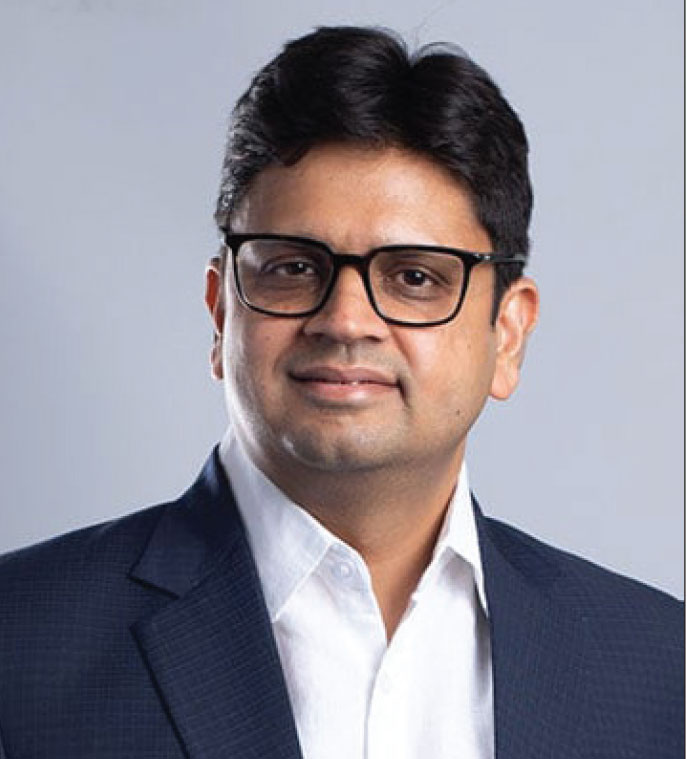
 In a recent interview with Power Line, Rahul Mishra, President and Head – Commercial and Industrial Business, BluPine Energy, discussed the company’s strategic vision to expand its renewable energy portfolio from 1.5 GW to 4 GW, driven by hybrid and storage-integrated projects. Its 150 MW hybrid project in Karnataka exemplifies its commitment to delivering firm, round-the-clock (RTC) renewable power. The company is leveraging advanced solar, wind and storage technologies, alongside artificial intelligence (AI)-driven solutions, to strengthen its Commercial and Industrial portfolio, which includes major clients like Amazon. While regulatory inconsistencies and infrastructure constraints remain challenges, BluPine continues to drive India’s clean energy transition through scalable, customer-centric and technologically advanced renewable solutions. Edited excerpts…
What is the current project portfolio of BluPine Energy? What are the targets and outlook going forward?
At BluPine Energy, our mission is to power India’s clean energy future by combining scale, innovation and strategic execution. Backed by $800 million from Actis Energy Fund 5, we currently operate over 1.5 GW of wind, solar and hybrid projects across India, with an ambitious target to expand our portfolio to 4 GW in the near term. Our projects span Rajasthan, Gujarat, Maharashtra, Karnataka, Chhattisgarh, Tamil Nadu and other key states, achieving a balance between geographic diversification and operational scale.
In the C&I segment, we have already secured 800 MW of projects, with a goal to scale to 1 GW, including a 99 MW wind PPA with Amazon. These initiatives enable businesses to meet their sustainability targets while optimising energy costs. Over 500 MW of PPAs were added in 2024 alone, reflecting strong market momentum.
Looking ahead, our strategy is to deliver commercially viable and environmentally responsible energy solutions that contribute meaningfully to India’s 500 GW non-fossil capacity target by 2030. With a dedicated team and a clear strategic vision, BluPine is not just expanding its portfolio; it is also innovating, leading and powering a sustainable energy transition that benefits industries, communities and the nation.
How is BluPine preparing to serve firm and despatchable renewable energy (FDRE) demand, and what role do storage and hybrid solutions play?
At BluPine Energy, we are strategically positioned to meet the growing demand for FDRE by advancing hybrid projects that seamlessly integrate solar, wind and energy storage technologies. Our flagship 150 MW FDRE project in Aland, Karnataka, exemplifies this approach. Scheduled for commissioning in 2026, this project integrates solar, wind and lithium-ion battery storage to provide reliable and firm power, overcoming the intermittency challenges of renewable energy and ensuring grid stability during peak demand periods. The project is financially supported by Rs 24.16 billion in debt financing led by Standard Chartered.
Storage and hybridisation lie at the heart of our FDRE strategy. By coupling solar and wind generation with advanced battery storage, we can supply RTC renewable power that meets the evolving needs of distribution companies and industrial consumers. This flexibility is critical to maintaining grid reliability and meeting India’s ambitious clean energy transition goals.
Our integrated hybrid projects embody BluPine’s commitment to technological innovation, financial discipline and collaborative execution. Through such forward-looking initiatives, BluPine is emerging as a key enabler of India’s low-carbon future – delivering commercially viable, sustainable and despatchable energy solutions that strengthen the nation’s green growth trajectory.
What technology trends in solar, wind and storage are as most relevant for C&I players over the next three to five years?
The renewable energy landscape is entering a phase of rapid technological advancement, with several innovations set to redefine the C&I energy ecosystem over the next few years.
High-efficiency solar technologies, such as bifacial and perovskite cells, are transforming energy generation by maximising output from limited rooftop or land space – a crucial advantage for industrial applications. Hybrid systems that combine solar, wind and battery storage are emerging as a game changer, providing stable, despatchable power that matches the dynamic load profiles of industries.
Meanwhile, advancements in energy storage, particularly in lithium-ion and long-duration batteries, are enabling load shifting and RTC renewable supply. Complementing this, AI-driven digital platforms are revolutionising energy management, from predictive maintenance to demand forecasting, empowering industries to optimise consumption and reduce downtime. The rise of decentralised energy systems is further enhancing resilience and autonomy for C&I consumers, while green hydrogen is fast becoming a viable clean fuel alternative for energy-intensive, hard-to-abate sectors.
At BluPine Energy, these innovations are integral to our growth strategy. They underpin the development of our 4 GW renewable energy portfolio, which blends solar, wind and hybrid storage assets to deliver firm, reliable power.
How do recent policies, such as the Green Energy Open Access [GEOA] Rules and state-level reforms, impact BluPine’s C&I business strategy?
The GEOA Rules and state-level reforms have created strong momentum for BluPine Energy’s C&I growth strategy. By lowering open access thresholds and streamlining approvals, these policies have made renewable energy procurement more accessible to a wider base of C&I consumers across India.
While execution challenges such as banking norms, wheeling approvals and discom resistance persist in some states, the overall policy direction is enabling. It supports BluPine’s focus on scalable, cost-efficient clean energy solutions for high-demand sectors such as steel, cement and data centres. These reforms strengthen our ability to serve the growing demand for green power while advancing India’s net zero and 500 GW non-fossil energy goals.
What regulatory or infrastructure challenges still act as barriers for C&I customers in scaling up renewable adoption?
At BluPine Energy, we are deeply committed to enabling C&I consumers to transition to renewable energy seamlessly. While the momentum is strong, regulatory inconsistencies and infrastructure bottlenecks continue to slow large-scale adoption. Inconsistent implementation of GEOA Rules across states, varying thresholds and differing interpretations of exemptions create confusion for customers seeking to transition to clean energy.
Infrastructure constraints also remain a key barrier. Limited transmission capacity, delays in grid connectivity and prolonged approvals for PPAs increase project timelines and costs. In addition, policy gaps, financial uncertainties and land acquisition challenges add further complexity.
At BluPine Energy, we actively collaborate with regulators, discoms and customers to address these barriers through innovative project design and execution models. Our focus remains on delivering reliable, scalable and commercially viable clean energy solutions that accelerate the C&I sector’s transition towards a sustainable future.
What are BluPine’s medium-term targets for its C&I portfolio in India, and are you exploring international opportunities?
BluPine Energy remains firmly focused on India’s fast growing renewable energy landscape and currently has no plans to expand into international markets. Our strategy is centred on strengthening our presence in the C&I segment, where we see significant potential for long-term growth. In the initial phase, our efforts are directed towards building strong intra-state projects that cater to localised demand and ensure efficient energy delivery for our customers.
Over the next two to four years, we plan to scale up our intra-state portfolio while increasingly focusing on developing interstate capacities, particularly projects with RTC capabilities that ensure reliable and consistent renewable power supply. In parallel, we are also exploring contract-for-difference structures to diversify our commercial offerings and provide greater value and flexibility to C&I customers. BluPine’s India-first approach reflects its commitment to driving the country’s energy transition through sustainable, innovative and customer-focused renewable energy solutions.
BluPine has worked with global enterprises in India’s C&I space. What lessons have you drawn from these partnerships that could be replicated across other sectors or geographies?
Our partnerships with global enterprises have underscored the importance of customised, end-to-end renewable energy solutions that align with each customer’s operational and sustainability goals. Understanding these unique needs allows us to design projects that integrate seamlessly, ensure regulatory compliance and accelerate progress towards net zero targets.
We have also learned that proactive stakeholder engagement, from regulators to local communities, is crucial for smooth execution and long-term trust. These practices not only help mitigate risks and optimise outcomes but also lay the foundation for scalable, resilient and sustainable energy ecosystems.
These lessons of customisation, collaboration and operational excellence are universally applicable, guiding BluPine’s efforts to deliver sustainable, commercially viable solutions across industries and geographies.