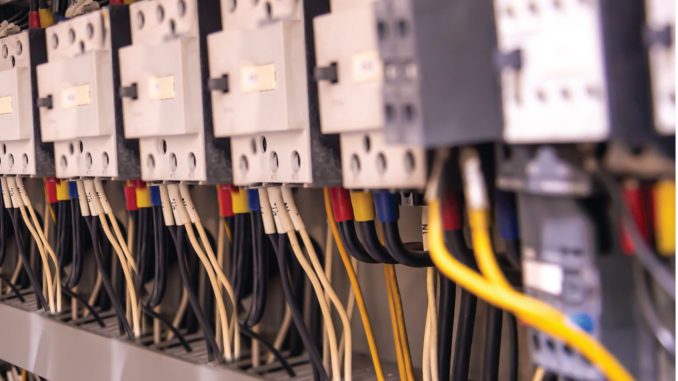
India’s electrical cables and conductors industry is entering a phase of sustained, policy-driven expansion, supported by rapid urbanisation, infrastructure growth and large-scale government interventions across the power and digital sectors. Industry estimates place the market at about $6.6 billion in 2024, with projections indicating it will rise to nearly $10.9 billion by 2033, at a compound annual growth rate of 5.76 per cent during 2025-33. Much of this momentum is tied to central schemes that are reshaping transmission, distribution, renewable energy evacuation and digital connectivity.
Flagship programmes, such as the Revamped Distribution Sector Scheme (RDSS), the Green Energy Corridor (GEC), PM Surya Ghar: Muft Bijli Yojana, the National Smart Grid Mission (NSGM), Faster Adoption and Manufacturing of Hybrid and Electric Vehicles (FAME) II, and BharatNet, are collectively driving extensive additions to line length, substation capacity, smart metering, electric vehicle (EV) charging infrastructure and fibre backbones. Urban distribution upgrades are adding another strong layer of demand. Discoms and city utilities are increasingly shifting from overhead lines to underground cabling to reduce outages, improve safety and enhance resilience to extreme weather. Metro rail networks, smart city clusters, commercial districts and dense residential zones are mandating 11 kV and 33 kV underground systems, ring main units and compact substations, further accelerating the uptake of medium-voltage and high-performance cables.
With interventions spanning power, mobility, digital connectivity and urban reform, government schemes are shaping a broad and durable demand base, positioning the wires and cables segment as a critical enabler of India’s next decade of infrastructure modernisation.
RDSS
The RDSS is emerging as a major driver of demand for cables and conductors, as discoms accelerate the expansion and strengthening of their networks. With an allocation of Rs 3,037.58 billion for 2021-22 to 2025-26, the scheme provides financial support to distribution utilities for modernising infrastructure and improving service reliability. As per the RDSS portal (accessed on November 28, 2025), 1,054,453 ckt km of low-tension (LT) lines have been sanctioned, with 939,494 ckt km awarded and 478,466 ckt km installed. In the high-tension (HT) segment, 864,016 ckt km have been sanctioned, 662,152 ckt km awarded and 318,412 ckt km installed. For distribution transformers, 583,419 units have been sanctioned, 519,821 awarded and 140,158 installed. A total of 2,010 substations haves also been sanctioned under the scheme, of which 1,795 have been awarded and 834 commissioned.
Smart grid initiatives
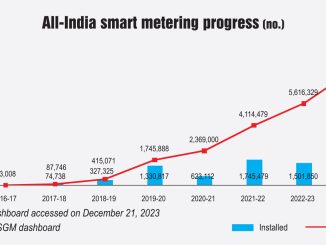
India’s smart grid development under the NSGM has emerged as a key growth driver for the wires and cables industry. Smart grid projects are modernising the country’s power network by integrating digital communication and automation technologies with conventional grid systems, enhancing reliability and operational efficiency. The roll-out of smart meters, advanced metering infrastructure and intelligent control systems has significantly increased the need for specialised cables that enable real-time monitoring, fault detection and efficient load management. This includes the growing use of fibre optic, instrumentation and control cables to support two-way communication and data transfer across the grid.
Further, rising investments by state utilities in grid automation and substation digitalisation are creating consistent demand for high-performance transmission and distribution cables. The integration of renewable energy sources such as solar and wind within smart grids has also accelerated the requirement for weather-resistant and high-voltage cable systems to ensure stable energy evacuation and grid resilience.
Renewable expansion
Government-led programmes, such as the GEC and PM Surya Ghar, are sharply accelerating solar and wind additions, creating sustained demand for high-quality, durable and low-loss cabling systems. Solar projects are especially cable-intensive. Industry estimates suggest that every 1 MW of solar capacity requires about 50 km of specialised PV cables to link modules, inverters and transformers while minimising losses. With India targeting 500 GW of renewable energy capacity by 2030, the segment alone is expected to require several million kilometres of cabling over the next few years.
By September 2025, India’s renewable installed capacity had reached 247.31 GW, driving the need for extensive transmission networks to move power from renewable-rich zones to load centres. Under GEC-I, 9,136 ckt km of transmission lines and 21,413 MVA of substation capacity have already been built. GEC-II aims to add another 7,574 ckt km of lines and 29,737 MVA of substations. The government is now pushing ahead with GEC-III to further strengthen intra-state renewable evacuation systems. Union Budget 2025-26 has earmarked about Rs 560 billion for this phase, with the central government contributing roughly 40 per cent (Rs 224 billion), and the remaining expected from states and other stakeholders.
Beyond this, ultra-high-voltage AC corridors and dedicated transmission systems for emerging green hydrogen hubs are planned through 2034, signalling long-term, structural demand for advanced cables and conductors.
E-mobility push
India’s growing electric mobility ecosystem has opened another strong avenue of demand for cables and conductors. With the government actively promoting EV adoption through schemes such as FAME II, the PLI scheme for advanced chemistry cell batteries and the National Electric Mobility Mission Plan, the requirement for robust power and charging infrastructure has surged sharply.
The rapid establishment of public and private charging networks across cities, highways and logistics hubs has significantly increased the consumption of low- and medium-voltage power cables, flexible charging cables and high-capacity conductors. Urban local bodies and state discoms are strengthening distribution networks to handle the additional power load from fast-charging stations, creating opportunities for suppliers of extra high voltage and low voltage cables.
At the same time, electric bus depots, metro systems and fleet electrification projects under central and state-level e-mobility programmes are driving large orders for flame-retardant, high-temperature and corrosion-resistant cable variants. The expansion of battery manufacturing facilities under the PLI scheme has further added to demand for specialised copper conductors and energy-efficient cabling systems. As India scales up its EV ecosystem, the wires and cables industry is emerging as a critical enabler of reliable, safe and high-capacity power connectivity across the entire e-mobility value chain.
Digital and data infrastructure
The roll-out of 5G networks and the rapid growth of data centres are generating strong demand for advanced cables and conductors. Under the Digital India and BharatNet programmes, large-scale investments in telecom infrastructure are driving the need for fibre optic, hybrid and power cables to support high-speed connectivity. Telecom operators are expanding backhaul and small-cell networks, significantly increasing cable deployment density.
At the same time, the expansion of hyperscale and edge data centres under the Data Centre Policy and PLI schemes for electronics is spurring demand for high-performance, fire-retardant and energy-efficient cabling systems. As digitalisation deepens across sectors, the wires and cables industry is emerging as a key enabler of India’s data and communication backbone.
Make in India and China+1 opportunity
The global shift towards supply chain diversification has created a strong China+1 opportunity for India’s wires and cables industry. As global manufacturers look to reduce dependence on China, India’s competitive manufacturing base, cost advantages and policy support are drawing increased investment. The government’s Make in India initiative has further accelerated domestic production by encouraging the localisation of key components and promoting value addition within the country. Further, schemes such as the PLI programme are incentivising manufacturers to expand capacity, enhance product quality and invest in research and development. These incentives have triggered substantial investments in advanced cable manufacturing technologies, automation and testing facilities. Several domestic and international players are setting up or expanding plants to meet rising demand from the power, renewable and telecom sectors.
Conclusion
India’s accelerating investments across power, transport, digital and urban infrastructure are creating a durable, multi-sector demand base for cables and conductors. Policy momentum remains strong, manufacturing capabilities are expanding, and utilities as well as private developers are steadily shifting towards higher-efficiency, higher-specification products. With large-scale upgrades under way in transmission corridors, distribution networks, mobility systems and data infrastructure, the industry is entering a phase where innovation, quality compliance and scale will determine competitiveness.