

TransTech India 2025 featured a series of focused technical sessions covering key themes such as the application of artificial intelligence (AI) and digitalisation in transmission operations, developments in cables and conductors, transformers, towers and substations, as well as the growing use of drones in the power transmission sector. Edited excerpts…
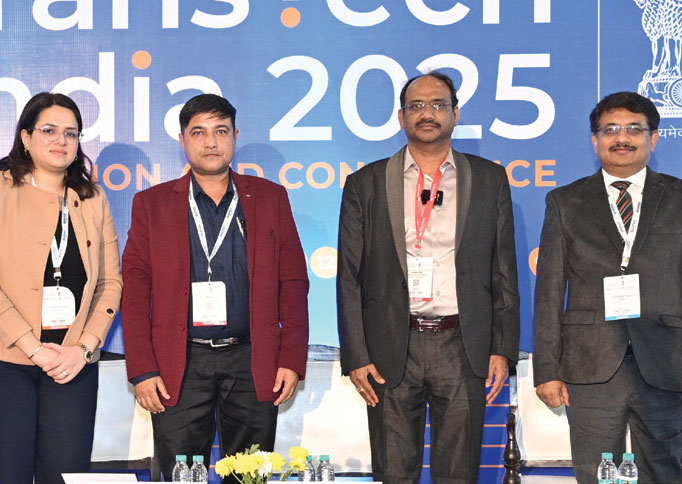
AI and digitalisation
The session on AI and digitalisation in transmission operations featured Mayank Bhardwaj, Director, Power and Utilities, KPMG; Mahendra Kumar Kaloria, Deputy General Manager, Power Grid Corporation of India Limited (Powergrid); and Nihar Raj, Head, Operations and Maintenance, Adani Energy Solutions.
According to the panellists, AI is still largely at the pilot stage across the Indian transmission sector. Transcos are adopting AI and digital solutions to expedite project execution and optimise network operations and maintenance (O&M). They are adopting AI-based transmission line patrolling systems capable of processing over 400 images per minute to identify defects, and reliability-centred maintenance tools for transformers, circuit breakers and transmission lines. To make the grid more flexible, utilities are using DLR and digital asset assessment tools, especially in renewable-rich states. Technologies such as STATCOMs, intelligent substation inspections, and drone-based patrolling systems are also being adopted. Digital tools are being adopted, from design to project execution, to compress project timelines. Moreover, utilities are deploying digital twins of substations to optimise maintenance.
Cables and conductors
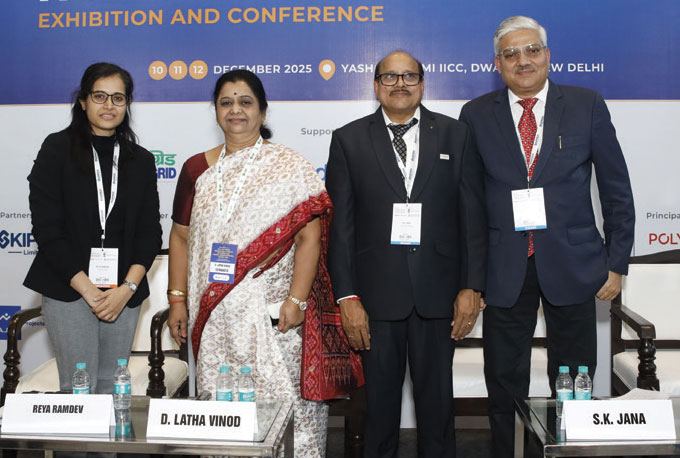
The session on “Cables and Conductors” was addressed by Abhishek, Chief General Manager, PowerGrid; S.K. Jana, Senior Vice-President, R&D, APAR Industries; and D. Latha Vinod, Director Projects, TGTRANSCO.
The speakers noted that the transmission sector is moving from traditional ACSR conductors to high-conductivity aluminium alloys and
special high-performance conductors (SHPCs). These allow utilities to upgrade existing lines and increase capacity by over 50 per cent without building new infrastructure. Covered conductors improve safety and are better suited for urban areas. Trenchless and modular technologies are needed to make underground cable installation and maintenance easier and less disruptive. Cables and conductors require minimal O&M and are robust and reliable in nature. Most issues arise from external activities such as accidental digging or tower damage. Utilities are also adopting sensors and AI-based monitoring tools for real-time condition tracking and predictive maintenance.
Transformers
The session on transformers featured insights from Deepak Kumar Jha, Chief Engineer, Bihar State Power Transmission Company; Abhay Kumar, Chief General Manager, POWERGRID; and Dinesh Kumar Singh, Executive Director (T&D System), DVC.
The panellists highlighted that transcos are adopting transformers with better bushing designs, improved oil processing and stronger protection systems, which are helping reduce avoidable failures. Digital diagnostics are also growing, with condition monitoring tools now consolidating transformer performance data to identify insulation and bushing issues. Transformers are under increasing operational stress as grids now handle higher harmonics, fluctuating loads and reverse power flows. This is leading to early transformer failures and operational challenges. On the supply side, manufacturing facilities for transformers are operating at high utilisation with multi year order books, resulting in delivery cycles of close to three years for large units.
Towers
The session on towers featured a panel discussion among Arup Kalita, Chief General Manager, Assam Electricity Grid Corporation Limited (AEGCL); Dayanand Swamy Kuna, President and CEO, Salasar Techno Engineering; and G.P. Payasi, Chief General Manager, POWERGRID. The session focused on how transmission expansion is increasingly moving into tougher geographies, necessitating a fundamental shift in tower design and engineering approaches.
Newer tower designs are characterised by lower right-of-way (RoW) requirements, improved aesthetics and enhanced performance. For tower monitoring, LiDAR surveys, AI-based defect analytics, thermal imaging, and geo-verified field inspections are reducing errors and optimising maintenance. Construction efficiency is being improved through standardised foundation templates and precast solutions. This is helping to compress execution timelines and reduce labour dependency. Shifting wind zones necessitate a re-evaluation of the tower selection methodology for new towers and for strengthening existing towers. Tower failures are mostly linked to foundation stress and changing wind zones. To tackle this, transcos are adopting stronger preventive maintenance protocols and risk-based asset assessment.
Substations
The session on substations was addressed by K. Dinesh, Chief Engineer (Transmission), Kerala State Electricity Board Limited (KSEB); and Atul Mathur, Deputy General Manager, POWERGRID.
The speakers examined the evolving role of substations in a rapidly changing grid environment, marked by renewable integration, land constraints and digitalisation.
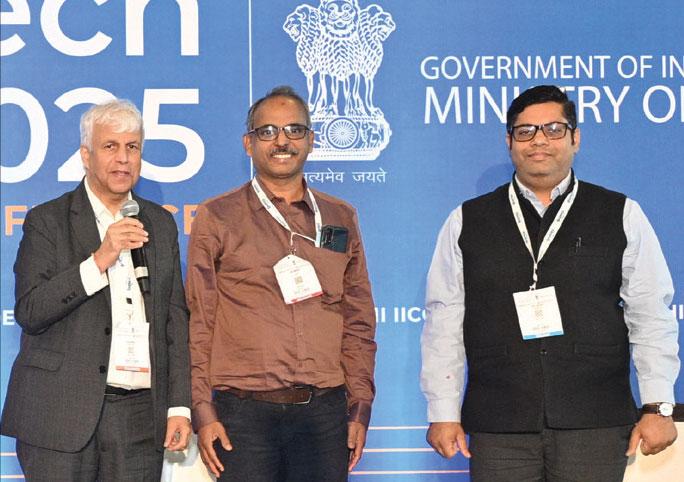
Substations in India are shifting from passive assets to active enablers of grid stability as demand rises, renewables scale up and land becomes scarce. Compact solutions such as gas-insulated, containerised and modular substations are increasingly being adopted for faster execution and a reduced footprint. The growing share of inverter-based renewable energy has introduced voltage variability, low inertia and bidirectional power flows, prompting the deployment of dynamic reactive power support solutions such as STATCOMs and synchronous condensers. At the same time, digitalisation – through fibre-based communication, digital protection and process bus systems – is enabling remote monitoring and unmanned operations. As grid complexity grows, substations are evolving into intelligent hubs, critical for reliability and renewable evacuation.
Drones
The session on drones was addressed by Pradeep Singh Chauhan, Chief Manager, Powergrid; and Kanav Kumar, Co-Founder and Director, Better Drones.
The session highlighted how emerging tools such as drones, AI, LiDAR and mechanised construction techniques are transforming transmission line inspection, maintenance and project execution, particularly in challenging terrain and high-risk operating conditions. Utilities are increasingly deploying digital and mechanised technologies to enhance the reliability, safety and efficiency of India’s transmission network. Drones have become integral to EHV line patrolling, enabling tower inspections, clearance checks and vegetation monitoring across difficult terrain such as hilly areas, river crossings and RoW constrained corridors. They also support rapid damage assessment and emergency patrolling during disasters.
Drone inspections are supported by AI and machine learning-based tools that automatically analyse imagery to identify defects and prioritise maintenance. Programmable drones with embedded analytics are also being used for substation inspections, improving accuracy and safety.
TransTech India 2025 also featured technology presentations by Skipper, Bentley, Andritz Hydro GmbH, Mtandt Group, Polycab, Kanohar Electricals, Bajel, Enline, Indore Composite and Elegrow Technology. In addition, the “Innovation in Action” session featured presentations by Resonia and Amber Wings.