

Power quality (PQ) is increasingly becoming an important parameter in the Indian power sector, with the focus shifting from capacity addition to reliability, efficiency and consumer-centric performance. While the country has made significant progress in expanding generation capacity and improving electricity access, the quality of power supplied-defined by voltage stability, frequency control and waveform integrity-has gained prominence for both utilities and consumers. PQ issues are a primary cause of device malfunction, equipment failure and power outages, resulting in costly unplanned downtime. Improved power quality optimises operations and equipment to ensure business continuity.
Key trends
The changing profile of electricity demand is a key driver of this shift. Industrial and commercial consumers are deploying advanced automation in precision manufacturing equipment and digital control systems that are highly sensitive to power disturbances. At the same time, residential consumption patterns are evolving with the proliferation of electronic appliances, inverter-based air conditioners, rooftop solar systems, and electric vehicle (EV) chargers.
Another defining trend is the rapid growth of renewable energy capacity. India’s power system is integrating large volumes of solar and wind generation, supported by ambitious national targets. While renewable energy improves sustainability and energy security, it also introduces variability and intermittency into the grid. Managing these dynamics without compromising power quality has become a key operational challenge, particularly at the
distribution level.
Technological changes within the grid itself are reshaping PQ outcomes. The increasing use of power electronics – across generation, transmission, distribution and end-use-has altered traditional power flow patterns and introduced new sources of distortion. At the same time, digitalisation and smart grid initiatives are enabling better monitoring and control, creating opportunities to proactively manage PQ issues rather than responding reactively.
 PQ issues and challenges
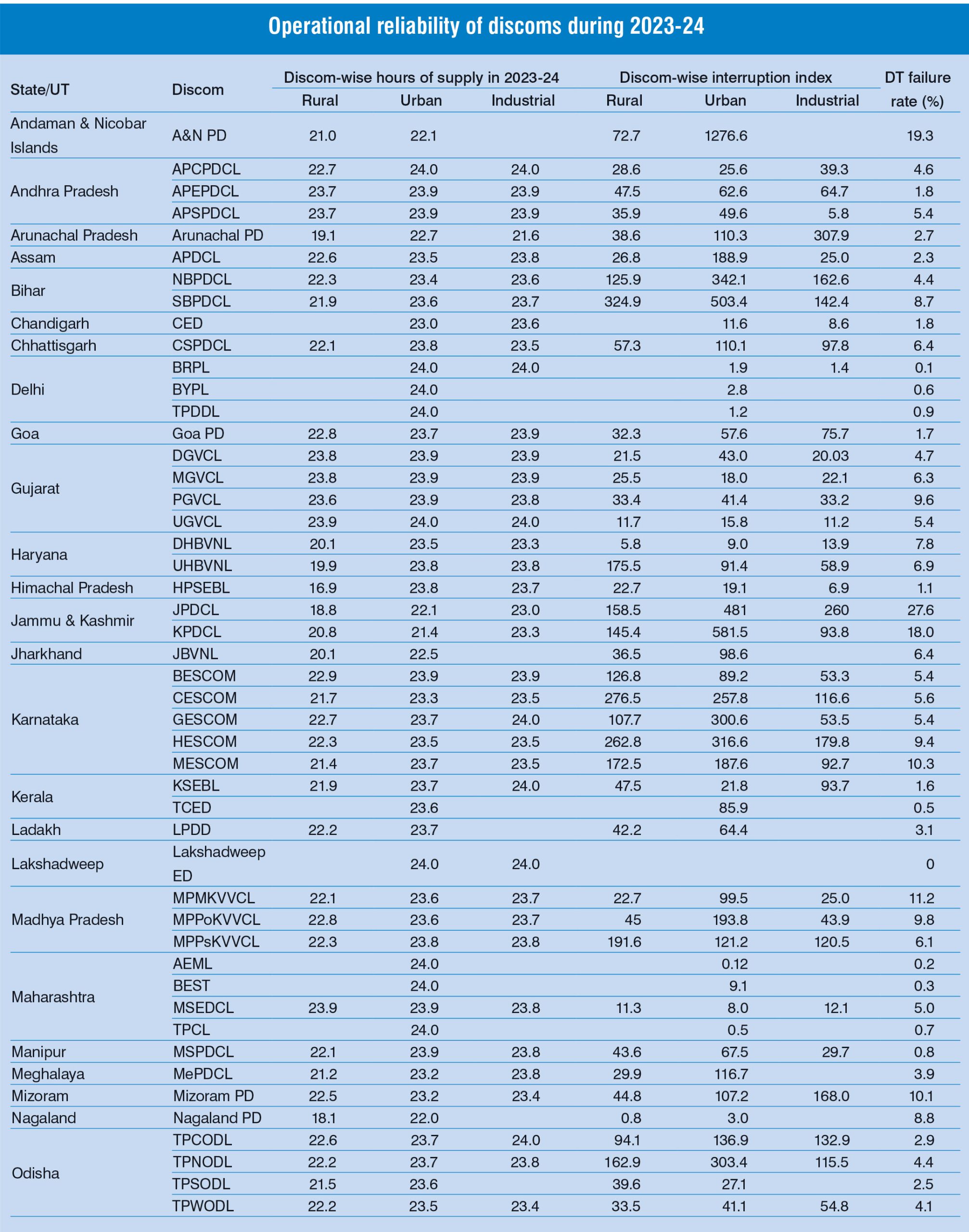
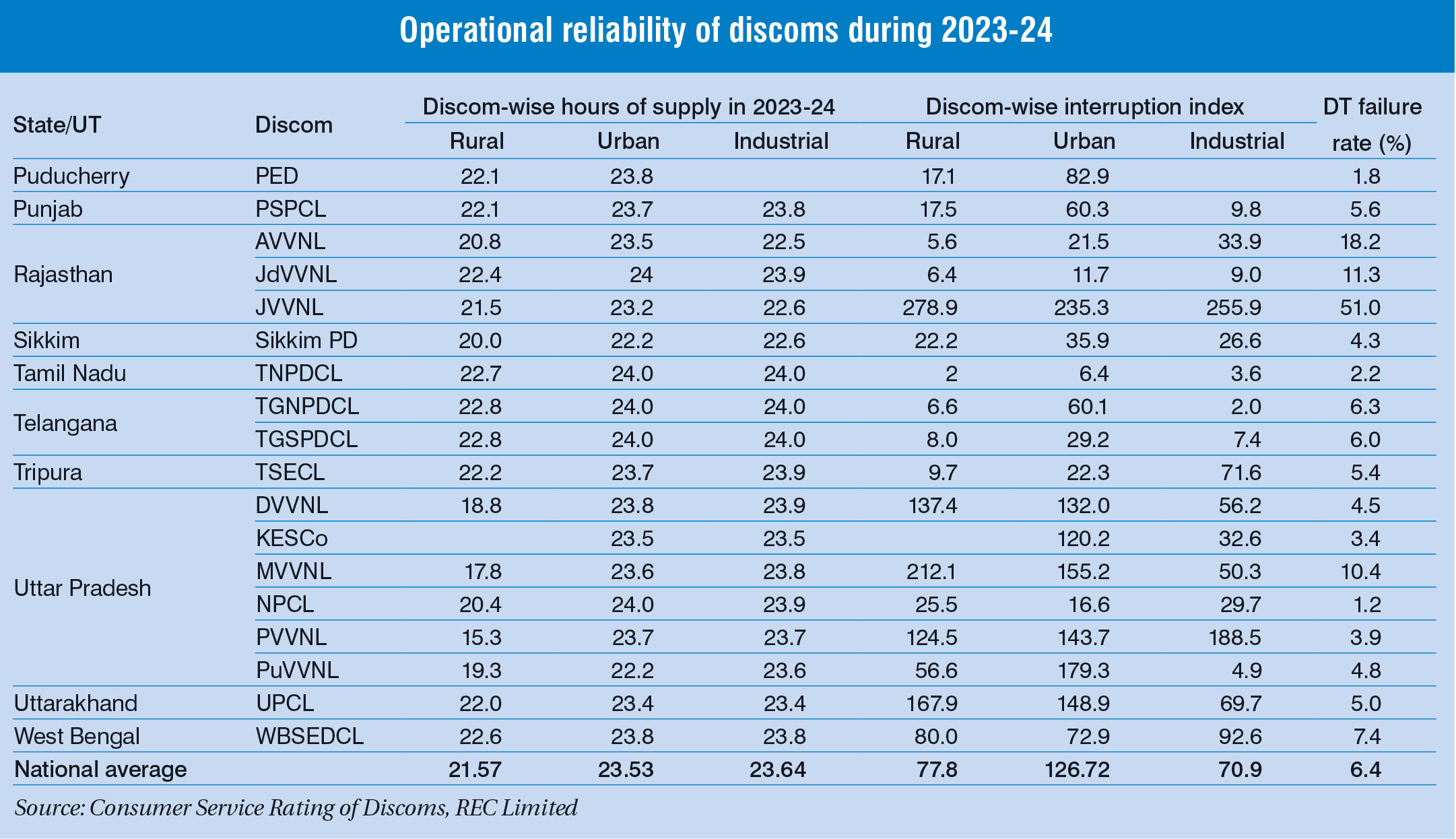
Despite improvements in grid reliability over the years, power quality challenges remain widespread across India’s power system. One of the most common issues is voltage variation, particularly at the distribution level. Long radial feeders, uneven load growth, inadequate reactive power compensation, and overloaded transformers contribute to frequent voltage sags and swells.
Harmonic distortion has emerged as a growing concern with the rapid adoption of non-linear loads. Devices such as variable frequency drives, inverters, LED lighting, computers, UPS systems and EV chargers draw non-sinusoidal currents, injecting harmonics into the network. Elevated harmonic levels lead to the overheating of transformers and cables, increased losses, the tripping of protection devices and interference with communications systems.
The integration of renewable energy sources has added further complexity to PQ management. Solar and wind energy generation are inherently variable, with output fluctuating in response to weather conditions. At high penetration levels, these fluctuations can cause voltage instability, flicker issues and reverse power flows, particularly in weak distribution networks. Rooftop solar installations, in many cases, operate without coordinated voltage or reactive power control, exacerbating local PQ issues.
Frequency control, which has seen a significant improvement at the national level through market mechanisms and a tighter grid discipline, continues to face challenges during periods of high renewable energy generation or sudden demand changes. Even short-duration frequency deviations can affect sensitive equipment and stress system assets, highlighting the need for fast-response balancing resources.
India’s ageing transmission and distribution infrastructure remains a structural constraint. Much of the existing network was designed for predictable, unidirectional power flows, and lower demand densities. With loads increasing and becoming more dynamic, these systems are struggling to maintain voltage balance and waveform quality.
Also, there is an increasing gap between consumer expectations and supply quality. As electricity becomes a critical input for digital services, data centres, healthcare facilities and advanced manufacturing, even minor disturbances can have disproportionate economic impacts. This changing demand profile is placing pressure on utilities to deliver not just reliable, but high-quality power.
 Solutions and mitigation
Addressing PQ challenges requires a combination of network strengthening, advanced technologies, regulatory support and improved operational practices. At the distribution level, conventional measures such as feeder segregation, conductor upgrading, transformer augmentation and improved phase balancing continue to play a vital role in reducing voltage fluctuations and losses.
Reactive power management remains critical to PQ improvement. The deployment of capacitor banks, static VAR compensators (SVCs), and static synchronous compensators (STATCOMs) helps maintain voltage within permissible limits under varying load and generation conditions. These solutions are increasingly being adopted not only at the transmission level but also within distribution networks serving high-density or sensitive loads.
Power-electronic-based mitigation technologies are gaining traction, particularly among industrial and commercial consumers. Active harmonic filters, dynamic voltage restorers and unified PQ conditioners can detect and compensate for disturbances in real time, improving waveform quality and equipment performance.
The role of digitalisation and smart grids is becoming increasingly important in PQ management. Advanced metering infrastructure, PQ monitors, and distribution management systems provide granular, real-time visibility into network conditions. This enables utilities to identify the sources of disturbances, optimise voltage profiles and implement predictive maintenance strategies.
Regarding renewable energy integration, advanced inverter functionalities offer significant potential. Modern inverters are capable of providing voltage regulation, reactive power support and harmonic mitigation, in addition to active power injection. Strengthening grid codes and ensuring compliance can enable renewable energy resources to actively support power quality rather than acting as passive sources
of variability.
Energy storage systems are emerging as a flexible solution for both frequency and voltage management. Battery storage can even out short-term renewable fluctuations, provide fast frequency response, and improve local power quality in areas with high distributed generation.
Regulatory frameworks also have an important role to play. Clearly defined PQ standards, coupled with monitoring and enforcement mechanisms, can incentivise utilities to prioritise quality improvements.
Consumer participation is another critical element. Large consumers can adopt best practices such as power factor correction, harmonic filtering and proper equipment grounding. Moreover, coordinated efforts between utilities and consumers can help reduce system-level stress and improve overall power quality at lower cost.
Outlook
As India’s power system becomes cleaner, more decentralised and increasingly digital, power quality will remain a key determinant of system performance and consumer satisfaction. The challenge lies in managing growing complexity without compromising stability and efficiency. Continued investment in grid infrastructure, the adoption of advanced technologies and the alignment of regulatory frameworks will be essential. Power quality is no longer a peripheral technical issue; in fact, it is pertinent for the next phase of power sector development. By addressing PQ challenges, India can ensure that its electricity system supports economic growth, technological innovation and the transition to a low-carbon future.