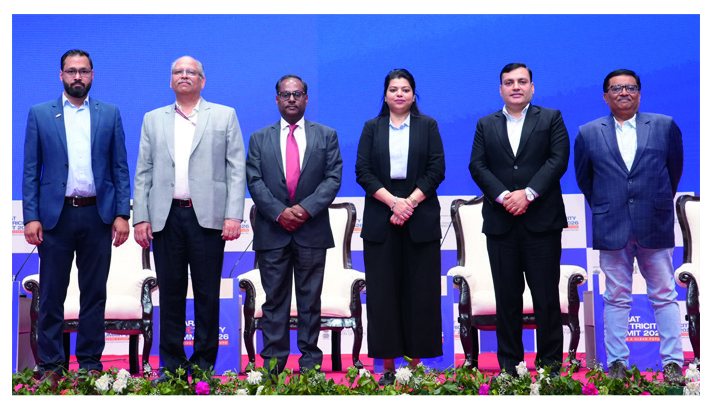
 The BES 2026 session on “Pumped Hydro Renaissance: Unlocking long duration storage for renewable dominance” at the Bharat Electricity Summit 2026 featured insights by M.G. Gokhale, Member, Hydro, Central Electricity Authority (CEA); Suprakash Adhikari, Director, Technical, NHPC Limited; Shubhra Thakur, Director, Policy and Markets, APAC and Country Director, India, Long Duration Energy Storage Council; Ankur Vashishta, Head, Pumped Storage Projects, JSW Energy; and Shouvik Dey, VP, Voith Hydro. It was moderated by Prateek Aggarwal, Programme Lead, Council on Energy, Environment and Water. The session highlighted emerging needs, challenges and initiatives in the pumped storage segment. Key takeaways…
With increasing renewable energy integration, the need for reliable, long-duration energy storage is becoming critical. Pumped storage projects (PSPs) are emerging as a key solution, providing system-level flexibility at scale and making them indispensable for a renewables-heavy grid.
Beyond this, PSPs also deliver significant socio-economic benefits, including job creation, industrial development and local community growth. However, their deployment remains constrained by execution-related challenges, which must be addressed to unlock their full potential as a critical enabler of a reliable, resilient and low-carbon energy system.
Challenges in PSP deployment
At present, the sector faces several structural and operational challenges. Long gestation periods, combined with delays in land acquisition and regulatory clearances, continue to slow project development. These delays have cascading impacts across the value chain, affecting not only developers but also equipment manufacturers and suppliers by disrupting planning cycles and execution schedules.
Operational inefficiencies further limit the utilisation of PSPs. Although surplus low-cost electricity is often available in the market for pumping, the absence of well-defined structural mechanisms and robust forecasting systems restricts its effective use. A shortage of skilled manpower further constrains execution capacity.
Moreover, PSPs require significant upfront capital investment, and achieving financial closure remains a challenge. While viability gap funding (VGF) can play a crucial role in the early stages, it must be complemented by stronger financial frameworks and milestone-based infrastructure support.
At the same time, improving project viability will depend on the creation of predictable and diversified revenue streams. This includes enabling revenue stacking and designing market mechanisms that provide clear price signals and better alignment between generation and demand across time blocks.
Measures to accelerate uptake
Addressing these challenges will require a multi-pronged approach. Global experience shows that structured risk-sharing mechanisms can significantly improve project bankability by ensuring stable base revenues while allowing excess returns to be shared with governments or consumers. Adapting such models to the Indian context could help attract greater private investment.
To help compress timelines and improve efficiency, standardisation of designs and greater repeatability across projects is critical. Faster preparation of detailed project reports, streamlined approvals and the adoption of advanced construction technologies is also necessary. Strengthening contracting and subcontracting frameworks, along with careful vendor selection, can further improve project outcomes. From a market perspective, improving forecasting capabilities and strengthening price signals will be essential to optimise PSP utilisation. Encouragingly, a more integrated ecosystem is beginning to emerge, particularly under the merchant PSP model, with greater alignment among developers, consumers and equipment suppliers. This growing synergy, along with increasing participation from private investors, is expected to accelerate project execution.
Policy support is gaining momentum, with government initiatives aimed at addressing land, regulatory and financing bottlenecks beginning to yield results. Several projects are already under implementation, supported by a strong pipeline across the sector. Over the next few years, increased developer participation and improvements in market design are expected to drive significant growth. Sustaining this momentum will require coordinated action across technology, policy, financing and execution.