
 The cover story of Renewable Watch’s April 2026 issue, “Waste Wise”, covered waste management challenges in Delhi-NCR, the growing burden of legacy waste at landfill sites, the need for improved waste processing infrastructure and the importance of expanding waste-to-energy (WtE) projects to address landfill accumulation, air pollution and rising urban waste generation.
This article builds further on that discussion, and with the help of case studies, examines how different cities across India are managing municipal solid waste (MSW) and organic waste by implementing WtE and bio-compressed natural gas (CNG) projects.
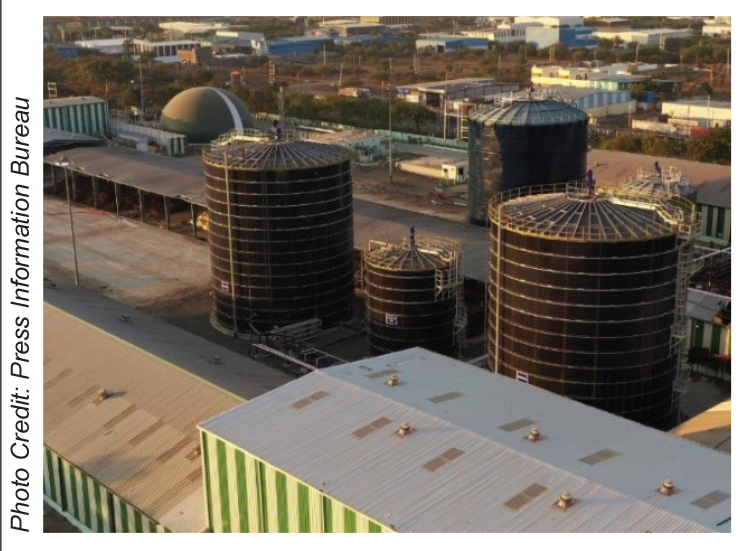
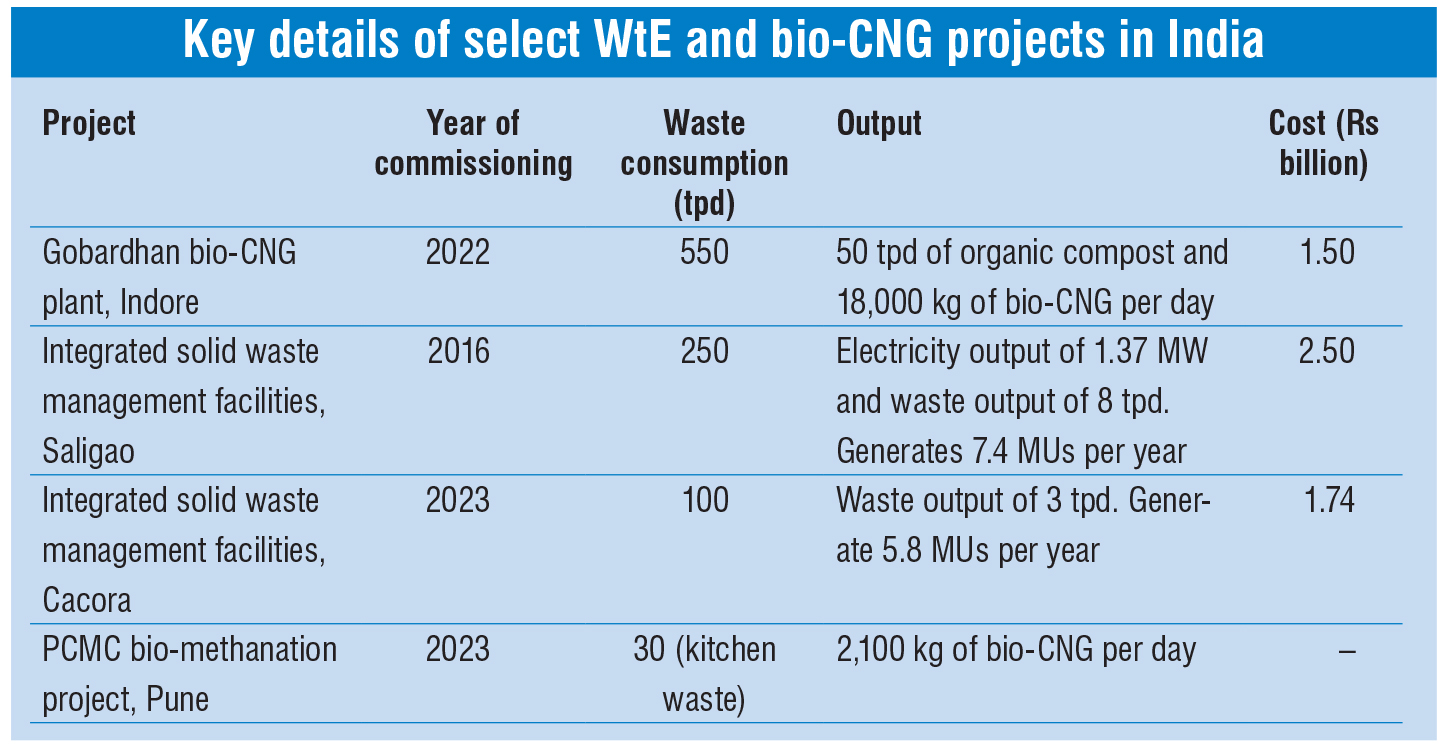
Gobardhan bio-CNG plant at Indore, Madhya Pradesh
Operator: Indore Smart City Development Limited
Project profile: Estimated waste consumption of around 550 tonnes per day (tpd), with a slurry output of around 50 tpd of organic compost and bio-CNG output of around 18,000 kg per day.
Cost: The project cost is approximately Rs 1.5 billion.
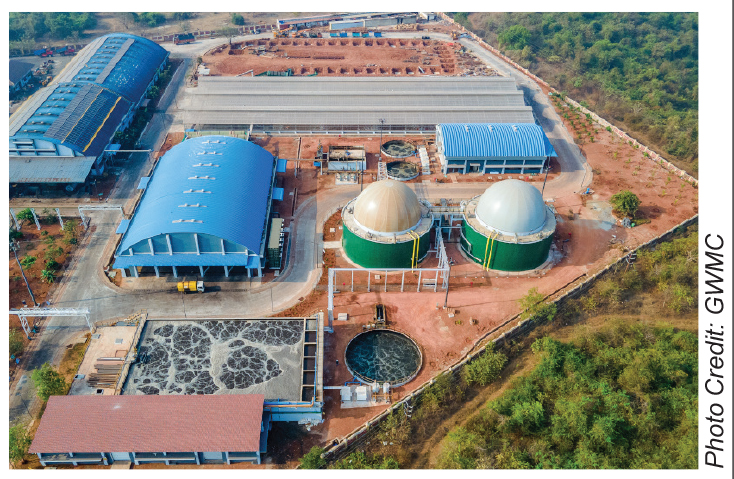
Site and operating context: The plant processes municipal organic waste through a bio-CNG route, with a biogas storage balloon forming part of the system. The main issue that necessitated the development of this plant was the improper disposal of organic waste in the city.
Key strengths: The project works on a strong output-based 20-year public-private partnership (PPP) model. It fuels more than 200 city buses and municipal vehicles with bio-CNG, and generates compost and carbon credits, adding economic value to the facility. It has reduced the city’s dependence on fossil fuels and improved air quality, with the city managing to treat the segregated wet waste at 95 per cent purity. The tipping fee is around Rs 25 million per month.
Challenges faced: Feedstock quality variations during the monsoon season reduce gas output. Maintaining an air quality index below 50 consistently remains a challenge. Furthermore, coconut shell compression in transit, blockage in shredder systems and pressure on plant emissions have also created operational constraints.
 Integrated solid waste management facilities at Saligao, Goa
Operator: Goa Waste Management Corporation (GWMC)
Project profile: The Saligao plant was commissioned in 2016, with an estimated waste consumption of 250 tpd and an expected electricity output of 1.37 MW. Further, it has an output of 8 tpd, generates 7.4 MUs of power annually and processes 550,000 metric tonnes (mt).
Cost: The project cost is Rs 2.5 billion.
Site and operating context: The facility was built on an abandoned quarry site and later used as a waste dumping site. It was designed as an integrated municipal waste-processing system with multiple output streams.
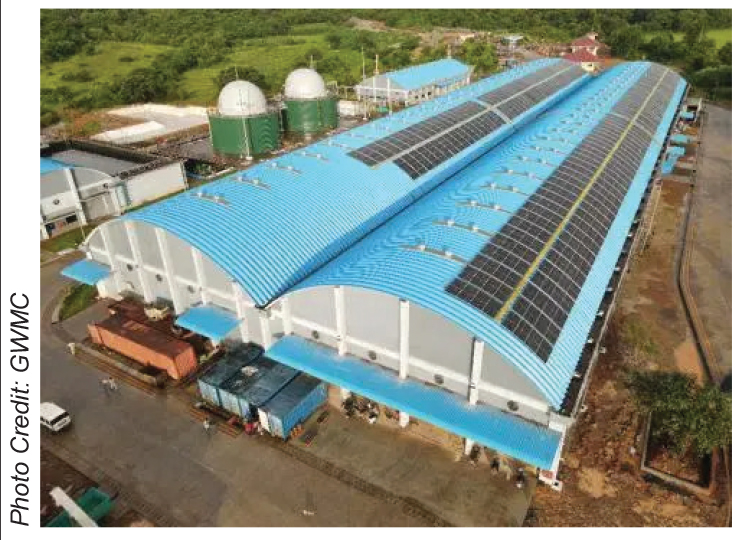 Key strengths: The project combines electricity generation from biogas and a 500 kW solar project, as well as compost sales at Rs 4 per kg and refuse-derived fuel (RDF) supply to cement factories in Maharashtra and Karnataka. Campaigns by GWMC improved waste segregation from 60 per cent to 90 per cent. No tipping fee is charged to village panchayats for wet waste, which has helped maintain participation and steady waste flow.
Challenges faced: The facilities depend on consistent waste segregation and steady feedstock inflow to maintain output stability. At Cacora, GWMC still had to push for additional vehicles and capacity utilisation to move the plant closer to full loading.
 Integrated solid waste management facilities at Cacora, Goa
Operator: GWMC
Project profile: The Cacora plant was commissioned in 2023, with an estimated waste consumption of 100 tpd. The facility has an output of 3 tpd, generates 5.8 MUs of power annually and processes 40,000 mt.
Cost: The project cost is Rs 1.74 billion.
Site and operating context: The facilities were designed as an integrated municipal waste-processing system with multiple output streams from a single project site.
Key strengths: The projects have benefited from a multi-output revenue model. Performance-linked staff incentives, along with a plant monitoring committee, have also improved oversight and efficiency across the GWMC workforce.
Challenges faced: GWMC had to push for additional vehicles and capacity utilisation to move the plant closer to full loading.
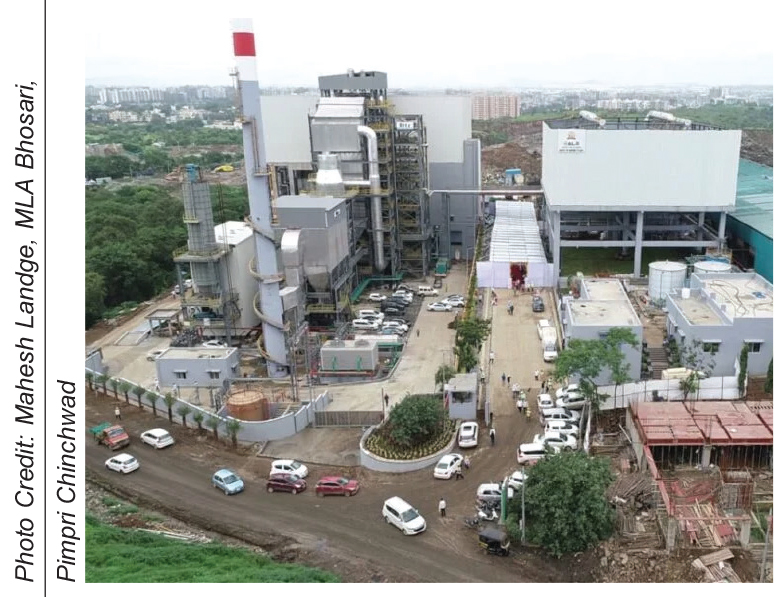
PCMC biomethanation project at Pune, Maharashtra
Operator: Pimpri-Chinchwad Municipal Corporation
Project profile: Commissioned in 2023, the plant has an estimated waste consumption of around 30 tpd of kitchen waste from hotels and resorts, with an expected output of around 2,100 kg of bio-CNG per day.
Site and operating context: The project is based on segregated hotel and hospitality waste, supported by a dedicated collection and processing system using vehicles.
Key strengths: The project is based on a PPP model with a 15-year concession period. The plant supplies around 2,100 kg of bio-CNG daily to Maharashtra Natural Gas Limited’s CNG stations. Revenue is generated through the tipping fee model (with a tipping fee of Rs 500 per tonne) and by-product sales, including bio-CNG and compost.
Challenges faced: The project depends heavily on registered bulk generators from the hotel segment. Lengthy approval cycles have also slowed implementation. Additionally, limited waste volumes constrain future scaling and affect return on investment, while higher pre-operational costs due to waste pretreatment add pressure on project economics.
 Outlook
The case studies underline a broader lesson for other Indian cities: long-term waste management outcomes depend on adopting different processing approaches based on local waste composition and collection systems. While integrated solid waste management facilities have focused on combining RDF recovery, composting and power generation, biomethanation projects have largely depended on segregated wet waste streams for the production of bio-CNG and compost. Across projects, a common takeaway has been that plant performance depends not only on the choice of technology but also on consistent waste segregation and a stable feedstock supply. Going forward, aligning processing route with the nature of the waste stream, and ensuring project viability in terms of feedstock availability, logistics, tariffs and offtake arrangements should take centre stage.
A relatively new area gaining traction is the use of MSW and agricultural residue for the production of green hydrogen and syngas. NTPC Limited, through NETRA, initiated work on a plasma-assisted oxy-gasification project in 2024 to produce green hydrogen using MSW and agricultural waste. Although the technology remains at a developmental stage, it reflects the larger possibility that waste can move beyond electricity generation alone.
Overall, as feedstock quality improves and technologies mature, hydrogen, biogas, compressed biogas and renewable electricity could increasingly become part of an integrated waste-to-value chain.
Data on case studies has been sourced from multiple sources, including the Ministry of Housing and Urban Affairs; Department of Economic Affairs, Ministry of Finance; GWMC’s website; presentations by Rahul Malik, Director, PwC; and Shoukan Teli, Deputy Manager, GWMC, at the Solid Waste Management in India conference organised by Renewable Watch in March 2026