

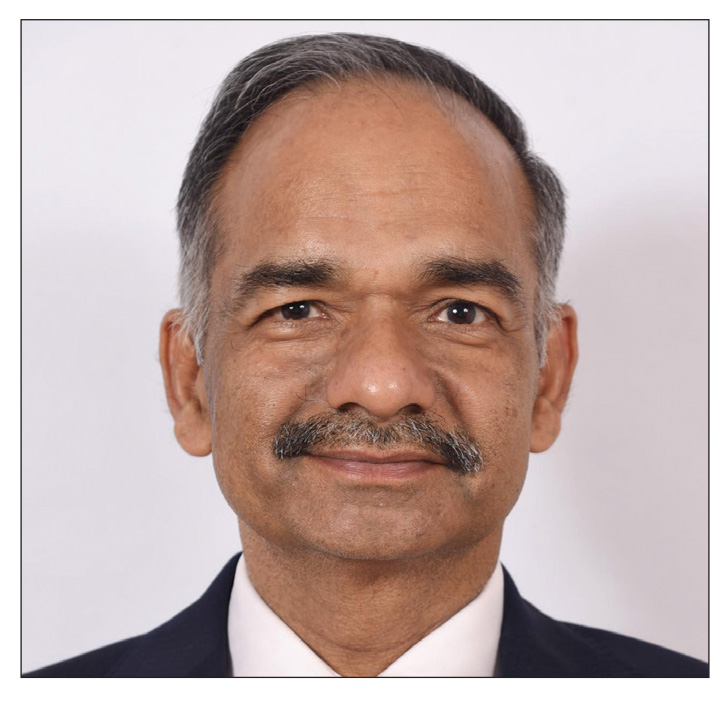
 Power Line is hosting a special 12-part podcast series, “Discom Perspectives”, sponsored by STS Association. The second episode in this series featured an interaction with Alok Kumar, Director General of All India Discoms Association (AIDA). The discussion focused on the transformation under way in India’s power distribution sector. From loss reduction and smart metering to tariff reforms, renewable energy integration and emerging digital technologies, Kumar shared his perspectives on the sector’s achievements, challenges and priorities for the years ahead. The conversation also stressed on how discoms can leverage data, innovation and policy reforms to improve their operational efficiency, financial sustainability and consumer service delivery. Edited excerpts…
What have been some of the key noteworthy achievements in the power distribution segment over the past three years?
The distribution segment in India has achieved several notable milestones over the past three to four years. In terms of operational efficiency, aggregate technical and commercial losses have declined to around 15 per cent, moving closer to the Revamped Distribution Sector Scheme (RDSS) target of 12-15 per cent. Another significant achievement has been the reduction in the gap between the average cost of supply and the average revenue realised (ACS-ARR), which has narrowed from about 51 paise per unit three years ago to around 6 paise per unit now. While the gap remains negative, the improvement has been substantial. The roll-out of smart meters has also been unprecedented, with over 60 million smart meters installed, largely during the past three years. Consumer services have improved as well, reflected in the growing number of discoms ranked in the top-performing categories of A+, A and B+, which has doubled over the period.
What are the key focus areas of discoms for the next three years, and what are their key goals?
The foremost priority for discoms over the next three years will be further loss reduction, with the goal of bringing losses down to single-digit levels, in line with global benchmarks of around 8-9 per cent. Another key target is to turn the ACS-ARR gap positive. States such as Gujarat have already achieved a positive gap of about 40 paise per unit, creating surplus resources for future network investments. Another focus area will be the productive utilisation of smart meter data. While smart meters are generating vast amounts of data, only a small portion is currently being used. Larger use of this data can help improve operational efficiency and enhance consumer services. Discoms are also expected to focus on more scientific demand forecasting, power procurement optimisation and the use of demand flexibility to reduce costs.
What are the policies/plans or programmes and other initiatives that you think are particularly noteworthy?
Among the ongoing initiatives, the timely completion of projects sanctioned under the RDSS is particularly important. Currently, only about 38-39 per cent of the sanctioned works have been completed. Accelerating their implementation over the next 18 months could significantly reduce technical losses through the addition of high-tension lines, new substations and the overall network upgradation. Capacity building for utility personnel to effectively utilise smart meter data is another key focus area. To this end, the Ministry of Power has been undertaking several training and capacity-building initiatives. Technical initiatives such as the India Energy Stack (IES) and the proposed data sharing policy are also noteworthy. The rapid roll-out of demand flexibility programmes is another emerging priority.
How would the IES benefit discoms?
The IES can benefit discoms by enabling seamless data flow across departments through common protocols and data exchange standards. At present, much of the data within discoms remains siloed. With the IES, data generated through systems such as supervisory control and data acquisition and smart meters can be more effectively shared with commercial, power procurement and field operations teams, improving the overall productivity and decision-making. The IES can also enhance the visibility of distributed energy resources across the network, enabling discoms to better monitor and manage the system.
What do you see as key challenges in the sector?
One of the key challenges facing the distribution sector is ensuring cost-reflective tariffs. In several cases, the disallowance of genuine expenses by state regulatory commissions has affected the financial health of discoms, leading to underinvestment and payment-related stress. A broader recognition, that the long-term financial viability of utilities is ultimately in consumers’ interest, is essential for sustainable sector growth. Another major challenge is improving supply reliability. Reliability indicators such as SAIDI (system average interruption duration index) and SAIFI (system average interruption frequency index) remain well below global benchmarks, highlighting the need for continued investment in network modernisation and system upgrades. The increasing integration of renewable energy also presents challenges. Under the existing framework of long-term power purchase agreements and must-run obligations, discoms continue to bear significant demand and price risks. Without a more balanced allocation of risks between generators and discoms, power procurement costs could rise sharply, creating an additional financial pressure on utilities.
What measures are utilities undertaking to achieve their loss reduction objectives?
Discoms’ loss reduction efforts are centred on improving billing efficiency, which captures both technical and commercial losses. Two major interventions are driving this process. First, the large-scale network upgradation being undertaken under the RDSS is expected to reduce technical losses by about 2-3 percentage points over the next few years. Second, the roll-out of smart meters is improving billing accuracy and regularity. With billing efficiency currently at around 87 per cent, smart metering and network improvements could increase it to 90-93 per cent, delivering substantial efficiency gains for utilities.
Another essential focus area is tariff reforms. Utilities are currently able to recover only a small portion of their fixed costs through demand charges, making revenues highly dependent on energy sales and weather conditions. Recalibrating demand charges to better reflect fixed costs would improve revenue stability. At the same time, a fairer allocation of network costs is needed, particularly for net metering and open access consumers, to ensure that all users of the grid contribute appropriately towards fixed costs. The adoption of time-of-use tariffs is also gaining importance. Aligning tariffs more closely with power procurement costs can improve revenue recovery, encourage demand flexibility and reduce expensive peak-period power purchases. In addition, utilities are exploring special tariff structures for large consumers such as data centres and other high-load industries. Given their lower cost to serve at higher voltage levels, competitive tariffs could help attract such consumers to the distribution network, while supporting higher sales and improved utility finances.
How are network management strategies evolving with the growing power demand and increasing renewable energy integration?
Network management strategies are undergoing a significant transition as power demand patterns become more uncertain and the share of distributed renewable energy resources increases. Unlike transmission planning, which has traditionally relied on sophisticated modelling tools, distribution network planning has largely been based on incremental expansion due to limited data availability and one-way power flows.
The growing penetration of rooftop solar systems, electric vehicles and other distributed energy resources has made distribution planning more complex, with power now flowing in both directions and demand patterns becoming increasingly dynamic. In response, pilot projects are being undertaken in collaboration with the Central Electricity Authority, to develop more scientific and integrated distribution resource planning approaches across selected cities.
Going forward, integrated distribution resource planning is expected to combine demand forecasts, distributed generation output and network constraints to support more efficient investment decisions. As these pilot projects mature, they are likely to provide a framework for wider adoption across discoms, leading to more advanced and data-driven network planning over the next few years.
What is the new technology that you think the utilities should definitely consider deploying?
Among emerging technologies, digital twin holds significant promise for utilities. The technology enables utilities to create a virtual model of their network and simulate its performance under different demand, generation and seasonal scenarios. Pilot projects are already under way in Jaipur Vidyut Vitran Nigam Limited and BSES Rajdhani Power Limited, where digital twins are being tested at different network levels.
By modelling network behaviour and power flows, digital twin can support more effective system planning, network upgrades and power procurement strategies. It can also help utilities assess hosting capacity and identify areas where distributed renewable energy resources such as rooftop solar systems, can be integrated at the lowest cost and with minimal network constraints.
Another technology generating considerable interest is artificial intelligence (AI). With the growing availability of granular data from smart meters and other digital systems, AI-based applications can significantly improve short-, medium- and long-term demand forecasting. AI can also enable predictive asset maintenance, helping utilities optimise asset performance, reduce operations and maintenance, costs and improve overall system reliability.
These technologies are expected to play an increasingly important role in modernising the distribution segment and enhancing operational efficiency over the coming years.


