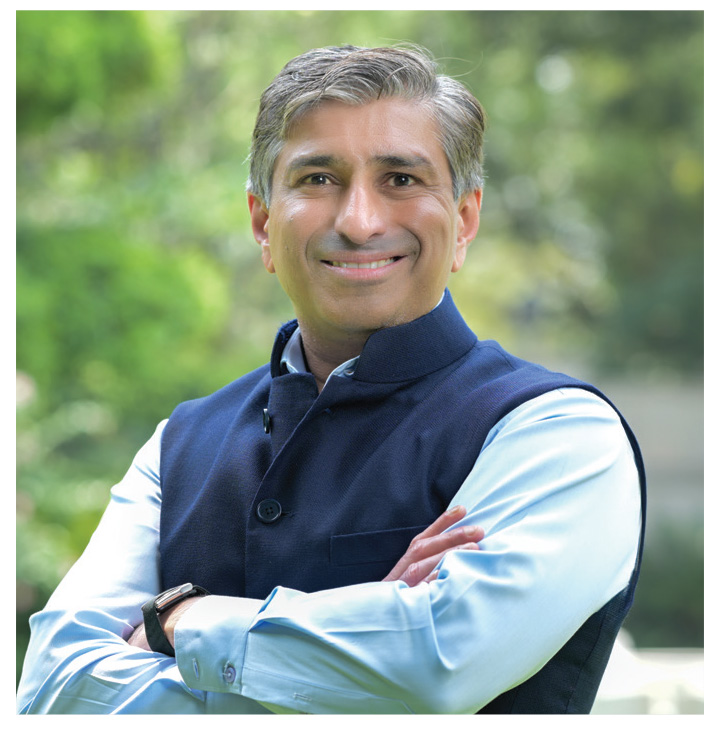
 In an interview with Power Line, Ratul Puri, Chairman, Hindustan Power Limited, discussed the company’s key focus areas, major milestones, energy transition initiatives and top strategic priorities. Edited excerpts…
What is the outlook for Hindustan Power’s business in the near and long term?
Hindustan Power’s near- and long-term outlook remains focused on scaling its renewable and transitional energy portfolio in line with India’s evolving priorities. The company has outlined a road map to build a 5 GW energy portfolio by 2028, with growth anchored in renewable energy, grid-supportive transitional energy solutions and long-term infrastructure development.
In the near term, the company is focused on structured capacity additions across key Indian states, supported by disciplined capital deployment, operational efficiency and timely project execution. The strategy is aligned with rising electricity demand, India’s clean energy targets and the increasing need for reliable and resilient power infrastructure.
From a long-term perspective, Hindustan Power aims to strengthen its position as a significant contributor to India’s energy transition by building a diversified and sustainable energy portfolio.
What are the major focus areas for Hindustan Power, given the present geopolitical scenarios?
Given the current geopolitical environment, our focus is on building scale with resilience. We see strong opportunity in creating a diversified energy portfolio that balances renewable growth with reliable and flexible power solutions necessary for the baseload.
We are also focused on sectors that will drive future electricity demand, industrial infrastructure and more. At the same time, strengthening domestic execution capability, supply chain preparedness and long-term infrastructure partnerships remain a key priority for us.
Why is India’s energy transition shifting from renewable capacity addition to integrated energy infrastructure development?
We are entering what can be described as the “era of electricity”. With the rapid electrification of transportation, rising power demand from data centres and increasing digital infrastructure, the priority is no longer just adding solar and wind capacity. The focus is now on ensuring round-the-clock (RTC) electricity, where hybrid models, backed by energy storage, will play a crucial role in the foreseeable future.
There is also a need to provide power on demand at the lowest delivered cost of energy. This requires investments in storage, grid flexibility, transmission networks and localised power infrastructure.
We are already experiencing multiple peak power periods due to heatwaves across the country. This requires moving beyond models that only focus on generation without concomitant investments in the other critical components of the power value chain. Thus, we need to move away from “just-in-time planning” and build future-ready capacity with adequate spare RTC power and robust connectivity to address sudden power constraints.
What is driving the growing adoption of solar-plus-storage, hybrid power and despatchable renewable energy solutions in India?
India’s power sector is moving into a phase where reliability and flexibility are becoming as important as renewable energy capacity addition. As electricity demand rises across sectors such as mobility, manufacturing and data infrastructure, the grid will require cleaner power sources that can supply energy beyond peak solar hours.
This is driving the significance of solar-plus-storage, hybrid power and despatchable renewable solutions, which can provide more stable and predictable power supply while supporting higher renewable integration into the grid. These technologies also help reduce transmission pressure, improve system efficiency and strengthen long-term energy security as India builds a more resilient electricity ecosystem.
How are IPPs evolving from pure power generators to integrated energy transition partners?
IPPs are increasingly evolving from pure power generators to integrated energy transition partners as the sector moves beyond standalone capacity creation. As discussed earlier, customers and governments are looking not just for megawatts, but also for reliable, flexible and long-term energy solutions.
This is expanding the role of IPPs into areas such as storage, hybrid power, grid support, energy management and despatchable renewable solutions. IPPs are also becoming important partners in supporting electrification, industrial decarbonisation and emerging energy demand from sectors such as mobility and data infrastructure. The shift reflects a broader transition from supplying power to enabling a more resilient, technology-driven and future-ready energy ecosystem.
What is the role of transitional power and flexible generation in supporting India’s renewable energy ambition?
India’s renewable energy ambitions will require a balanced and reliable power ecosystem. While renewable capacity will continue to scale rapidly, transitional power and flexible generation will remain important in ensuring grid stability, meeting peak demand and supporting RTC electricity availability.
As renewable energy penetration increases, the ecosystem will require flexible sources of power that can respond quickly to fluctuations in demand and supply. In the near to medium term, India will continue to require a diverse mix of energy sources, including thermal, hydro, nuclear, storage and renewable energy, to maintain reliability while the transition evolves.
The long-term direction remains towards cleaner energy systems, but a phased and balanced transition will be critical to supporting economic growth, industrial expansion and energy security.
How do you view emerging opportunities in battery storage, green hydrogen and industrial decarbonisation?
The “era of electricity”, as I describe it, is creating entirely new opportunities across battery storage, green hydrogen and industrial decarbonisation. The electrification of transportation, growth in data centres and rising industrial demand will require reliable and flexible power systems at scale.
Battery storage is becoming one of the most important enablers of this transition. As renewable penetration increases, just building peak daytime energy is not going to solve the problem. The focus is now shifting towards storage combined with renewable energy, despatchable clean power and RTC energy solutions. Green hydrogen will also become increasingly relevant, particularly for hard-to-abate sectors and industrial decarbonisation. Over time, industries will look for cleaner and more competitive energy pathways as carbon markets evolve and clean energy adoption accelerates.
What is your outlook for India’s long-term electricity demand amid manufacturing expansion, electrification and AI-driven data centre growth?
India’s electricity demand is on a sustained upward trajectory, reinforced by both structural and cyclical factors. The recent heatwave conditions, such as in May 2026, have already pushed peak load to record levels of 270 GW, highlighting how climate stress is intensifying short-term consumption spikes alongside long-term growth trends.
Beyond seasonal demand, the bigger shift is coming from economic transformation. Manufacturing expansion is increasing industrial power requirements, the electrification of mobility is creating new categories of demand and artificial intelligence-led compute growth is accelerating the need for large-scale, green energy.
Together, these forces are reshaping India’s power system from one that is primarily driven by peak seasonal variation to one that is defined by consistently rising base demand and higher RTC consumption needs.
How can India advance energy security, affordability and sustainability simultaneously during its power transition?
India’s power system is expanding at a pace where balancing reliability, cost and decarbonisation has become essential rather than optional. Rising consumption from industrial growth, electrification and digital infrastructure is steadily increasing the need for continuous and scalable electricity supply.
Affordability remains critical to support manufacturing competitiveness and broad-based access, while energy security ensures the system can meet both expected and sudden variations in demand without disruption. Sustainability provides the long-term framework to align this expansion with emissions reduction goals.
Taken together, these three priorities are increasingly interdependent and progress in one without the others would limit the effectiveness and resilience of India’s overall energy transition.