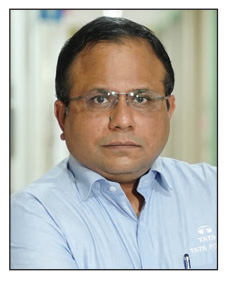
 By Tarun Katiyar, Chief Executive Officer and Managing Director, Tata Power Trading Company Limited
India is entering a defining phase in its energy transition journey. Every summer now tells a more urgent story of rising temperatures, prolonged heatwaves, record-breaking electricity demand and increasing stress on urban and industrial infrastructure. What was once considered a seasonal challenge is rapidly becoming a structural shift in India’s energy landscape.
This summer alone demonstrated how dramatically the landscape is evolving. On May 21, 2026, India recorded an unprecedented peak power demand exceeding 270 GW. The significance lies not only in the scale of demand, but also in the timing. Peak demand seasons are beginning earlier, lasting longer and becoming increasingly driven by cooling requirements across the residential, commercial and industrial sectors. The challenge is expected to intensify further in the coming decades. The India Cooling Action Plan (ICAP) projects the country’s cooling demand to grow nearly eightfold by 2037-38 if addressed through conventional pathways. Meanwhile, the International Energy Agency (IEA) has repeatedly identified space cooling as one of the fastest growing drivers of electricity demand in emerging economies, particularly India.
As climate patterns evolve and heatwaves become more frequent and severe, cooling is emerging as one of the key pillars of India’s energy future. For a country balancing rapid urbanisation, economic growth and ambitious decarbonisation goals, the question is no longer whether cooling demand will rise; it is how India chooses to meet that demand sustainably. The answer lies in rethinking cooling not simply as an operational utility, but as an integrated energy service. This is where Cooling as a Service (CaaS) can become transformative.
India’s cooling demand is entering a new era
India is already among the world’s fastest growing cooling markets. Urbanisation, rising disposable incomes, expanding middle-class aspirations, and growth in commercial real estate, data centres, healthcare infrastructure, cold chains and electric mobility ecosystems are collectively accelerating demand for cooling solutions. Meanwhile, climate realities are making cooling less of a luxury and more of a necessity. India has one of the world’s highest “cooling degree day” requirements, resulting in longer and more intense cooling cycles across regions.
The impact is visible across sectors. Commercial buildings are witnessing extended cooling hours, industrial facilities are adopting more advanced thermal management systems and data centres (the backbone of the digital economy) are becoming increasingly dependent on efficient cooling infrastructure. Similarly, cold chains are playing a more critical role in ensuring food security and healthcare resilience.
This trend is especially visible in India’s rapidly expanding commercial real estate and infrastructure sectors. Post-pandemic growth in Grade A office spaces, global capability centres, mixed-use developments and data centres has significantly increased the demand for resilient and energy-efficient cooling systems.
At Tata Power Trading Company Limited (TPTCL), our engagements within the commercial real estate segment, including integrated energy-as-a-service (EaaS) solutions, reflect how developers are increasingly moving beyond traditional infrastructure ownership models towards smarter, outcome-driven energy and cooling frameworks that improve operational efficiency while supporting long-term sustainability goals.
The implications for India’s power systems are significant. Cooling loads now contribute substantially to peak summer demand, placing growing pressure on generation assets, transmission networks and distribution infrastructure. Traditional cooling deployment models are becoming increasingly unsustainable, both economically and environmentally. Merely adding more cooling equipment without improving efficiency, optimisation and life cycle management will create disproportionate stress on the grid and increase carbon emissions. Therefore, India needs a new paradigm – one that aligns affordability, sustainability, digital intelligence and energy efficiency.
Why cooling-as-a-service matters
CaaS fundamentally changes how cooling infrastructure is deployed and consumed. Instead of customers investing heavily in cooling assets and managing operations independently, CaaS offers an outcome-based model where customers pay for cooling performance, while service providers manage system optimisation, maintenance, operational efficiency and life cycle performance.
This shift brings several strategic advantages. First, it democratises access to energy-efficient cooling technologies. Many businesses and institutions hesitate to adopt advanced cooling systems due to high upfront capital expenditure. Service-led models remove this barrier and accelerate adoption. Second, it improves efficiency at scale. When providers are accountable for performance outcomes, they are incentivised to deploy smarter systems, digital monitoring, automation, thermal storage integration, renewable-linked optimisation and AI-driven controls. Third, it can significantly reduce stress on the power grid. Intelligent cooling systems can support demand-side management, optimise energy use during peak hours and integrate distributed energy resources more effectively. Fourth, it supports India’s broader sustainability ambitions by lowering electricity intensity and reducing emissions across urban and industrial infrastructure. Importantly, this aligns closely with the objectives of ICAP, which emphasises reducing cooling energy requirements, improving efficiency and expanding access to sustainable cooling solutions.
At TPTCL, we are already witnessing growing interest in integrated EaaS and CaaS models across commercial real estate and large infrastructure projects. Our collaborations reflect how customers are increasingly prioritising life cycle efficiency, operational resilience and sustainability performance over traditional asset ownership approaches.
The convergence of cooling, electrification and digital energy
One of the most important developments shaping the future is the convergence between cooling, electrification, storage and digital energy ecosystems. The energy landscape is no longer linear. Distributed renewable energy, battery storage, electric mobility, smart grids and intelligent energy management systems are becoming deeply interconnected.
Cooling systems of the future will increasingly operate as part of these integrated ecosystems. Delivering such systems effectively will also require deeper global collaboration and technology partnerships. Combining India’s infrastructure scale with international expertise in advanced cooling technologies, digital optimisation and intelligent energy management will be critical to accelerating the adoption of next-generation solutions.
Building resilience for a warmer India
India’s energy transition is often discussed in the context of renewable energy targets, generation capacity and electric mobility adoption. But resilience must become equally central to this conversation. Heat resilience is now an economic issue, a productivity issue, and increasingly, a public health issue.
The IEA estimates that cooling demand will continue to emerge as a major contributor to electricity demand growth in India as temperatures rise and urbanisation accelerates. Ensuring access to affordable, efficient and sustainable cooling will therefore become essential to economic resilience, urban productivity and quality of life. India still has a unique opportunity. Unlike many developed economies that built cooling infrastructure through energy-intensive pathways, India can leapfrog directly towards a more efficient, digitally enabled and sustainable cooling ecosystem. By embedding efficiency, digital intelligence and sustainability into cooling infrastructure from the outset, India can create a globally relevant model for sustainable growth.
A collaborative ecosystem approach
The scale of India’s cooling challenge and opportunity requires collaboration across the ecosystem. Utilities, infrastructure developers, technology providers, OEMs, policymakers, financial institutions and energy service companies must work together to create scalable and commercially viable solutions.
Integrated EaaS and CaaS models can play a pivotal role in ensuring that these assets become more efficient, resilient and future-ready from inception. Equally important will be international technology collaborations that bring advanced operational expertise, intelligent cooling technologies and digitally enabled optimisation capabilities into India’s rapidly expanding infrastructure ecosystem, alongside supportive policy frameworks from the urban development, energy and finance departments.
The road ahead
At TPTCL, we view CaaS not merely as a business opportunity, but as a critical component of India’s broader energy transition and infrastructure resilience journey. Our recent partnership with Tata Realty and Infrastructure Limited and Keppel reflects this direction, bringing together complementary expertise to deploy integrated energy and cooling solutions that can help commercial infrastructure become more efficient, resilient and aligned with India’s long-term sustainability goals. As cooling demand rises across commercial spaces, industrial facilities, airports, urban infrastructure and digital ecosystems, integrated energy solutions will become increasingly important in balancing economic growth, sustainability and grid efficiency.
India’s cooling demand will continue to rise. That reality is unavoidable. What remains within our control is how we choose to meet that demand. If approached conventionally, cooling could become one of the largest drivers of energy consumption and emissions growth. But if approached strategically, cooling can instead become a powerful enabler of India’s sustainable growth story.
CaaS offers India an opportunity to decouple economic growth from inefficient energy consumption. It enables a shift from asset ownership to energy outcomes, from reactive infrastructure expansion to intelligent optimisation, and from fragmented systems to integrated energy ecosystems.
As India builds the infrastructure of the future, cooling can no longer remain an afterthought. It must become central to how we design resilient cities, modern industries and sustainable energy systems. The transition has already begun. The imperative now is to scale it responsibly, collaboratively and with long-term national priorities in mind.