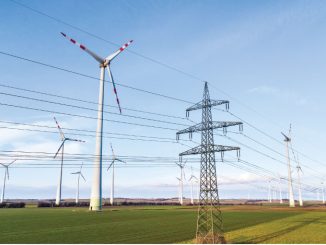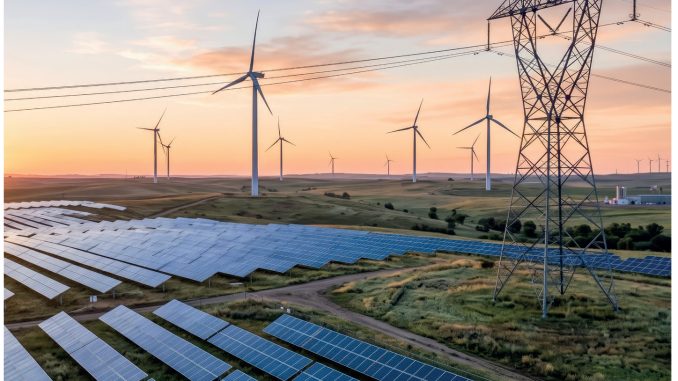
The rapid expansion of renewable energy in India is increasingly exposing a critical gap between generation capacity addition and the development of transmission infrastructure required to evacuate it. While renewable energy projects, particularly solar and wind, are being added at an incremental pace, transmission networks and associated grid infrastructure are not keeping pace. This mismatch is emerging as a key operational and financial risk for the country’s renewable energy ambitions.
Transmission constraints accounted for a significant share of renewable energy curtailment in recent months. During April-June 2026, solar power curtailment totalled 8,133 GWh due to transmission bottlenecks and grid security requirements, according to the Ministry of New and Renewable Energy. Curtailment stood at 2,417 GWh in April, 3,235 GWh in May and 2,481 GWh in June.
Such incidents can affect project revenues and returns, particularly for projects that have already been commissioned but do not have adequate evacuation capacity. The issue could also influence the pace of future renewable energy bidding and investment, as developers become increasingly cautious about connectivity and transmission risks.
Reasons for curtailment
Transmission congestion and project delays
The concentration of renewable energy capacity in a few resource-rich regions is creating congestion on key transmission corridors. Large-scale renewable energy development has been accompanied by plans for interstate transmission system (ISTS) corridors to evacuate power from these regions to demand centres; however, the rapid pace of generation addition is putting pressure on existing networks. The generation profile of conventional solar projects further adds to this challenge, as transmission infrastructure needs to accommodate high levels of generation during peak solar hours, typically around 12 p.m. to 2 p.m., while remaining underutilised for much of the day.
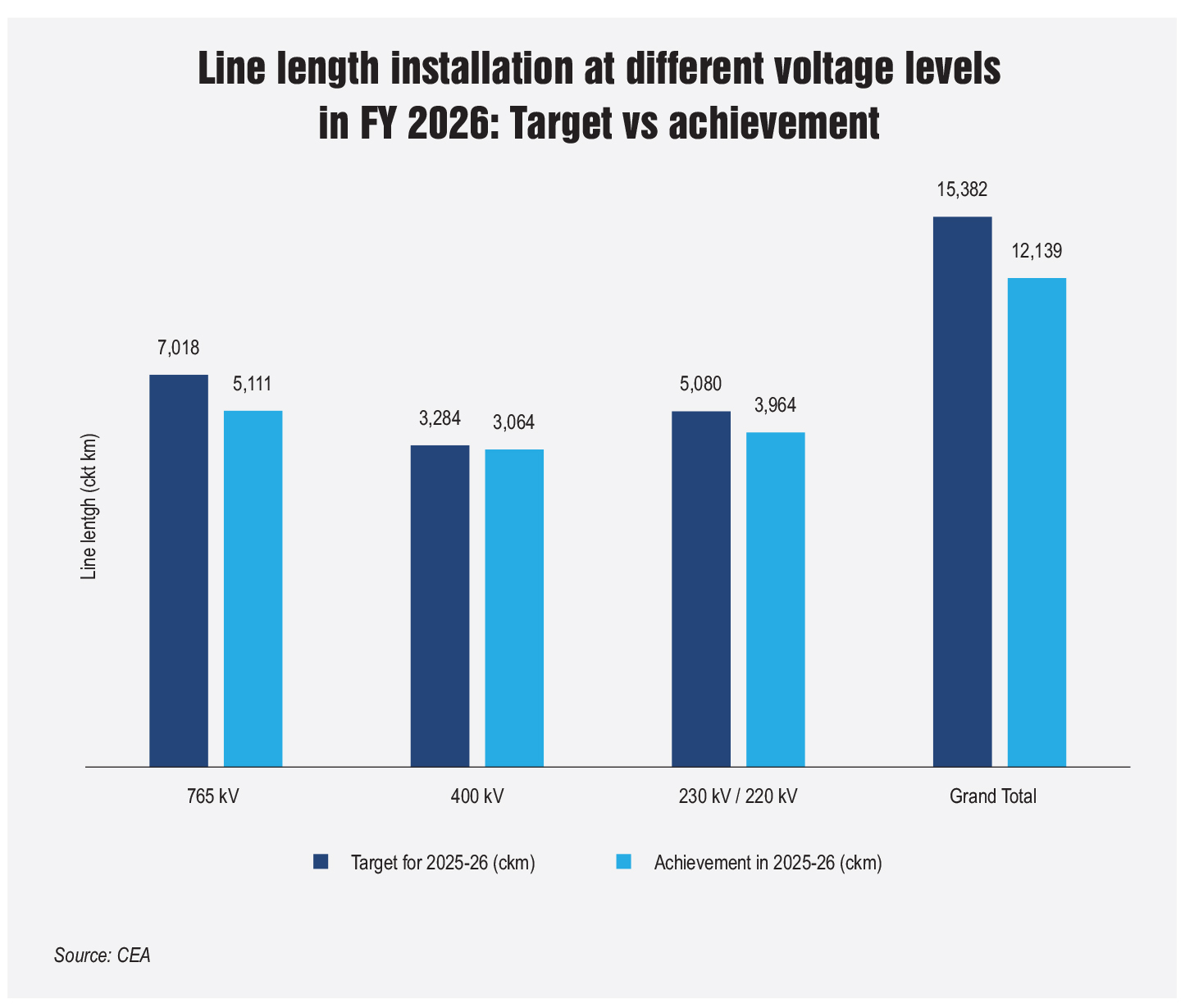
At the same time, delays in transmission project execution are contributing to renewable energy curtailment. Over the past five years, India’s transmission capacity addition has consistently fallen short of planned targets, resulting in a growing project backlog. In 2025-26, against a target of 15,382 ckt km, 12,139 ckt km was added. For 2026-27, the target has been set at 16,554 ckt km, with 4,081 ckt km added as of July 31, 2026.
Right-of-way (RoW) issues, including increasing land requirements for higher-voltage lines, fragmented land ownership and differences over compensation, remain major bottlenecks. Land acquisition for substations, particularly where private or common land is involved, can create additional challenges, with disputes sometimes leading to litigation. Forest and environmental clearances, requirements related to forest rights and gram sabha consent, and biodiversity-related restrictions can further extend project timelines and result in changes to transmission designs. In addition, the limited global supplier base for critical high-voltage direct current (HVDC) components, particularly converter stations, can increase procurement timelines. These challenges become more significant when transmission projects are required to be commissioned alongside rapidly developing renewable energy projects.
 Connectivity constraints
The general network access (GNA) framework provides renewable energy projects access to the ISTS, but delays in the development of associated transmission infrastructure have increased the reliance on temporary GNA (T-GNA). T-GNA provides interim access to available transmission capacity until permanent connectivity is established. However, unlike firm GNA, it does not assure full evacuation when the network is congested, leaving projects more exposed to curtailment, particularly during peak solar generation hours.
The risk is becoming more significant as the slow roll-out of ISTS infrastructure leaves newly commissioned projects dependent on temporary access. According to industry estimates, more than 35 GW of renewable capacity could face severe grid curtailment risks in 2026-27. The issue is particularly pronounced in renewable-rich states such as Rajasthan and Gujarat, where transmission development has lagged capacity addition. Projects, therefore, can be commissioned and be ready to generate but remain unable to evacuate their full output, resulting in lower generation and revenue losses.
While compensation may be available when renewable generation is backed down for certain grid-security requirements, transmission-related curtailment can leave developers exposed to losses. Prolonged dependence on T-GNA can consequently weaken project cash flows, debt-servicing capacity and overall project viability, while increasing uncertainty for lenders and investors. The situation is further complicated by execution challenges in hybrid and standalone storage projects, including a mismatch between discovered tariffs and actual project costs. The timely commissioning of permanent transmission infrastructure, alongside viable storage deployment, will, therefore, be critical to ensure that new renewable capacity can be effectively evacuated.
Solutions and CEA recommendations
The Central Electricity Authority (CEA) has proposed several measures to improve grid strength and system stability as renewable penetration increases. A key recommendation is to mandate grid-forming (GFM) capability in battery energy storage systems (BESS) above 50 MW and renewable energy plants. Most renewable plants currently use grid-following inverters, which depend on existing grid voltage and frequency for synchronisation and can face performance issues under weak grid conditions. GFM inverters, in contrast, can establish and regulate voltage and frequency independently, making them better suited to weak-grid and low-inertia conditions.
The CEA has also recommended priority planning and implementation of synchronous condensers, pumped storage plants or other suitable technical solutions in large renewable energy complexes. Other measures include improving damping through greater interconnection of the ISTS with intra-state networks and planning loads close to major renewable energy pooling stations. The CEA has further proposed amendments to its Connectivity Standards, in the draft CEA (Technical Standards for Connectivity to the Grid) Regulations, 2026, to include necessary technical provisions for renewable energy plants, BESS and bulk loads. These measures are aimed at strengthening the grid and enabling the greater integration of inverter-based renewable generation without compromising system stability.
Beyond these measures, addressing renewable curtailment requires generation and transmission to be planned through a co-optimised approach, rather than transmission development responding after renewable projects have been located and awarded.
Greater emphasis should be placed on developing renewable capacity closer to demand centres, including through intra-state projects, to reduce excessive concentration in a limited number of ISTS corridors. BESS at renewable pooling stations can provide a near-term solution by absorbing excess generation during periods of congestion and shifting it to periods when transmission capacity is available, thereby improving the utilisation of existing assets and reducing curtailment. Storage deployed specifically for congestion management could also defer some transmission investments, although appropriate market and regulatory mechanisms would be required.
 At the same time, existing transmission infrastructure can be better utilised through grid-enhancing technologies, such as dynamic line rating (DLR) and high-temperature low-sag (HTLS) conductors, which can increase the transfer capability of existing lines without requiring entirely new corridors and help avoid RoW and environmental challenges. Transmission corridors with recurring congestion should, therefore, be identified for targeted deployment of such technologies, alongside conventional measures such as transformer augmentation and substation expansion. Renewable energy procurement and auction frameworks also need to evolve, with greater emphasis on storage-linked renewable projects and standalone BESS, rather than predominantly plain-vanilla renewable projects in already congested corridors. This would better align renewable generation with transmission availability and demand.
The way forward
India’s renewable energy expansion will increasingly depend on synchronising generation addition with timely transmission development. The CEA’s transmission plan for integrating over 900 GW of non-fossil capacity up to 2035-36 provides a longer-term roadmap, with transmission systems for 913.7 GW of non-fossil capacity planned by 2035-36. The plan envisages 137,500 ckt km of transmission lines and 827,600 MVA of substation capacity through ISTS and intra-state networks during 2026-27 to 2035-36, involving an estimated investment of Rs 7.93 trillion. The timely execution of these projects will be critical, particularly in renewable-rich regions such as Rajasthan and Gujarat, where proposed high-capacity corridors and HVDC links from Bhadla, Barmer and Khavda will support long-distance evacuation to demand centres.
At the intra-state level, the proposed Green Energy Corridors (GEC) Phase III, alongside the ongoing GEC-II, can further strengthen renewable evacuation. GEC-III is expected to facilitate around 134.7 GW of additional renewable capacity and 25.2 GW of pumped storage capacity, supported by more than 51,000 ckt km of transmission lines and 228,000 MVA of substation capacity. However, the focus now needs to be on timely implementation and closer coordination between generation and transmission planning to avoid the commissioning of renewable projects ahead of their evacuation infrastructure.
Alongside network expansion, BESS and pumped storage can help manage congestion by absorbing excess renewable generation and shifting it to periods when transmission capacity is available. Greater use of grid-enhancing technologies such as DLR, HTLS conductors, STATCOMs, synchronous condensers and FACTS devices can also improve utilisation of existing networks and address grid-strength constraints without relying solely on new transmission corridors. Connectivity provisions for solar and non-solar hours can further improve utilisation of available capacity. Together, faster transmission execution, integrated generation-transmission planning, storage and better utilisation of existing networks will be essential to reduce curtailment and ensure that India’s rapidly expanding renewable capacity translates into actual generation.