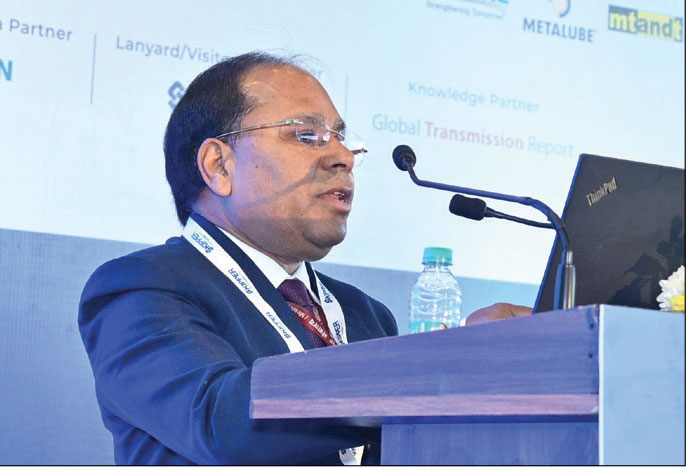
 V.K. Singh, Member, Power Systems, Central Electricity Authority (CEA), delivered the inaugural address at the Power Line TransTech India 2025 Exhibition and Conference. He outlined the key priorities and evolving requirements of the transmission sector, stating that transmission serves as the backbone for evacuating renewable energy from resource-rich regions to load centres. Edited excerpts from his address…
India’s energy transition is being driven by rapid capacity additions in solar, wind and hydropower, underscoring the need for a strong, flexible and future-ready grid. Grid reliability and resilience, optimal utilisation of renewable energy, reduced curtailment, and the integration of technologies such as battery storage, green hydrogen and offshore wind remain central priorities.
India operates the world’s largest synchronous grid. As of end-October 2025, the national transmission network spans nearly 498,000 km of 220 kV and above lines, with around 1,400 GVA of transformation capacity, including high-voltage direct current (HVDC) systems. Interregional transmission capacity has expanded to about 120 GW and is projected to reach 167 GW by 2031-32, enabling reliable power transfer from generation centres to load centres across regions.
Renewable energy capacity, currently at 250 GW, is expected to reach 500 GW by 2030 and around 600 GW by 2032. Long-term projections up to 2047 indicate renewables accounting for nearly 80 per cent of the power mix. To support this scale-up, the CEA has estimated a requirement of 650,000 circuit km of additional transmission lines and 2,412 GVA of transformation capacity, including HVDC, by 2032.
Planning reforms and policy initiatives
Transmission planning has shifted to a renewable energy potential-based approach, providing visibility for projects up to 2032 and aligning transmission readiness with renewable capacity addition. This is aimed at avoiding mismatches and reducing renewable energy curtailment. The tariff-based competitive bidding model continues to enable faster and more cost-effective project development, with several states adopting the framework, particularly for projects above specified thresholds.
A national single-window clearance system has been introduced to eliminate physical submissions and streamline approvals. In addition, revised right-of-way (RoW) compensation guidelines provide 100 per cent compensation for tower base footing and 30 per cent for transmission corridors. Nine states have adopted the central framework, while Rajasthan has enhanced compensation to 200 per cent for tower footing and 60 per cent for corridors.
Large renewable and storage-based hybrid projects are being developed across Rajasthan, Gujarat, Andhra Pradesh and Karnataka. Following the publication of resource adequacy plans, states are being guided to prepare intra-state transmission plans through joint studies with state transmission utilities. Plans for the north-eastern and most eastern states have been completed, with the remaining expected by January 2026, improving long-term visibility for the industry.
Execution challenges and the road ahead
Key challenges continue to include RoW and land acquisition issues; delays in permits and environmental clearances; long lead times for manufacturing transformers, reactors and equipment; and limited domestic capacity for cold-rolled grain-oriented steel. These are being addressed through high-level monitoring of clearances, with the involvement of senior officials and district administrations.
The shortage of skilled manpower, particularly for transmission line erection, has also emerged as a concern. New skill development centres are being planned in select states, alongside a call for industry-led training facilities. Integrating large volumes of variable renewable energy will require stronger forecasting, adequate reserves and balancing mechanisms, along with enhanced cybersecurity and resilience for critical infrastructure. Greater coordination among generators, transmission planners, load centres and state regulators remains essential.
Timely commissioning, quality execution, safety and long-term reliability were emphasised, amid rising incidents of transformer and tower failures. The adoption of advanced technologies such as HVDC, reconductoring with advanced conductors, integration of storage solutions and strengthening of domestic supply chains will be critical to reduce dependencies and lead times. Ongoing initiatives, supported by coordinated industry action, are expected to help build a robust transmission infrastructure by 2032, support the Viksit Bharat@2047 vision and meet long-term net-zero commitments.