
 By Rahul Kumar, General Manager, Special Management Group & Solar, Tata Power-DDL
India’s transition towards clean energy has accelerated significantly in recent years, with rooftop solar emerging as a key contributor to the country’s renewable energy programme. The push for net metering, supported by smart metering, policy reforms and financial incentives, has enabled consumers to become active participants in electricity generation while reducing their dependence on conventional grid power. Alongside utility-scale solar projects, rooftop solar installations are contributing to the country’s target of achieving 500 GW of non-fossil-fuel-based capacity by 2030. However, despite rapid progress, several regulatory, infrastructural and consumer-related challenges continue to influence the pace of adoption. Utilities are therefore focusing on simplifying procedures, strengthening customer engagement and improving grid readiness to accelerate rooftop solar deployment.
Emerging opportunities
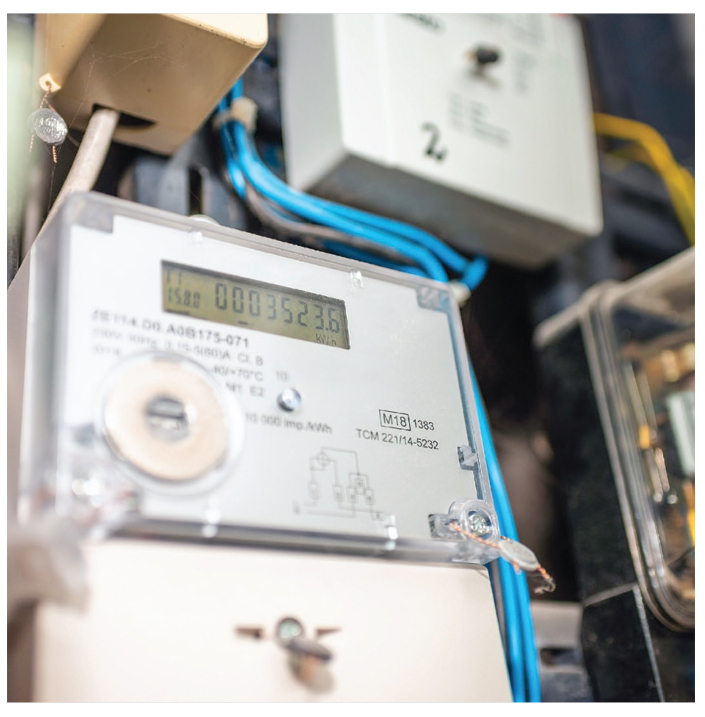
India’s renewable energy transition gained momentum following the global climate discussions in Paris in 2015, which reinforced the need to reduce carbon emissions and dependence on fossil-fuel-based power generation. While net metering regulations were introduced in 2013, their adoption accelerated after the roll-out of smart meters from 2018 onwards. Smart meters, which support prepaid, post-paid and net metering functionalities, have enabled the accurate recording of electricity imports and exports, facilitating greater adoption of rooftop solar.
Rooftop solar offers multiple benefits, including lower electricity bills, improved savings under the time-of-day (ToD) tariff regime, reliable power generation for up to 30 years with minimal maintenance, utilisation of unused rooftop space, and the ability to export surplus electricity to the grid under the net metering framework.
India’s installed renewable energy capacity has reached 150.26 GW, with utility-scale solar accounting for about 110 GW, rooftop solar 25.73 GW and agricultural solar 14.1 GW (under the Pradhan Mantri Kisan Urja Suraksha Evam Utthaan Mahabhiyan programme). During the previous financial year alone, around 44.59 GW of renewable capacity was added, while rooftop solar connections have expanded to nearly 4.2 million households. Rajasthan, Gujarat and Maharashtra continue to lead solar capacity additions.
Significant growth potential remains, particularly in the residential and commercial segments. The government aims to achieve 10 million rooftop solar installations under the PM Surya Ghar: Muft Bijli Yojana by March 2027, although the current number stands at about 3.2 million. Group net metering and virtual net metering are also expanding opportunities for distributed solar adoption. Financial incentives continue to support deployment, with central subsidies of up to Rs 78,000 for systems up to 3 kW, supplemented by additional state incentives, including generation-based incentives in Delhi.
Consumer outreach
Utilities are adopting both personalised and mass outreach programmes to promote rooftop solar. Dedicated solar ambassadors conduct awareness campaigns in urban areas in collaboration with vendors, while Solar Sakhis – village women engaged to promote rooftop solar in rural areas – help raise awareness and facilitate new connections while generating local employment.
Mass outreach initiatives include FM radio advertisements, SMS and WhatsApp campaigns, street plays and promotional activities at public locations. Rural areas have recorded higher conversion rates due to the effectiveness of direct consumer engagement, while urban adoption is often constrained by rooftop ownership issues.
Utilities are also proposing higher upfront subsidies to reduce consumers’ initial investment, with the remaining cost financed through low-interest loans. In parallel, customer experience has improved through digitalisation. Utility portals are now integrated with the Ministry of New and Renewable Energy (MNRE) platform, enabling the automatic retrieval of consumer details, while OTP-based authentication, online document submission and automated verification have simplified the application process and reduced processing time.
Net metering models
Net metering has evolved beyond conventional rooftop installations and now encompasses multiple models designed to maximise the utilisation of distributed solar generation. Under the conventional rooftop net metering framework, electricity generated by the rooftop solar system is first consumed by the consumer. Any surplus power is exported to the grid, while the smart meter records both imported and exported electricity. At the end of the settlement period, the exported energy is adjusted against consumption, and any surplus balance is compensated by the utility according to the applicable tariff.
Besides conventional rooftop net metering, group net metering (GNM) and virtual net metering (VNM) have expanded the opportunities for consumers who may not have suitable rooftop space. Under GNM, a consumer can install a large solar plant at a single location and utilise the generated electricity across multiple premises owned by the same entity. For instance, a factory owner with several manufacturing units can install a solar plant at one location and distribute the energy generated across different facilities through adjustments made by the utility. In Delhi, installations of up to 4 MW are permitted under this arrangement, making it particularly attractive for commercial and industrial consumers with multiple establishments.
VNM, meanwhile, addresses one of the biggest barriers to rooftop solar adoption – the lack of rooftop ownership. Consumers who do not have access to suitable rooftop space can enter into an agreement with the owner of a large rooftop solar installation. The electricity generated from that installation is allocated among multiple consumers based on agreed shares, with the utility facilitating the adjustment of energy credits. This model enables consumers without dedicated rooftops to benefit from solar generation while making better use of available rooftop infrastructure.
At present, these arrangements are generally confined to consumers located within the same utility service area. However, discussions are under way to examine the possibility of extending these benefits across different distribution utility areas. Such an expansion could significantly widen the scope of virtual and group net metering by enabling consumers located in different parts of a city, or even across states, to participate in shared solar projects.
The financial returns also vary across different net metering models. Conventional rooftop net metering offers the shortest payback period of approximately three to five years, with annual returns estimated at 20-30 per cent. Since consumers not only offset their own electricity consumption but also receive payment for surplus electricity exported to the grid, the overall economics remain favourable. GNM generally offers a longer payback period of five to seven years with annual returns of around 14-20 per cent, while VNM creates opportunities for consumers who would otherwise be unable to participate in rooftop solar.
 Challenges and the way forward
Despite the progress made in rooftop solar deployment, several implementation challenges remain. A key concern is the readiness of the distribution network to accommodate reverse power flows as consumers increasingly export surplus electricity to the grid. While individual rooftop systems inject relatively small quantities of power, larger installations under GNM and VNM require stronger and more resilient distribution infrastructure.
Grid connectivity for large-capacity projects also remains a challenge. Additional network infrastructure, right-of-way issues and land constraints can delay project execution and commissioning. Material availability and limited rooftop space, particularly in metropolitan areas, further affect the pace of deployment.
To address these issues, utilities have significantly simplified application procedures. The processing time for rooftop solar connections has been reduced from nearly 55-60 days to around seven working days, with efforts under way to reduce it further to three days. Manual processes involving physical applications, demand drafts and notarised declarations have been replaced with digital platforms that support OTP-based authentication, online document submission and automated verification.
Utility portals are now integrated with utility databases and the MNRE portal, enabling automatic retrieval of consumer details and reducing manual data entry. Additional reforms include self-declarations in place of notarised documents, deemed technical feasibility for systems up to 10 kW and single-window systems with dedicated points of contact, all of which have accelerated approvals and improved the consumer experience.
Another important consideration is the interaction of rooftop solar with ToD tariffs. While solar generation effectively reduces afternoon peak demand, managing the evening peak remains a challenge as solar output declines after sunset. Battery energy storage systems are increasingly being considered to address this issue. However, current battery systems typically provide only about two hours of backup. Advancements enabling four to six hours of storage could significantly improve the utilisation of rooftop solar, reduce dependence on conventional power during peak demand periods and enhance overall grid stability.
The continued improvement of net metering regulations, digitalisation of consumer services and simplified approval processes are expanding opportunities for rooftop solar. Going forward, strengthening distribution infrastructure, improving grid flexibility and advancing energy storage technologies will be critical to supporting the next phase of distributed solar growth.