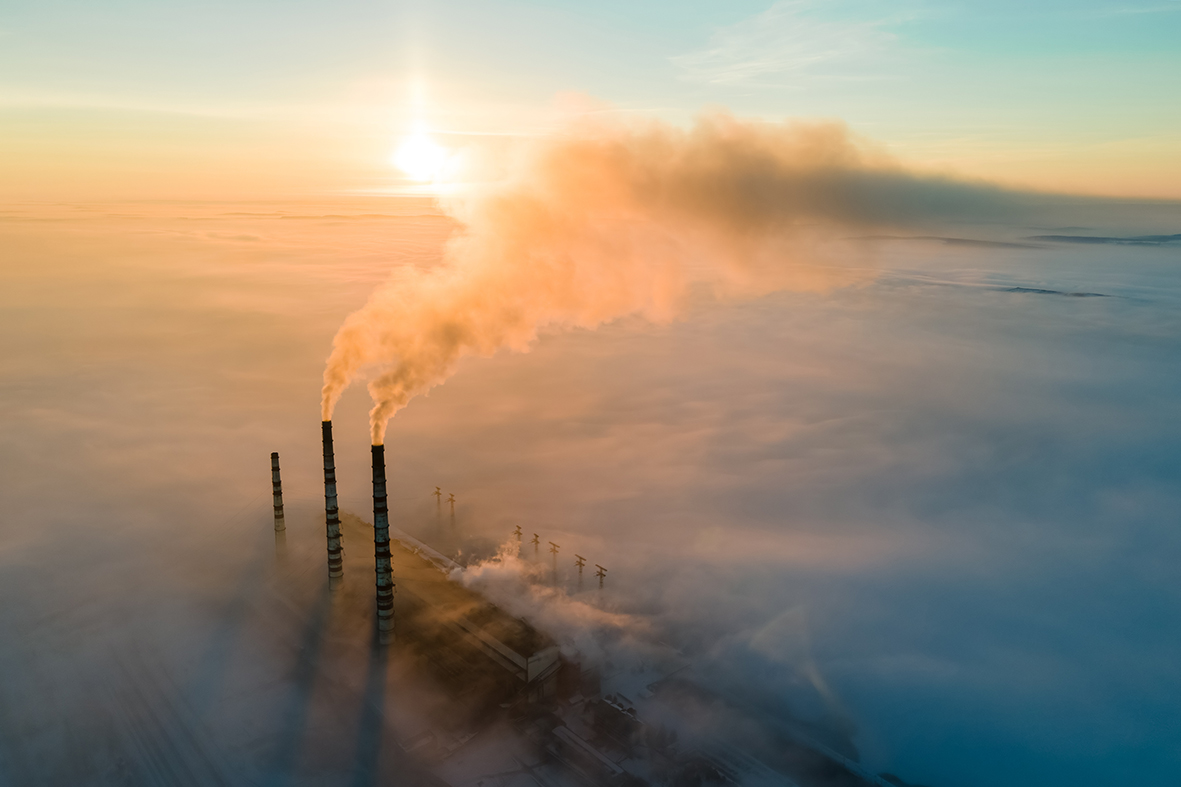
 Particulate matter (PM) emission from thermal power plants (TPPs) is a key contributor to air pollution. Industry estimates suggest that coal-based TPPs contribute 60 per cent of the total PM emitted. These emissions need to be controlled and reduced by installing advanced mechanisms such as electrostatic precipitators (ESPs), fabric filters and wet particulate scrubbers. TPPs are subject to stringent emission standards for PM, as set by the Ministry of Environment, Forest and Climate Change. For coal-based TPPs, the PM emission standards were set at 100 mg per Nm³ for power plants installed before December 31, 2003, 50 mg per Nm³ for plants installed between January 2014 and December 2016, and 30 mg per Nm3 for plants commissioned from January 2017 onwards.
Fly ash is a major contributor to rising PM. There is a growing focus on ensuring fly ash utilisation. It was utilised up to 100 per cent by 92 out of 200 power utilities in 2021-22. Utilisation of fly ash as bricks for the construction of roads and dams, and mineral filler can help generation plants achieve 100 per cent utilisation as per government directives.
Electrostatic precipitators
ESPs are filtration devices that are used to eradicate smoke and dust particles from exhaust fumes. By charging particles either positively or negatively with electrical energy, they extract particles from a gas stream. Collector plates with the opposite charge are then drawn to charged particles. Gathered particles can either be cleaned from plates with water (wet ESPs) or removed from collecting plates as dry material (dry ESPs). The ESP technology is used by nearly all coal-based TPPs in India to reduce PM in flue gas produced when coal is burned. This technology has a collection efficiency of more than 99 per cent for wet and dry particles. ESPs are undergoing retrofitting to meet the set emission standards. These are filter-free devices that extract PM from air pollution with an efficiency of over 70 per cent, can effectively improve the air quality via electrostatic precipitation. Improving electrode technologies, adding plate enhancements with rigid discharge electrodes to increase the efficiency of electric field distribution, improving collection efficiency and monitoring ESP operations, and using modern control algorithms are some of the ways to do so. Notably, at NTPC Limited, retrofitting of ESPs has been completed at over 13 GW capacity to curb particulate emissions at stations. The genco has completed renovation and modernisation of ESPs at its 40 units.
Fabric filters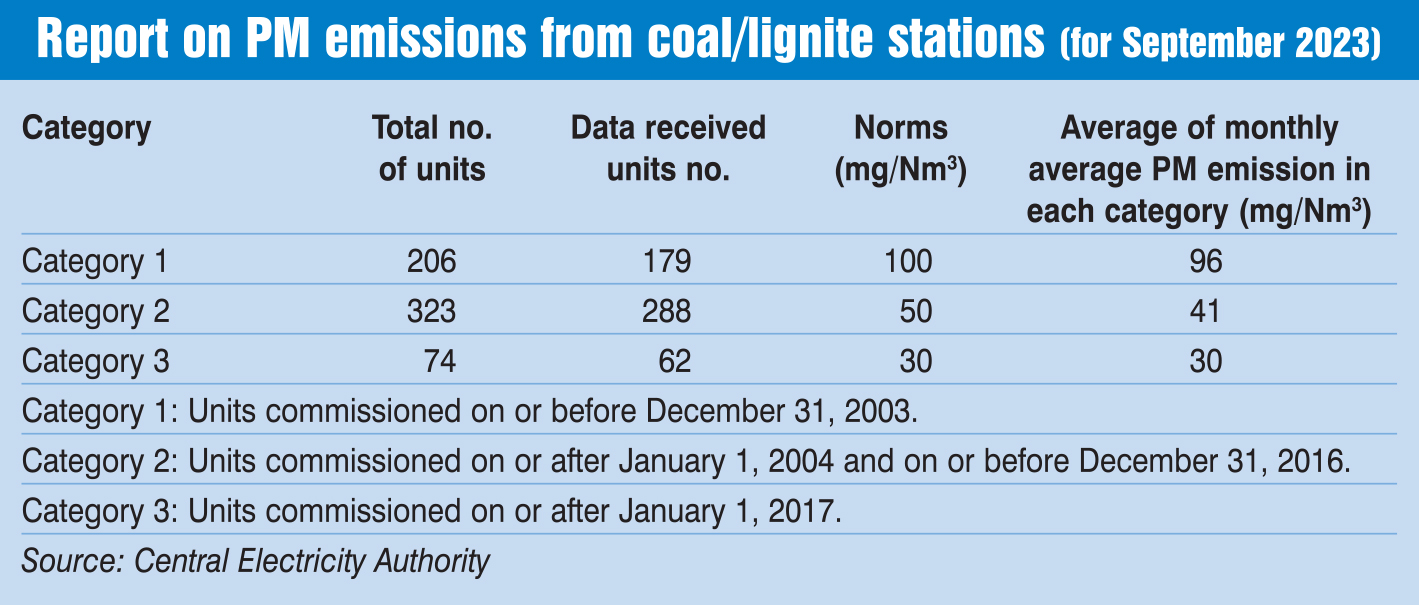
This baghouse, or dust collector, collects PM from a process gas stream before it is released into the atmosphere. These are extremely efficient for the collection of submicrometre-sized particles. The dust-laden gas enters the baghouse compartment, where smaller particles gather on filter bags to produce a layer that permits clean gas to travel through the media, while bigger particles fall out of the hopper. Cleaning begins when the layer of dust becomes thick enough to significantly impede the flow through the media. Depending on the type of baghouse and the cleaning approach, cleaning can be done either with the compartment isolated and not filtering, or with the compartment still filtering. It has a removal efficiency of 99 per cent for fine particles and 99.5 per cent for the overall removal efficiency. Haryana’s Jhajjar Power Limited has installed fabric filters and ESPs to bring their PM emission down in their 1,320 MW coal-based power station. Apart from this, Vedanta has incorporated industrial internet of things in fabric filters to enhance emission controls in its 2,400 MW thermal power station. The technology is helping the company to precisely measure differential pressure and take immediate action as and when required.
Conclusion
Managing PM emissions from TPPs is a must and these emissions need to be kept under check. Strict measures are required to ensure TPPs comply with the emission norms stipulated by the government. In addition, there is a need to deploy digital solutions to track and manage PM emissions. Real-time online emission monitoring systems needs to be installed to analyse the performance of the emission control systems deployed.