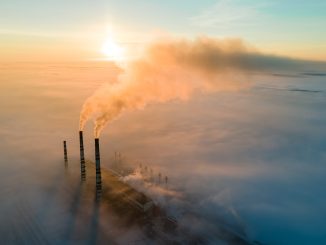
Easing the Norms: FGD to remain relevant despite the relaxation of SO2 mandates
For decades, studies of Indian coal have shown that it is typically low in sulphur and high in ash, except for certain reserves in the north-eastern states. […]
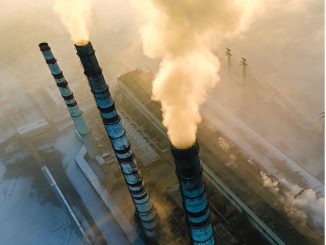
By Prankur Patel, Assistant Director, Central Electricity Authority The installation of flue gas desulphurisation (FGD) systems across India’s coal-based thermal power plants (TPPs) has emerged as a controversial topic in recent years due to rising […]
Power generation through thermal energy sources significantly contributes to the total power generation in India. It is responsible for high emissions released into the atmosphere, which include particulate matter (PM), sulphur dioxides (SO2), nitrogen oxides […]
Thermal power plants (TPPs) are responsible for large volumes of emissions, making the reduction of pollutants such as SOx, NOx and particulate matter a top priority for power plant operators. Overall compliance with the emission […]
Particulate matter (PM) emission from thermal power plants (TPPs) is a key contributor to air pollution. Industry estimates suggest that coal-based TPPs contribute 60 per cent of the total PM emitted. These emissions need to […]
The policy and regulatory developments in the past year demonstrate the government’s focus on integrating larger volumes of renewable energy sources and strengthening the distribution segment to improve end-user satisfaction. The country’s green energy commitment […]
The country’s power generation segment is witnessing a major shift, with renewables replacing thermal power in the installed capacity mix at a fast pace. As of August 2022, the country’s installed capacity stood at 405.8 […]
The fly ash produced as a by-product of coal combustion in the boiler poses environmental challenges, and its efficient, sustainable utilisation has been of paramount importance to the power industry. According to latest Central Electricity […]
The country’s dependence on coal for meeting its energy needs has resulted in the generation of huge quantities of ash over the years. However, ash utilisation levels have remained dismal. Of the total installed capacity […]
Water is a key input in thermal power generation. It is used in almost all systems of a power plant including cooling water systems, ash handling, air conditioning and ventilation, and coal dust suppression. The […]
Fly ash management has been one of the key concerns of the power sector in India owing to the high ash content (30-45 per cent) in domestic coal, which accounts for over 70 per cent […]
Aimed at regulating the pollution caused by thermal power plants, the Ministry of Environment, Forest and Climate Change (MoEFCC) revised the standards for emissions from thermal power plants in December 2015. Apart from tightening the […]
Coal-based plants emit dust of about 10 microns size on burning pulverised coal. Given its adverse environmental impact, particulate control equipment and technologies have been designed to remove particulates from the flue gas stream, preventing them from re-entering the […]
Coal is a key source for meeting India’s power requirement, contributing about 80 per cent to the total generation. Its position in the Indian power sector is most likely to remain strong in the coming […]
Water has several end-uses in a power plant. Since it has the highest specific heat rate amongst all fluids, water is ideal as a coolant for various processes. Besides, it is widely used in ash handling systems. With […]
The rising demand for power in India has been met increasingly through coal-based power, which accounts for 60 per cent of the country’s total installed capacity base of 320 GW (as of March 2017). The […]
COPYRIGHT © 2017-2025 | POWER LINE