

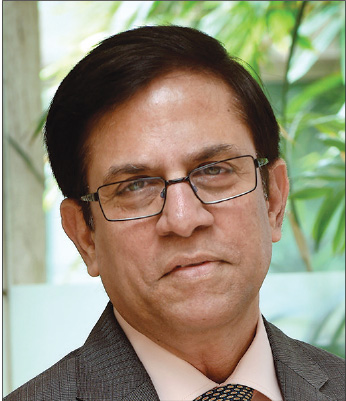
 In a recent interview with Power Line, J.P. Chalasani, Group Chief Executive Officer, Suzlon Group, shared his views on the current state of the wind power sector, and the key issues and challenges before it. He also spoke about the outlook for offshore wind and repowering of wind projects in the country. As per the latest industry data, the Suzlon Group contributes 32 per cent of India’s total installed wind capacity of 47 GW. Edited excerpts from the interview…
What is your assessment of the current state of the wind power sector?
The wind power sector is currently witnessing one of its best phases in decades. Historically, the renewable energy sector, including wind, relied heavily on policy support. Wind power development was driven by incentives such as accelerated depreciation, renewable purchase obligations and generation-based incentives. However, the landscape has shifted significantly. Today, wind power tariffs are much more competitive. Many believe that wind is more expensive than solar. However, this is a misconception. When demand-based pricing is taken into account, wind is often more cost-effective. Power purchase agreement (PPA) tariffs for wind, ranging from around Rs 3.50 to Rs 3.70 per unit, are favourable compared to market rates during wind generation hours.
It is important to view wind power, solar and storage as complementary and mandatory to provide firm power, rather than as a competition to each other. Together, they form the backbone of the strategy to replace fossil fuels. Firm and despatchable renewable energy (FDRE) projects now offer two types of bids — peak-hour bids and load-following bids. Load-following bids, in particular, are designed to match the 15-minute load-following requirements of discoms, same as fossil fuel-based power. These bids are now competitively priced at Rs 4.80-Rs 4.90 per unit, making FDRE a viable alternative to fossil fuels. Additionally, renewable energy tariffs are fixed for 25 years, eliminating the uncertainty of fuel price fluctuations, a significant advantage over fossil fuels. In the new FDRE projects, substantial wind capacity will be required to meet the load-following profiles, alongside solar and storage.
What are the unresolved issues in the segment, especially for domestic manufacturers?
As per the latest industry data, the country has an adequate wind turbine manufacturing capacity of 14-15 GW, compared to the current annual deployment of 3-4 GW. The real challenge lies in the implementation of wind projects, which is far more complex than other power projects, including fossil fuel-based plants and solar projects. Wind projects, spread across open areas, present significant challenges. The pathways may change or disappear over time, leading to delays.
Land acquisition is another critical issue. The lack of uniform policies in many states has led to significant delays in the land acquisition and allotment process. Many wind projects are connected to the central transmission utility (CTU), while land acquisition falls in the purview of state governments. Although state governments are supportive, they are not direct stakeholders in CTU-connected projects, which can slow down the resolution of land-related challenges. It is essential for the central government to find ways to involve state governments as interested stakeholders in these projects to speed up the land acquisition process as well as the completion of the project.
Another issue is the evolving nature of wind project sites. As we move forward, newer sites will have lower wind speeds, but we cannot afford an increase in the cost of power generation. Research and development (R&D) to develop suitable wind turbine models will be crucial for making these lower-speed sites economically viable without raising costs.
Identifying potential sites involves an analysis and continuous monitoring of wind data. Wind turbines are then designed based on this data. The primary challenge is not the turbine’s capacity but designing the most suitable turbine for each site to optimise power generation costs. This makes R&D a significant cost for wind turbine manufacturers. In India, only Suzlon has in-house R&D capabilities, while other companies source technologies from outside. Global manufacturers find it easier to invest in R&D due to their worldwide turbine sales. These companies often design turbines for international markets and adapt them for Indian conditions. In contrast, Suzlon focuses on designing turbines specifically for Indian wind conditions and later modifies them for global markets.
What policy measures are needed to support the wind energy sector?
Policy stability and effective implementation are essential for the wind energy sector. The concept of a “pool tariff” is particularly critical for the wind power sector, even more so than in the solar sector, due to the concentration of wind resources in seven key states. For example, in FY 2017, when India reached a record 5.5 GW of wind energy capacity, all seven states played a significant role. However, competitive bidding has led to the emergence of state-agnostic projects, primarily focused on high-wind areas.
States like Gujarat, Tamil Nadu and Karnataka are seeing crowding of projects. Therefore, new states like Madhya Pradesh and Rajasthan, which may have relatively higher tariffs, need to be explored. This is where the pooling tariff concept comes in – projects from various states are pooled together to create a more balanced overall tariff. Unfortunately, while this policy was announced some time ago, it has not been implemented till date.
What is your opinion on the recent wind auction results and tariffs, including round-the-clock tariffs?
In earlier wind auctions, many projects faced challenges. For instance, if we look at initial rounds, only 50 per cent of the projects were successfully implemented due to aggressive tariffs. However, I believe the industry has learned from these experiences. It is difficult to generalise whether tariffs from those auctions are viable, especially since different frameworks for FDRE bids involve varying assumptions.
Early-stage auctions have resulted in aggressive tariffs due to limited options, but the Government of India has announced a substantial auction pipeline, creating ample future opportunities. Therefore, developers should not feel pressured to secure every project. Moreover, the commercial and industrial segment has witnessed significant growth. At Suzlon, the C&I segment constitutes a major portion of our outstanding order book.
What is the outlook for offshore wind development? Is it a good idea?
The concept of offshore wind development is promising, but its viability depends on several factors. Examining successful offshore wind projects globally reveals two main drivers of their growth. First, these projects are often developed in regions with limited land availability, necessitating a shift to offshore locations. Second, there is typically a substantial generation gap between onshore and offshore wind, which helps justify the higher costs associated with offshore projects. In India, however, the generation gap between onshore and offshore wind is less pronounced, making the significant cost increase for offshore developments a critical concern. The Tamil Nadu coast is more favourable for offshore wind projects than other coastal areas.
It is a good initiative by the Government of India to develop an initial 1,000 MW of capacity through the VGF route to gain the necessary experience. However, offshore wind capacity is not expected to be significant over next five years.
What is the potential for repowering of wind power projects in the Indian context?
The potential for repowering wind projects is substantial, but some key issues must be addressed. First, there is a common misconception that replacing a 1 MW turbine with a 3 MW turbine will proportionately increase the park’s capacity. The overall park capacity will remain the same but the efficiency gains from newer technology can be significant.
Second, many of these projects are connected to the state grid. If demand is low in that state, evacuating power through the CTU can incur high costs, making the projects economically unviable. To address these challenges, states are coming up with policies, including policies to ensure that the state purchases the generated power. While repowering holds great promise, overcoming these obstacles is essential to make it a more viable option.
What are your key priorities and plans for Suzlon Energy over the next one to two years?
Today, we are the market leader in terms of the wind turbines installed in the country. We are determined to maintain our leadership position in the industry. Our primary goal is to continue growing while ensuring that the cost of wind generation remains stable by bringing out newer models of wind turbines through extensive R&D. We are also committed to making new wind turbine technologies commercially viable. Further, we are working on providing integrated solutions for FDRE projects. There are many more plans on the anvil.