India’s electricity demand is expanding with the rising urbanisation, digitalisation and increasing electrification of industries as well as transport, leading to the need for power infrastructure augmentation across all verticals – generation, transmission and distribution. Battery energy storage systems (BESSs) are playing a critical role across all levels of power generation and supply. On the generation side, especially in the case of renewable energy, they help manage resource intermittency and provide firm clean power. On the transmission side, BESSs help improve grid stability maintenance through a variety of ancillary services. On the distribution front, BESSs can help discoms manage their load effectively.
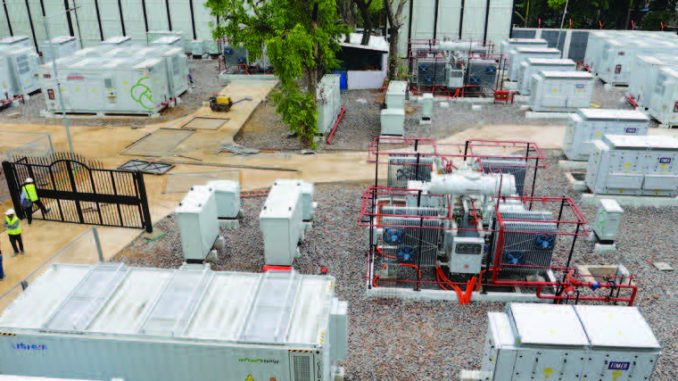
BESSs are, thus, becoming increasingly popular with utilities to help meet power demand efficiently, ensure quality power supply, manage renewable energy integration into the grid and also maintain grid reliability. In line with this, IndiGrid commissioned its 20 MW/40 MWh BESS project at BSES Rajdhani Power Limited’s (BRPL) Kilokari substation in Delhi on March 31, 2025. IndiGrid hosted the launch event of the project on May 6, 2025, in the presence of various leading key stakeholders from across the power sector.
Across all discussions, there was a clear recognition of the system-level value that BESSs bring, especially in managing peak demand, enhancing grid stability and facilitating renewable energy integration. This article sheds light on the key takeaways from the launch event of the Kilokari BESS Private Limited project and offers insights into the role of BESSs in India’s energy transition. It is based on remarks by and discussions among Ghanshyam Prasad, Chairman, Central Electricity Authority (CEA); Sushanta Chatterjee, Chief (Regulatory Affairs), Central Electricity Regulatory Commission; Amal Sinha, Executive Director, BRPL; Abhishek Ranjan, CEO, BRPL; Harsh Shah, Managing Director, IndiGrid; and Woochong UM, Chief Executive Officer, Global Energy Alliance for People and Planet (GEAPP), at the launch event.
Regulatory perspective
Regulatory momentum for BESSs in India has picked up pace, with the CEA releasing standard bidding documents for battery storage. However, two key regulatory elements remain work in progress – grid connectivity standards for BESSs and comprehensive safety regulations specific to BESSs.
From the regulators’ perspective, the urgency for scaling up BESSs is rooted in the changing nature of India’s power demand curve, specifically the emergence of a “duck curve” driven by the increasing penetration of solar power in the grid. This curve poses challenges for India’s largely thermal-based generation, which is constrained in its ramping capabilities. Energy storage is being suggested as a solution here to help store excess power generation and maintain grid stability.
The integration of distributed renewable energy generation sources, driven by initiatives such as the PM Surya Ghar: Muft Bijli Yojana for residential rooftop solar and Pradhan Mantri Kisan Urja Suraksha evam Utthaan Mahabhiyan (PM-KUSUM) for solarising irrigation can create substantial grid management challenges in the future. This represents a major opportunity for distributed BESS applications to capture daytime solar generation for evening use. India’s National Electricity Plan already projects the need for over 47.24 GW of storage by 2031-32. This projection far exceeds the current under-construction capacity, showing a significant investment gap, but also a vast market opportunity that can be tapped.
Furthermore, it was highlighted that BESSs are being valued for their multiple applications. While the daily charge-discharge cycles represent the basic use case, there is a growing recognition of additional value streams including ancillary services, grid stabilisation, frequency balancing and supporting renewable generators in managing deviation settlement mechanism charges. As the renewable energy penetration increases, regulatory requirements for renewable generators are expected to tighten, particularly regarding grid discipline and forecasting accuracy. BESSs will play a key role in helping renewable energy plants meet stringent regulatory standards.
India’s energy storage future looks promising, but requires continued development and innovation. Going forward, as renewable energy’s share in the power mix grows beyond 50-60 per cent, storage duration requirements are expected to increase from the current one- or two-hour systems to four- or six-hour systems, eventually necessitating long-duration energy storage solutions. Thus, the government’s backing is crucial in scaling up deployments, while the technology matures and costs continue to decline.
Discom perspective
A key insight from the discom side is the re-conceptualisation of BESSs as a core part of the grid infrastructure, comparable to transformers or other embedded assets. It was highlighted that BESSs should be considered within network planning regulations, not as an external add-on but as a foundational component. Discom experience with small-scale deployments at the distribution transformer level since December 2021 has shown that such systems can effectively support neighbourhood-level grid stability and relieve local loads, especially in densely populated urban areas. These systems are integrated seamlessly into substations and are already delivering measurable operational benefits.
However, the successful deployment of a BESS depends on a clear understanding of its intended use case. Projects without clearly defined roles risk becoming underutilised or economically unsustainable. BESSs must be customised to the needs of the grid and their versatility as both a load and a source makes them particularly valuable. Additionally, with battery prices declining and more research and development under way, the feasibility of widespread BESS deployment is increasing.
Developers’ perspective
The Kilokari BESS project is specifically designed for densely populated urban areas, facing the growing pressure on the distribution infrastructure. Key use cases planned for the project include energy arbitrage, reactive power support and grid stability. It offers backup supply to an 11 kV distribution bus at the substation, ensuring uninterrupted power to selected feeders in the event of upstream grid failures. Moreover, it is designed to provide critical ancillary services such as frequency support during high-ramp events, particularly during Delhi’s summer and winter peak load periods. The system will also assist in reactive power compensation and voltage support, contributing to improved power quality across BRPL’s service area.
IndiGrid leveraged learnings from previous pilot projects at its Dhule and Kallam substations in Maharashtra to de-risk the Kilokari BESS implementation. Unlike those projects, the Kilokari project had to contend with the logistical and regulatory challenges of an urban environment. Pre-construction due diligence involved extensive coordination with local authorities and the construction required careful planning to minimise disruptions. The project team focused on commissioning the project with a “first-time-right” approach. The success of this approach, despite urban constraints, validated the operational feasibility of third-party-owned storage systems on a utility network.
Furthermore, the project includes data acquisition systems to capture real-time operational data, which would be used to inform the design of similar systems across high-growth and high-density zones,
especially in coordination with Delhi’s transport electrification push. Notably, the system is being integrated to support the upcoming electric vehicle charging infrastructure and will enable phase balancing and load management to accommodate variable and night-time loads.
However, the need for standardised safety norms and stringent testing protocols was also highlighted in the event, emphasising the importance of ensuring long-term reliability and preventing cost-cutting by unqualified players. The “black box” nature of batteries limits inspection and is of major concern.
Financiers’ perspective
The financial viability of the project was significantly strengthened by concessional finance provided by GEAPP in the form of 70 per cent of the project cost. This substantially reduced the levellised annual tariff to Rs 5.76 million per MW, reportedly among the lowest recorded for such BESS projects in India. Moreover, this fixed-capacity payment model has made the project bankable and replicable for other discoms and urban locations.
Moreover, GEAPP’s financing approach extended beyond concessional capital, also incorporating collaborative monitoring and evaluation efforts with knowledge-sharing objectives. The project has overcome several logistical challenges, including limited space availability and proximity to sensitive sites such as residential colonies, metro lines and a hospital. The key learnings from this project, particularly in urban deployment, logistics, regulatory coordination and stakeholder management, are intended to be shared with other stakeholders, both within India and international. These learnings aim to contribute to capacity building and accelerate the development of energy storage systems globally.
Future outlook
The Kilokari BESS project marks a critical step for integrating battery storage in India’s urban grid. Its significance lies not just in its technical attributes, but in the framework that it sets for financing, business models and regulatory approvals for similar projects in the future. As India moves towards the 500 GW non-fossil fuel target by 2030, the role of BESSs will become increasingly central to balancing power intermittency, managing grid stability and ensuring continuous reliable power. Urban utilities, in particular, will require modular and replicable BESS installations such as the Kilokari BESS project to manage the growing night loads and distributed renewable initiatives.
Looking ahead, more such projects are expected to emerge across high-density cities in the country. With the right partnerships and regulatory support, India’s transition to a carbon-free grid is well within reach.