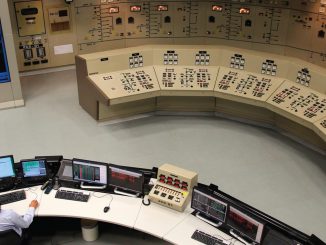
The growing momentum toward automation in power plants is being driven by rapid technological advancements, increasing financial viability and the need to optimise and enhance power generation efficiency. India has been witnessing a steady increase in installed capacity. Advancements in digital technologies, such as drones, robotics, internet of things, artificial intelligence (AI)-based analytics and cloud-integrated supervisory control and data acquisition (SCADA) systems, are enabling the full-scale digitalisation of power plants. This allows for real-time visibility, predictive diagnostics and seamless coordination for assets located in geographically difficult terrains. Developers and operations and maintenance (O&M) operators recognise the need for reducing O&M costs in order to improve returns on investment. This becomes especially important in the case of hydropower plants, which are usually located in difficult terrains and require a high capex.
As the power mix evolves in energy generation and installed capacity, O&M is expected to shift from manual processes to smart and autonomous systems. With automation in plants, operators will benefit from advanced monitoring, predictive maintenance, remote operations and real-time grid interaction. While automating processes may require significant upfront capital investments, its long-term economic benefits are substantial. These include reduced operational costs, enhanced efficiency and improved reliability, making automation a financially sound strategy for renewable energy operators. Furthermore, implementing AI-driven predictive maintenance systems can lower maintenance costs and minimise unplanned outages. Automation also contributes to increased labour productivity and operational efficiency. These improvements are crucial for renewable energy plants, where efficient operations are vital for maximising energy output and ensuring grid stability.
Benefits of automation in HEPs
In large and small hydroelectric plants (HEPs), automation systems play a critical role in streamlining operations. These systems enable the automatic starting, stopping, safe operation and protection of generating units through computerised control. Traditionally, these tasks have been performed manually by skilled operators, facing the risk of inconsistencies and higher operational costs. With automation, small HEPs can achieve more efficient and reliable performance. Computer-based control systems manage key functions such as voltage regulation, load balancing and automatic generation control. These algorithms help optimise plant output based on real-time conditions, improving both operational safety and cost efficiency across the grid.
Automation in HEPs also leads to a significant improvement in maintenance practices. It enables early fault detection, monitors equipment performance trends and maintains detailed maintenance logs. For small HEPs, which often operate with limited staff, centralised automation significantly reduces the need for constant manual oversight. It ensures uniform procedures, improves response time during abnormalities, and provides easy access to control and monitoring data.
With technological advancements and expanding opportunities for automation, modern HEPs can be integrated with electronic or digital turbine governors that precisely control the speed and output of turbines in response to grid frequency and load conditions. This is especially important in a grid with high renewable energy penetration, where flexible resources such as hydro are required to ramp up or down quickly. For large dams, automation enables the real-time monitoring of reservoir levels, spillway gate positions and rainfall data. This process involves protocols that trigger flood management or drought protection.
Digital twins are increasingly being adopted in large HEPs, especially for turbine generator units and dam infrastructure. In hydropower, these virtual models help simulate hydraulic behaviour, monitor wear in moving parts such as turbines and gates, and assess stress factors in critical structures. They are especially useful in forecasting maintenance needs and assessing operational risks such as cavitation and sediment build-up. While public sector organisations such as NHPC Limited and SJVN Limited have begun exploring digital twin technologies, adoption in small HEPs remains limited.
NHPC Limited, the country’s largest hydropower producer, has undertaken automation upgrades across multiple hydropower stations as part of its renovation and modernisation efforts. It has been actively implementing automation technologies across its HEPs to enhance efficiency and reliability. As of early 2020, approximately 15 of NHPC’s power stations were automated using SCADA systems, with plans to implement SCADA in five additional stations. This automation facilitates centralised operation, reduces manpower requirements, aids in precise fault detection and enables the generation of historical data for analysis. NHPC’s 44 MW Chutak HEP in Kargil is operated remotely from the Nimoo Bazgo HEP, ensuring seamless functioning even during extreme weather conditions. Further, NHPC has launched a cloud-based early warning system for its HEPs. This system enables the real-time monitoring of river water levels and discharges, issuing alerts to project authorities and stakeholders to provide lead time for safety measures during potential disasters such as floods or landslides.
Automation in solar energy
In solar power generation, a large portion of O&M expenses is attributed to manpower. The majority of the O&M workforce is engaged in essential activities such as panel cleaning, system inspections and vegetation control around the site. However, this share is forecasted to decrease with the integration of digital technologies and automated solutions.
Since solar modules depend on direct sunlight to produce electricity, it is vital to keep them clean to maintain their efficiency. Accumulated dust, bird droppings or debris can reduce energy output. Cleaning methods range from basic manual techniques such as hosepipe washing and tractor-mounted systems to more advanced technologies such as mechanical brushes, anti-soiling coatings and electrostatic cleaning methods. Plants can automate this process through several activities. For instance, air jet cleaning involves the use of compressed air to blow away loose dust and particles from the panel surfaces. Robotic cleaners can move across the panels to sweep and clean them. Water spray systems can use high-pressure nozzles mounted on rails or movable arms to distribute purified water evenly over the panels for thorough cleaning. In addition to automated cleaning, predictive maintenance is gaining traction. Sensors embedded across modules continuously monitor operational parameters such as current, voltage and temperature. These insights allow operators to detect performance anomalies early, enabling condition-based maintenance instead of fixed-schedule servicing, which ultimately improves uptime and reduces costs.
A case in point is Bhadla Solar Park in Rajasthan, which has adopted robotic cleaning systems to minimise water use and reduce O&M manpower, especially since solar plants operate in desert environments with high dust levels. Automation in processes is essential for maintaining performance and reducing costs.
Automation in wind energy
The wind power sector in India is also witnessing an increased uptake of automation. This is driven by advancements in AI, digital control systems and smart monitoring technologies. At the forefront of this shift is the growing adoption of predictive maintenance strategies that minimise the need for manual inspections and reduce operational costs. AI-powered solutions enable remote diagnostics and real-time troubleshooting, allowing operators to manage assets more efficiently across vast and often remote wind farm locations.
A central element of wind power automation is the use of SCADA systems. These systems act as the digital backbone of wind farms, providing a unified interface for monitoring turbine performance, weather conditions and substation health. SCADA platforms collect and process data from turbine generators and meteorological stations, enabling remote diagnostics and better control of plant operations.
As per industry reports, the next step in automation involves enhancing SCADA systems with condition monitoring systems and AI-based tools such as neural networks. These technologies can detect irregularities in turbine behaviour, forecast failures and support preventive measures that extend equipment lifespan. Digital twins have also found application in wind power generation. In this context, a digital twin is a virtual replica of a wind turbine or an entire wind farm that simulates its performance based on real-time sensor data and historical patterns. These models are used to monitor structural failures, forecast wind speeds and optimise turbine control strategies. Given the remote locations and harsh conditions in which wind plants operate, digital twins help operators reduce manual inspections and implement
predictive maintenance.
Implementation challenges
While automation in power plants offers significant advantages in terms of efficiency and safety, its implementation is accompanied by several challenges. A major hurdle is the integration of modern automation technologies such as SCADA with the older systems, which are often outdated and equipped with incompatible equipment, requiring custom solutions and extensive testing. Increased digitalisation also exposes plants to cybersecurity threats, which may require strong protective measures such as firewalls, intrusion detection systems and regular audits. Workforce training is another challenge, as personnel must adapt to new technologies and overcome resistance to change, stemming from concerns about job security and system complexity. Additionally, automation systems generate large volumes of data, making efficient data management and analytics essential for optimal decision-making. Further, AI-based predictive analytics, while being powerful, are limited by their reliance on historical data and may falter in unprecedented situations. This could happen when operational patterns diverge from past trends and result in reducing their predictive accuracy.
Conclusion
Automation has the potential to transform the future of power generation in India across the hydro, solar and wind sectors. Despite its benefits, the path to automation is not without challenges. High capital costs, legacy system integration, cybersecurity risks, data complexity and workforce upskilling continue to pose barriers. However, with investment in digital infrastructure, automation has the potential to significantly enhance the performance and safety of India’s power fleet.